
Taplio is one of the most recognized LinkedIn tools on the market. It promises AI-powered content creation, scheduling, analytics, and lead generation — all in one place.
If you're evaluating it seriously, you've probably already seen the feature list. What you haven't seen is an honest breakdown of what it actually costs to use, where it falls short, and what real users say after the trial ends.
I built Supergrow, a direct competitor. That's worth knowing. It also means I've looked at Taplio more carefully than most reviewers have.
What I found was a tool with real strengths and a few decisions that consistently catch users off guard after they've already paid.
What Is Taplio?
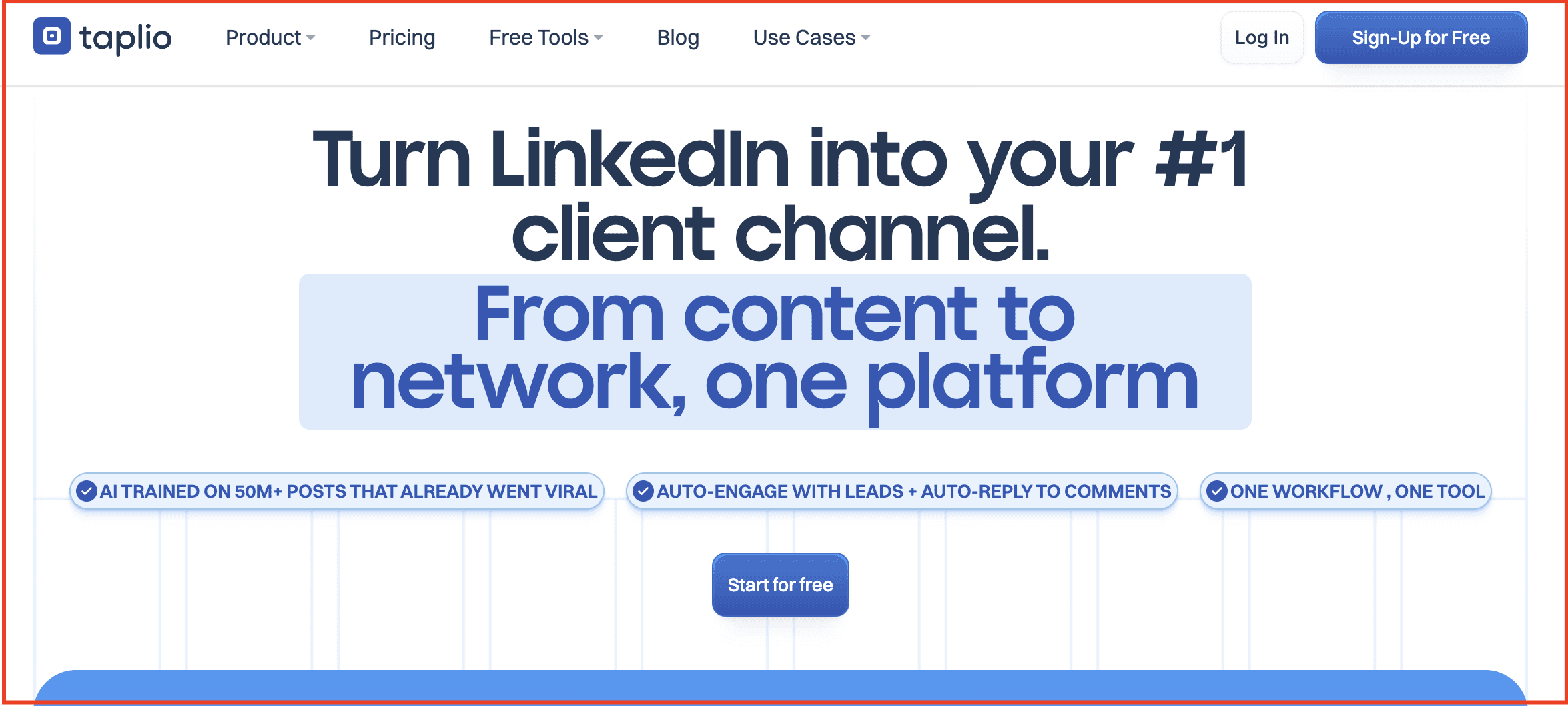
Taplio is a LinkedIn personal branding tool built for individuals. Founders, consultants, creators, and sales professionals who want to show up consistently on LinkedIn without spending hours writing every post.
It launched in 2022 and was acquired by Lempire in 2023. Lempire is the company behind Lemlist, one of the more established cold outreach platforms in the B2B space. Taplio isn't a scrappy indie tool. It's part of a sales ecosystem, and the product reflects that thinking.
At its core, Taplio does four things. It helps you create content with AI. It schedules and queues your posts. It tracks how your content performs. And at the Pro tier, it adds a lead database with outreach automation. Most users sign up for the first two. The fourth is where pricing escalates and where account risk becomes a real conversation.
One thing worth knowing upfront. Taplio is LinkedIn-only. No cross-platform publishing, no repurposing to other channels.
Taplio Features
So what does Taplio actually give you? Here is what each feature delivers — and where it stops short.
1. Viral Post Library
This is Taplio's strongest feature and the one users mention most consistently. A searchable database of over 5 million LinkedIn posts filtered by engagement, industry, and content format. If you want to understand what's working in your niche right now, or need a starting point when ideas run dry, this is genuinely useful. It's the feature that justifies the subscription for many active LinkedIn creators.
2. AI Post Generator
Taplio generates LinkedIn posts from a topic, a URL, a YouTube link, or an existing piece of content. The output follows LinkedIn formatting well. Short paragraphs, clean structure, readable hooks. For someone staring at a blank page three times a week, it removes the friction of getting started.
The limitation is consistent and well-documented. The AI runs on ChatGPT. It knows how LinkedIn content looks. It does not know how you write, what you believe, or what makes your perspective different from the next founder posting about the same topic. Every post needs editing before it sounds like you. For a tool sold on saving time, that editing cost is worth factoring in before you subscribe.
3. Hook Generator
Pulls opening lines from patterns that have historically performed well on LinkedIn. Useful for breaking through a weak start. The hooks follow recognizable formulas, though. As more people use AI tools to write LinkedIn content, those formulas are becoming easier to spot in the feed.
4. Carousel Generator
Creates carousels from blog posts, YouTube videos, article links, or topics. No design experience needed. The templates are clean and work well for standard content. They start to look repetitive at scale, and users who want a distinctive visual identity still tend to rely on Canva for anything that needs to stand out.
4. Scheduling and Queue
Reliable and well-built. Calendar view, content queue with shuffle and re-queue, and first-comment scheduling to keep external links out of the main post body. This part of the product works cleanly and draws minimal complaints across user reviews.
5. Analytics
Tracks post performance, follower growth, and engagement trends beyond what LinkedIn shows natively. Adequate for individual users monitoring their own content. Falls short for anyone wanting to understand audience behavior in depth or measure content against business outcomes.
6. Engage Lists
Build curated lists of prospects, peers, or industry voices. Taplio surfaces their latest posts so you can comment intentionally rather than scrolling the feed, hoping the right people appear. A practical feature for anyone building relationships as part of their LinkedIn strategy.
Taplio Pricing
Here is where most reviews get it wrong. They list $39 per month and move on.
That number is real. What it buys you is not what most people expect.
The three plans:
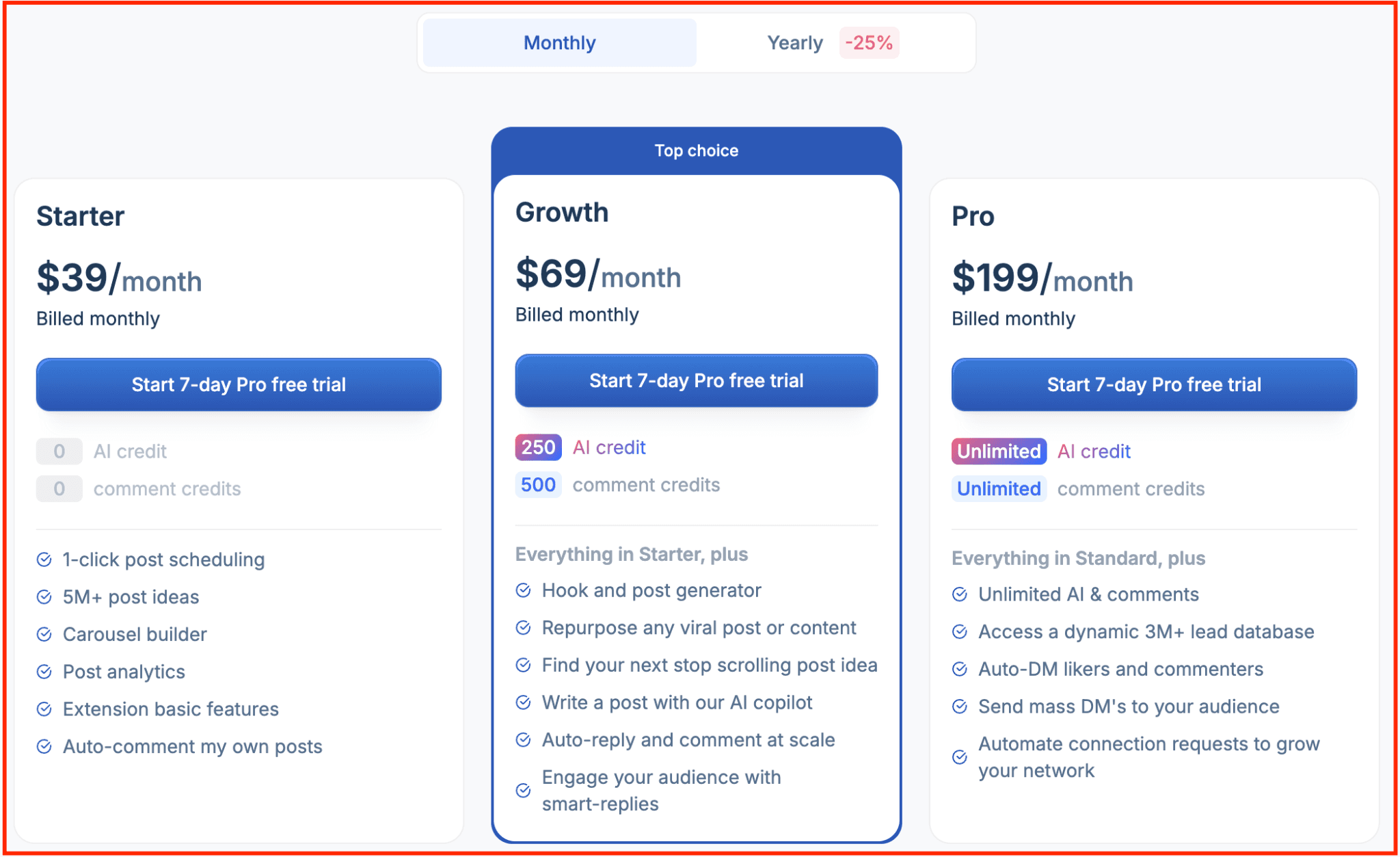
Pricing verified on April 21st, 2026.
The Starter plan has zero AI credits.
Not limited AI. Not a reduced amount. Zero. The AI post generator, hook generator, carousel AI, and AI copilot are all locked. What you get is scheduling, the viral post library, basic analytics, and the carousel builder without AI. Nothing more.
This matters because Taplio's entire marketing is built around AI-powered content creation. Sign up at $39 expecting to generate posts with AI, and you will hit a wall on day one.
The real entry price for the features Taplio is known for is $69 per month. Billed annually, that comes down to $49 per month. But you are committing to the year upfront.
The credit ceiling problem
Growth plan users get 250 AI credits and 500 comment credits per month. That sounds sufficient until you realize both pools deplete across everything. Drafting posts, generating hooks, writing AI comments, replying to engagement — it all draws from the same limits. Active users who post frequently and engage intentionally burn through both allocations faster than expected.
There is no option to buy additional credits. The only path forward is upgrading to Pro at $199 per month. That is nearly a 3x jump with no middle ground between the two.
The Pro plan is built for outreach, not personal branding
Pro unlocks the lead database, auto-DMs, and mass messaging. Sales prospecting features. If personal branding is the goal and outreach automation is not part of your strategy, you are paying for functionality you will never use.
7-day free trial available on all plans with full Pro access
What Real Users Say About Taplio
The best way to evaluate any tool is to look past the marketing and go straight to the people using it. Here is what they are actually saying.
Where Taplio earns genuine praise
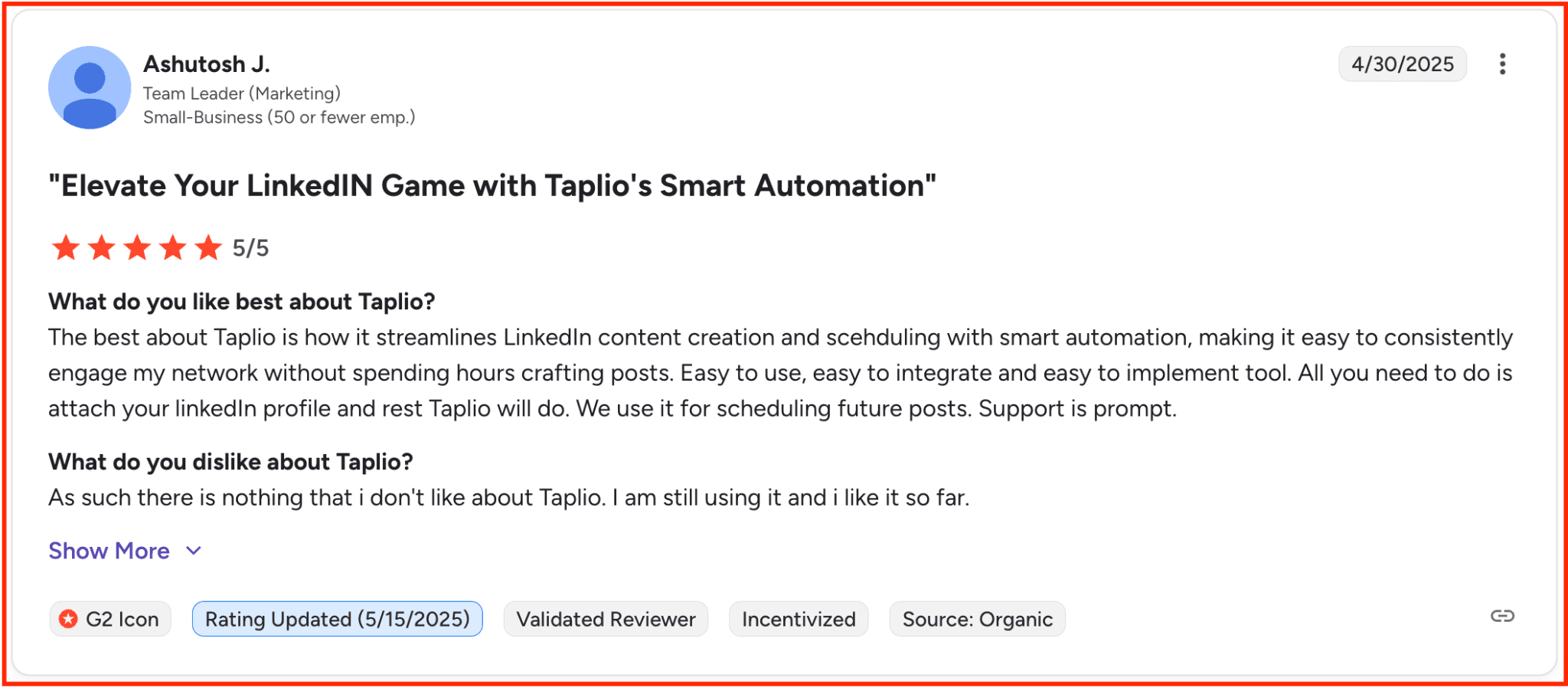
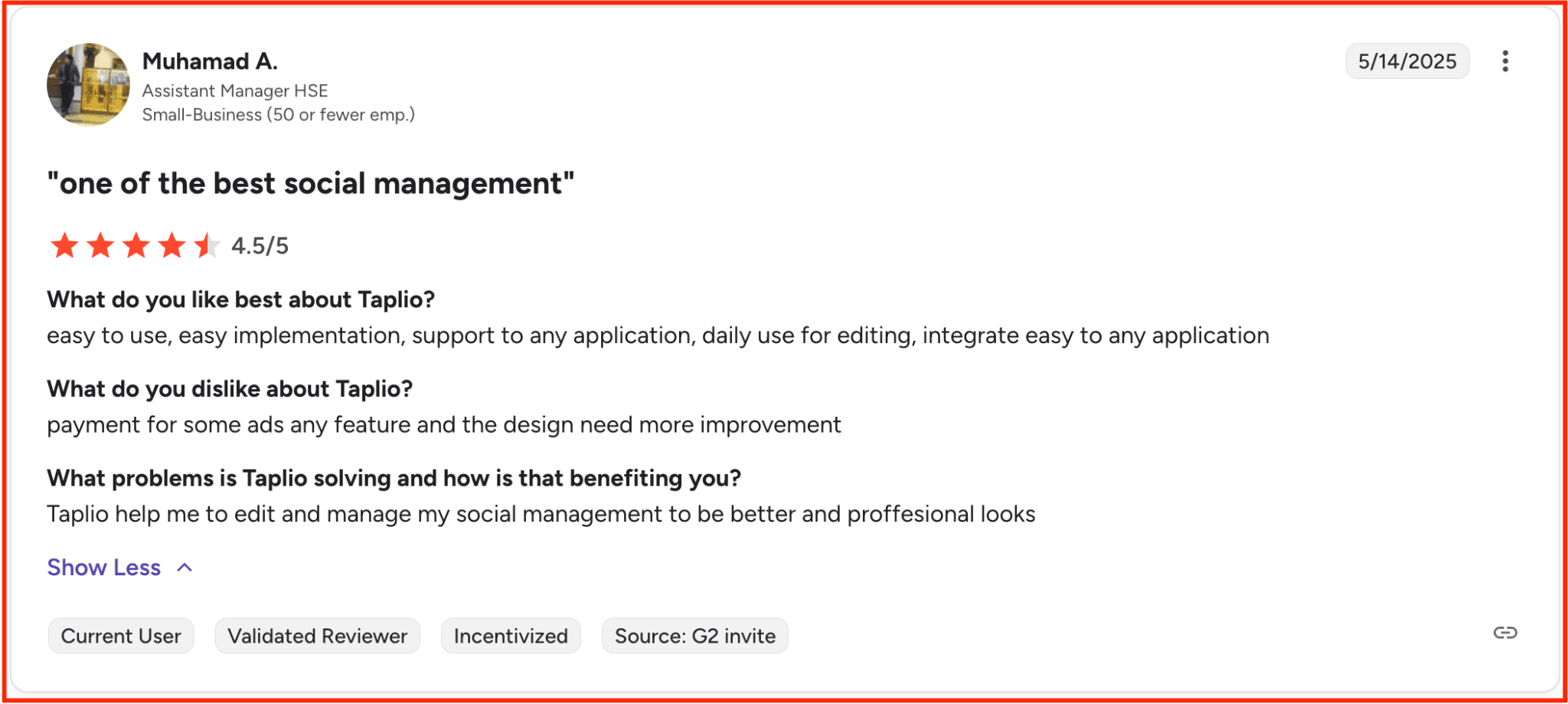
These are real users who made Taplio work for them. The scheduling and ease of setup come up consistently in positive reviews. That is worth acknowledging.
Where it breaks down
This is where it gets more interesting.
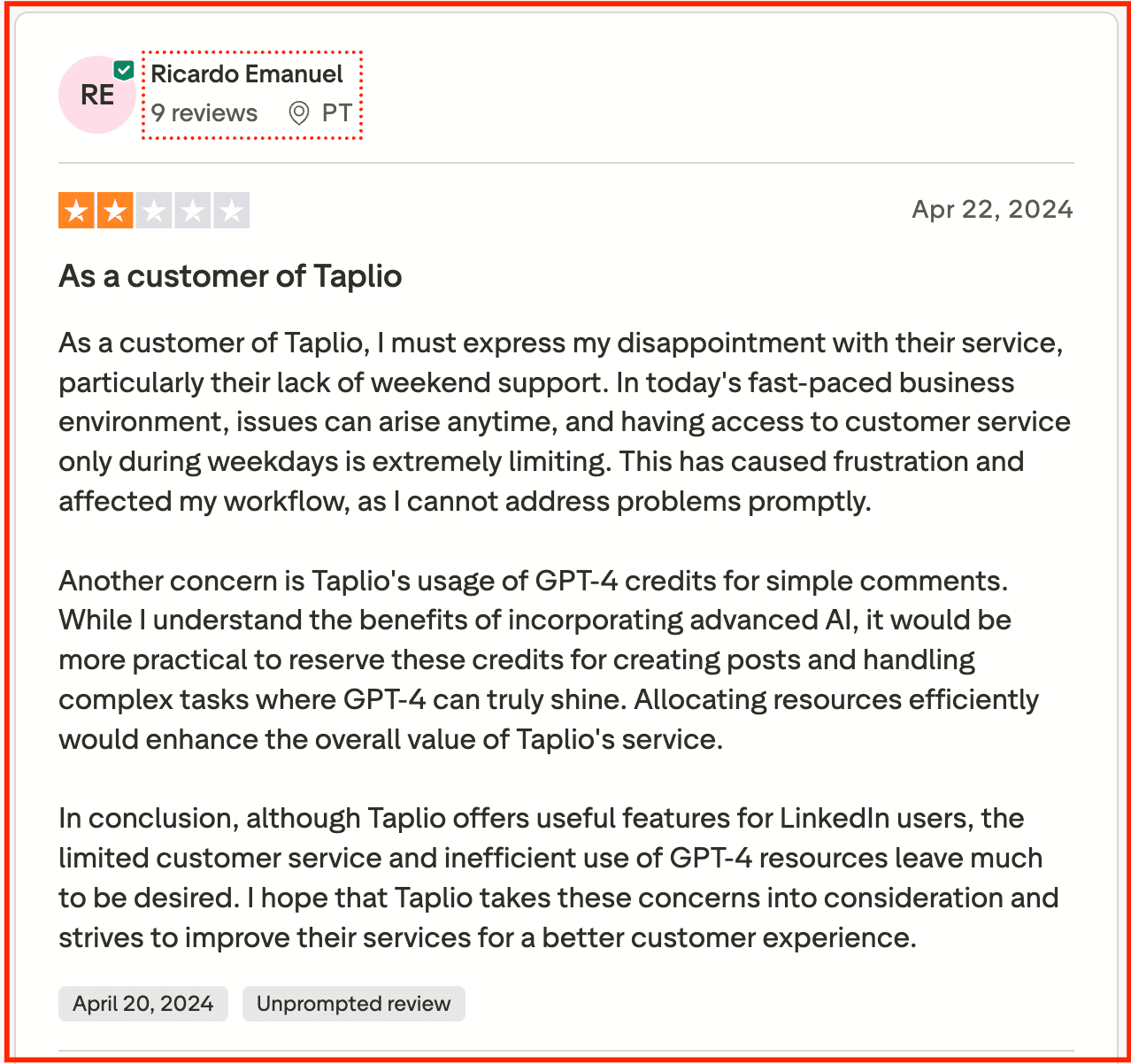
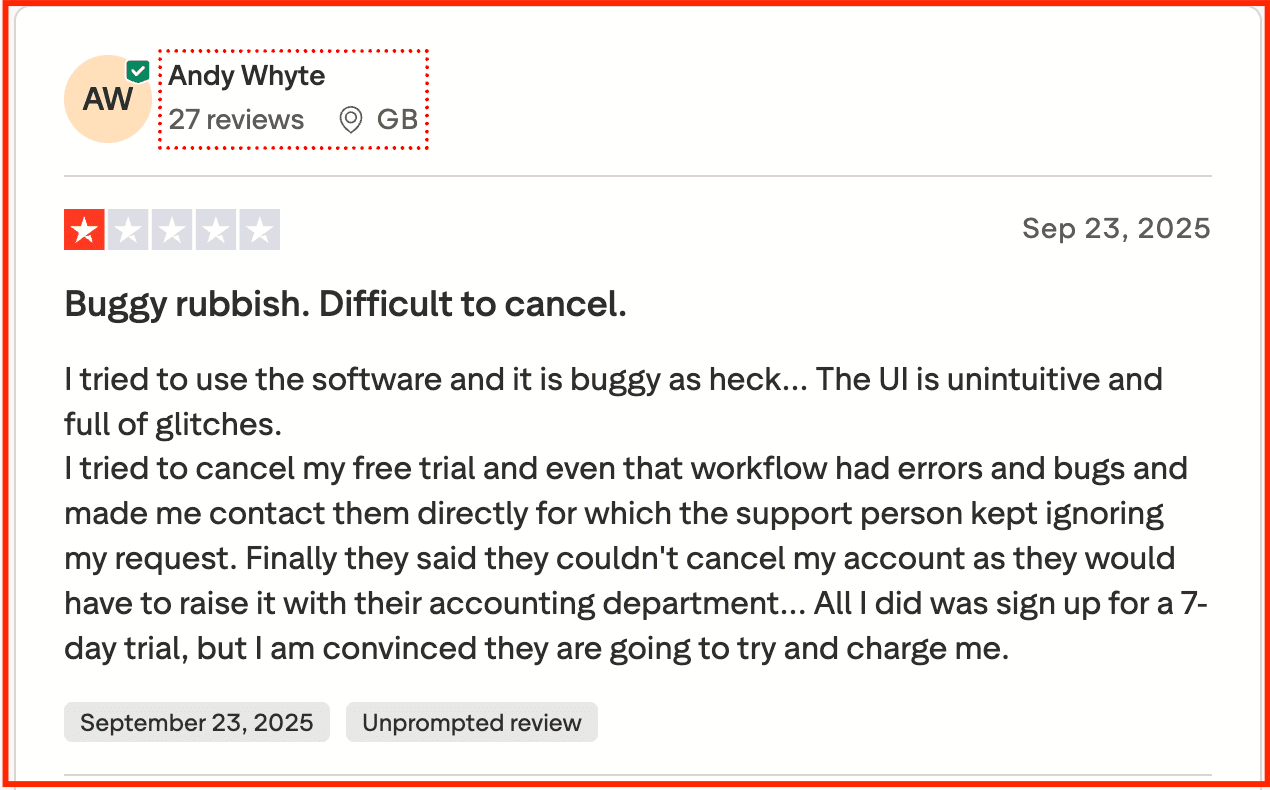
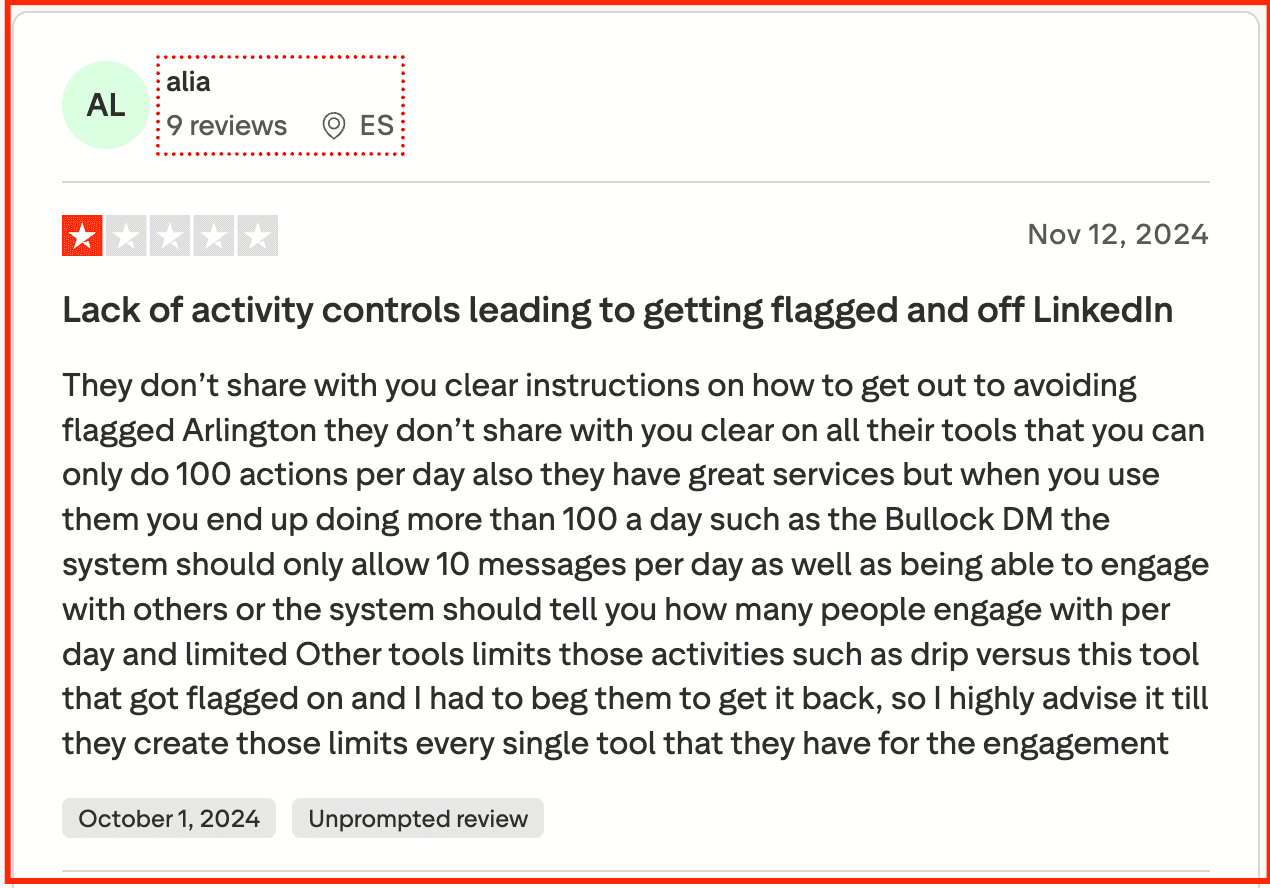
The rating gap
Taplio holds a 3.9 out of 5 on G2 and 4.0 on Product Hunt. On Trustpilot, it has a rating of 2.1 out of 5.
That spread tells a story. Pre-purchase enthusiasm and post-purchase experience are not aligned. Users who found a workflow that suits them rate it well. Users who hit billing friction, AI disappointment, or account restrictions after subscribing tell a very different story.
Both groups are being honest. The question worth sitting with is which experience is closer to yours.
Is Taplio Safe for Your LinkedIn Account?
This is the question most reviews skip. It deserves a straight answer.
A LinkedIn account is not replaceable. The network, the content history, the connections — years of work. Losing access, even temporarily, cuts off the pipeline, visibility, and outreach overnight.
What happened in April 2025
In April 2025, LinkedIn moved against third-party automation tools at scale. Taplio's own company page was restricted during this period — even its leaders were locked out. Shadow-bans and temporary suspensions followed for users relying on the platform's automation features.
LinkedIn's enforcement targeted tools using cookie-based authentication, automated engagement, and extension-based overlays. Taplio's architecture sits squarely in that territory.
Where the risk lives
Taplio's Pro plan is built around the features LinkedIn was targeting — auto-DMs, mass messaging, bulk connection automation, and engagement automation at scale. The tool also relies on cookie-based authentication, which LinkedIn flagged as non-compliant.
The deeper problem is that Taplio does not enforce the daily activity limits that keep accounts safe. LinkedIn's threshold sits at 100 actions per day. Taplio's engagement features can push users past that without warning. By the time LinkedIn flags the activity, the damage is already done.
Two Trustpilot reviewers experienced this directly. One was flagged after unknowingly exceeding daily action limits and described having to beg for support to restore access. Another received suspension warnings simply from having Taplio active.
Taplio acknowledges the risk on their own blog: "If your automation tool is spamming your network or sending too many connection requests, your account could be flagged, restricted, or permanently banned."
If LinkedIn is your primary business channel, that is not a theoretical risk. It’s the risk worth understanding before you subscribe.
Does Taplio's AI Actually Sound Like You?
The problem is not what it produces. It is what it cannot learn.
Taplio's AI runs on ChatGPT. It knows how LinkedIn content looks. It does not know how you think, how you phrase things, or what makes your perspective different from every other founder posting about the same topic. There is no mechanism in the product that analyzes your past posts, studies your vocabulary, or adapts to your natural voice over time.
What you get is a competent first draft that sounds like LinkedIn content. What you need is a post that sounds like you.
The gap between those two things is where personal branding either works or doesn't.
Bernhard, a Product Hunt reviewer who tested Taplio and left a 2-star review, put it plainly:
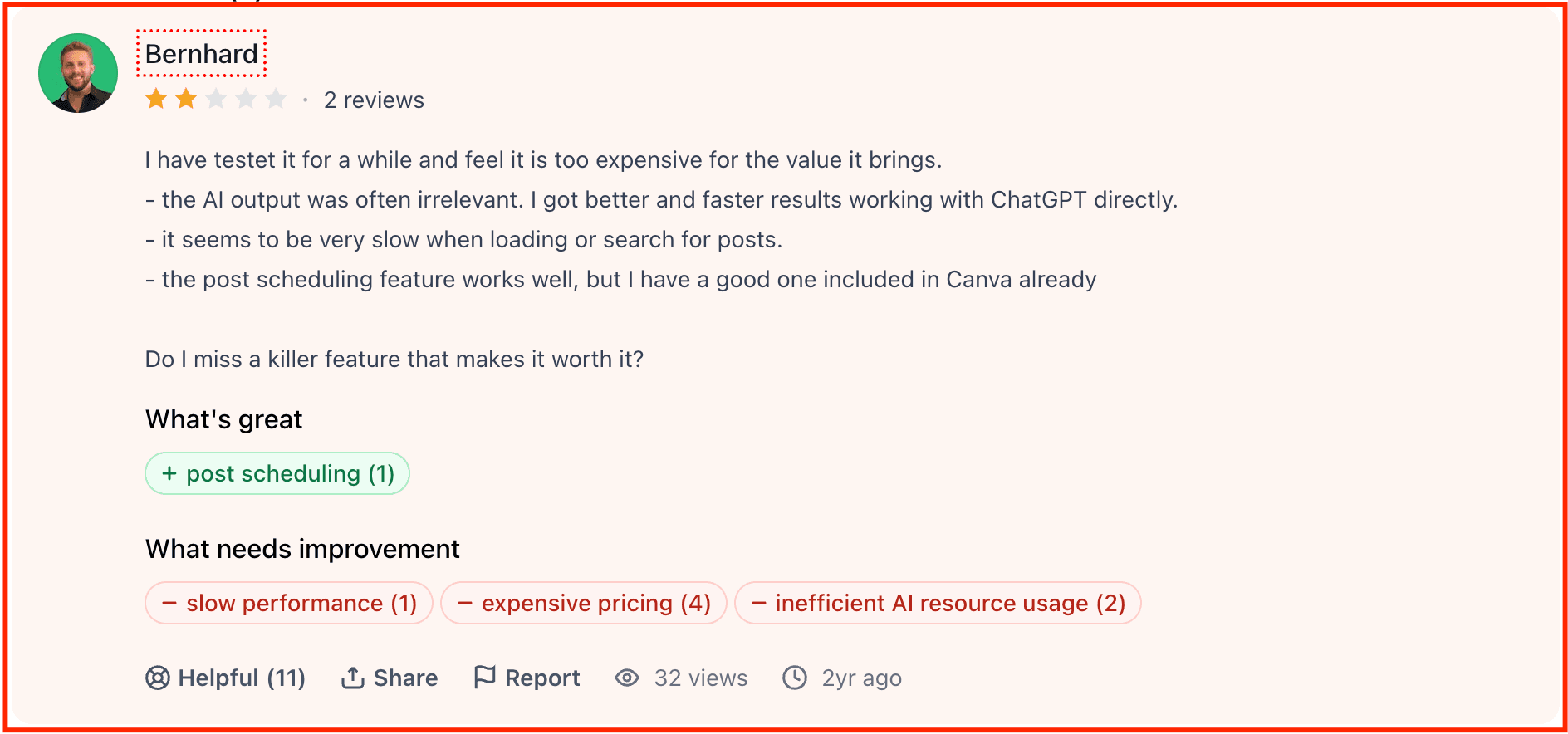
That last line says everything. For a tool built around AI content generation, the core feature should not leave users questioning whether it adds any value.
This is the gap Supergrow was built to solve. Content DNA creates a voice profile for each user — built from their existing posts, tone, vocabulary, and how they naturally structure arguments. Every draft starts from who you are, not from what LinkedIn content generically looks like. The output still needs a human hand. But it needs far less editing because it starts closer to your voice.
Stop sounding like everyone else on LinkedIn — try Supergrow free for 7 days.
Taplio for Teams and Employee Advocacy Programs — Where It Falls Short
Taplio is built for individuals. The team features exist, but they are an add-on, not a foundation.
There is no content approval workflow. No habit-building mechanics — no challenges, no leaderboards — to keep employees posting after the first week. No voice profiling per member. Every employee's AI output sounds the same unless they edit it themselves.
The hardest problem in employee advocacy is not content distribution. It is consistent participation. Taplio gives admins a visibility layer. The participation problem remains untouched.
Most advocacy programs built on Taplio lose momentum within weeks. Not because the team didn't try. Because the tool wasn't designed to sustain it.
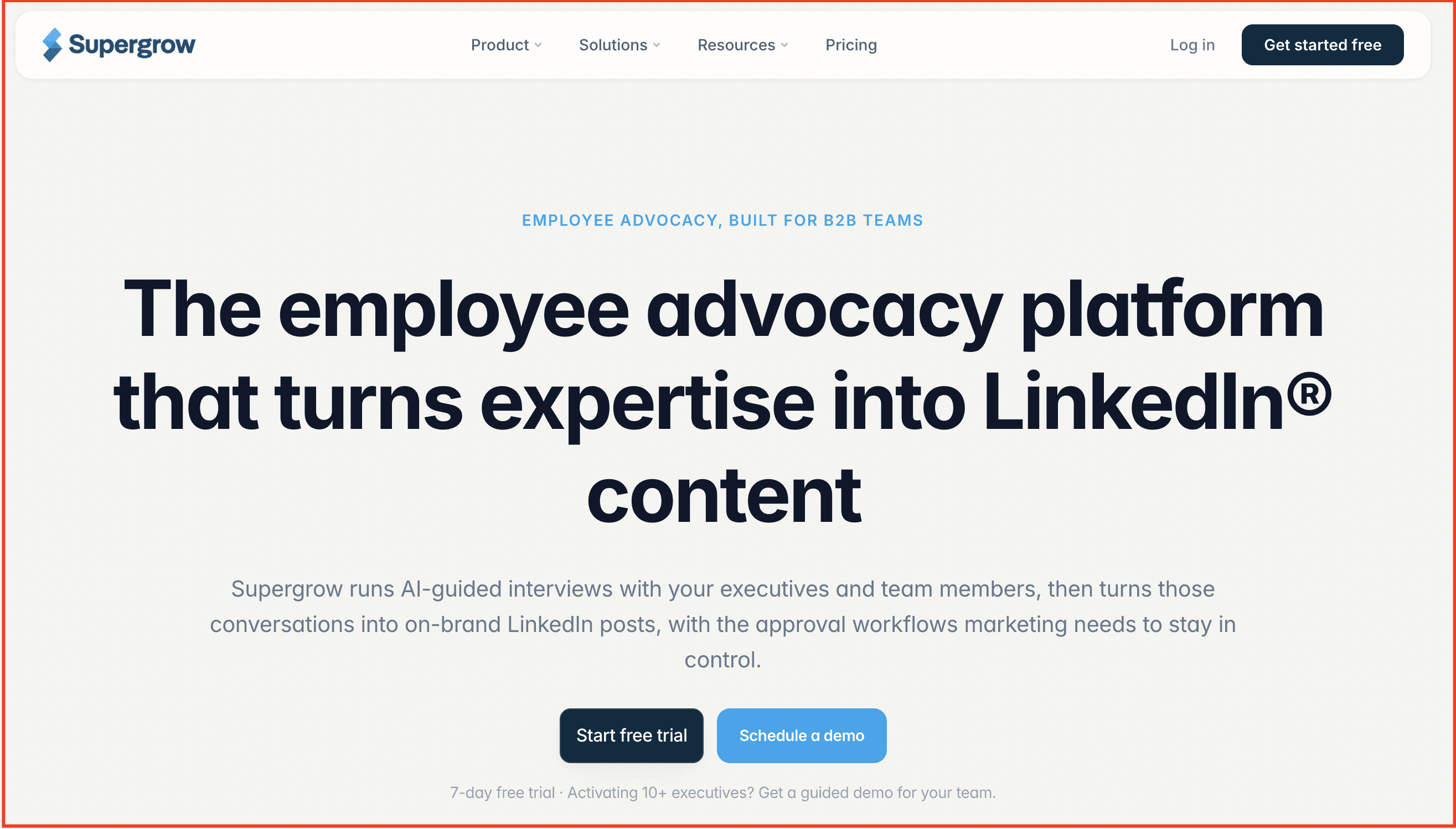
Supergrow Teams is built specifically for this job. Every member gets their own Content DNA voice profile. Approval workflows keep marketing in control without creating friction. PostCast lets employees capture content by speaking, not writing. Challenges and leaderboards keep participation consistent. Admins see everything from one dashboard.
It is the difference between tracking what your team posts and building a system that keeps them posting.
That system is Supergrow Teams.
Build an employee advocacy program that actually works — explore Supergrow Teams.
Why Founders Are Switching from Taplio to Supergrow
Three problems consistently arose throughout this review.
Here is where Supergrow directly addresses each one.
- If the AI voice problem frustrated you
Taplio generates content from general LinkedIn patterns. Supergrow builds a Content DNA profile from your existing posts — your tone, your vocabulary, your structure. The output starts closer to how you actually write. Less time editing. More posts that sound like you.
- If account safety concerns you
Supergrow connects to LinkedIn through official API methods. No cookie-based authentication. No Chrome extension overlays. None of the automation patterns LinkedIn targeted in its 2025 enforcement wave. Your account is not the variable in the equation.
- If you are running a team or advocacy program
Taplio gives admins visibility. Supergrow gives teams a system — approval workflows, Content DNA per member, PostCast for voice-to-content capture, and Challenges to keep participation consistent after the launch week fades.
The problems are different. The tool you need is different too.
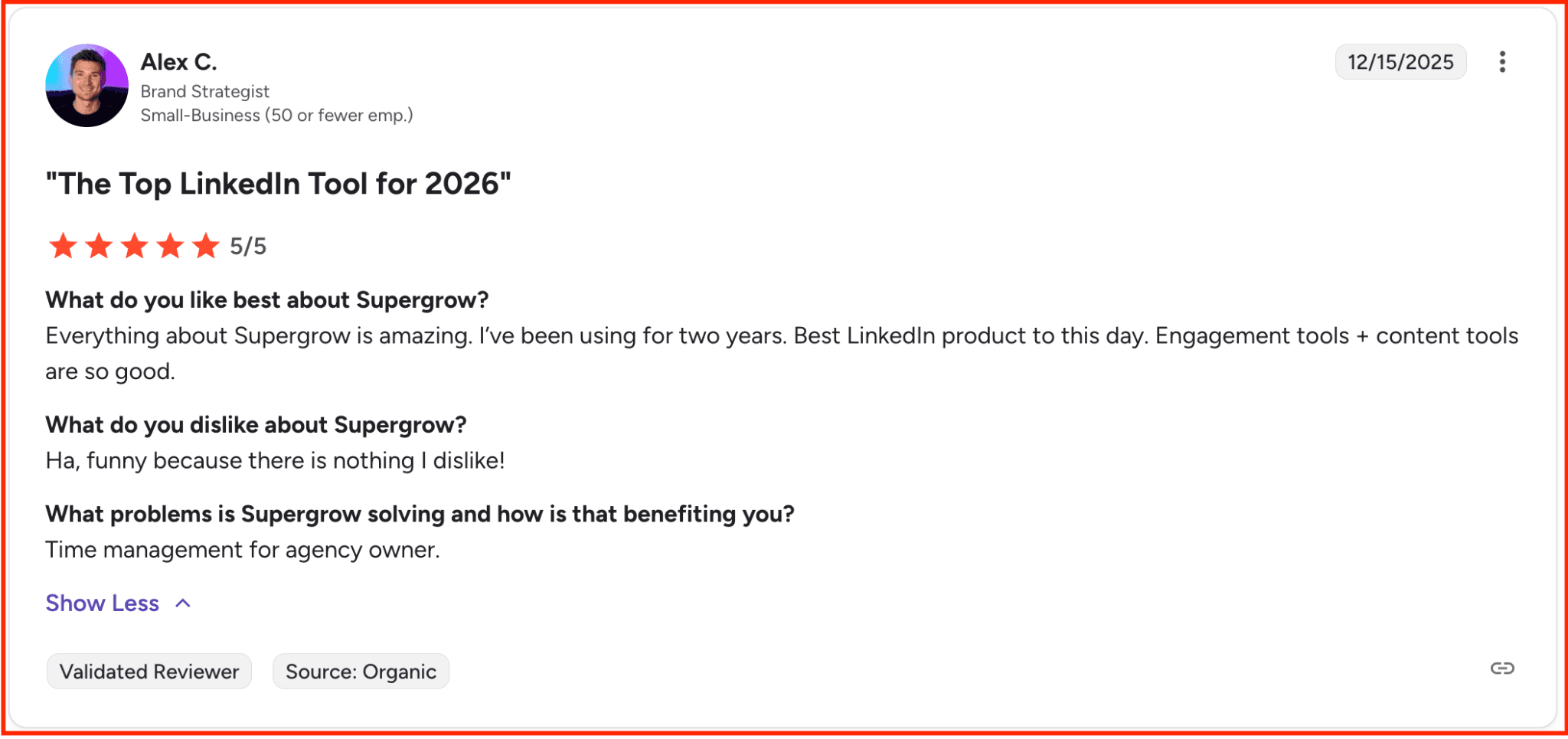
Here is what a Brand Strategist who has used Supergrow for two years had to say on G2:
See how Supergrow compares — start your free 7-day trial.
Final Verdict — Is Taplio Worth It in 2026?
Taplio has real strengths. The viral post library is genuinely useful. Scheduling is reliable. For sales-focused users on the Pro plan, the lead database adds value.
But the $39 entry price is misleading. The AI does not learn your voice. The account safety risk is real. And for teams, it simply was not built for the job.
If you are serious about building a personal brand on LinkedIn — one that sounds like you, grows consistently, and does not put your account at risk — you need more than a content scheduler with an AI layer on top.
That is exactly what Supergrow was built for.
Try Supergrow free for 7 days — no credit card required. Your LinkedIn presence should sound like you, not like everyone else using the same tool. Start your free trial.