
Businesses recognize an opportunity to turn their employees into brand ambassadors through social media.
According to Hinge marketing, 31% of businesses are actively considering social media for employee advocacy, and 16.6% have already implemented it.
Despite the clear benefits of becoming an employee advocate, many businesses still struggle to engage their teams. A major reason employee advocacy fails is that businesses treat social media as a distribution channel rather than an ecosystem.
Marketing creates a brand asset. The team asks employees to copy and paste brand assets with generic copy. Social media channels recognize the repeated content and throttle engagement.
Employees quickly lose interest, and businesses give up on employee advocacy.
But that’s not how employee advocacy works on social media. This article explains how employee advocacy actually works in social media feeds, and what teams must design differently to scale it.
Why Employee Advocacy Behaves Differently on Social Media
Social channels provide a platform for enterprises and their employees to share PoV and build trust. It makes brand messages feel closer, more relatable, and less scripted.
1. Social Platforms Reward People, Not Brands
Your brand’s reach on social media is capped–not because your content is weak–but because you’re overlooking your biggest asset: employees.
But let’s talk numbers. Why employee posts outperform brand posts:
-
Posts shared by employees receive 8x more engagement than brand posts.
-
Just 3% of employees' sharing can drive a 30% increase in total engagement.
-
Click-through rates are 2x higher from employee content—even when it’s the same message.
-
Your employees' total networks are 10x larger than your company’s.
But this isn’t just about numbers, but about impact.
For instance, when Arek, Software Engineer at Buffer, posts something their team created, people listen because;
-
He’s sharing his experience, not a marketing copy
-
He doesn’t get paid for creating social media posts
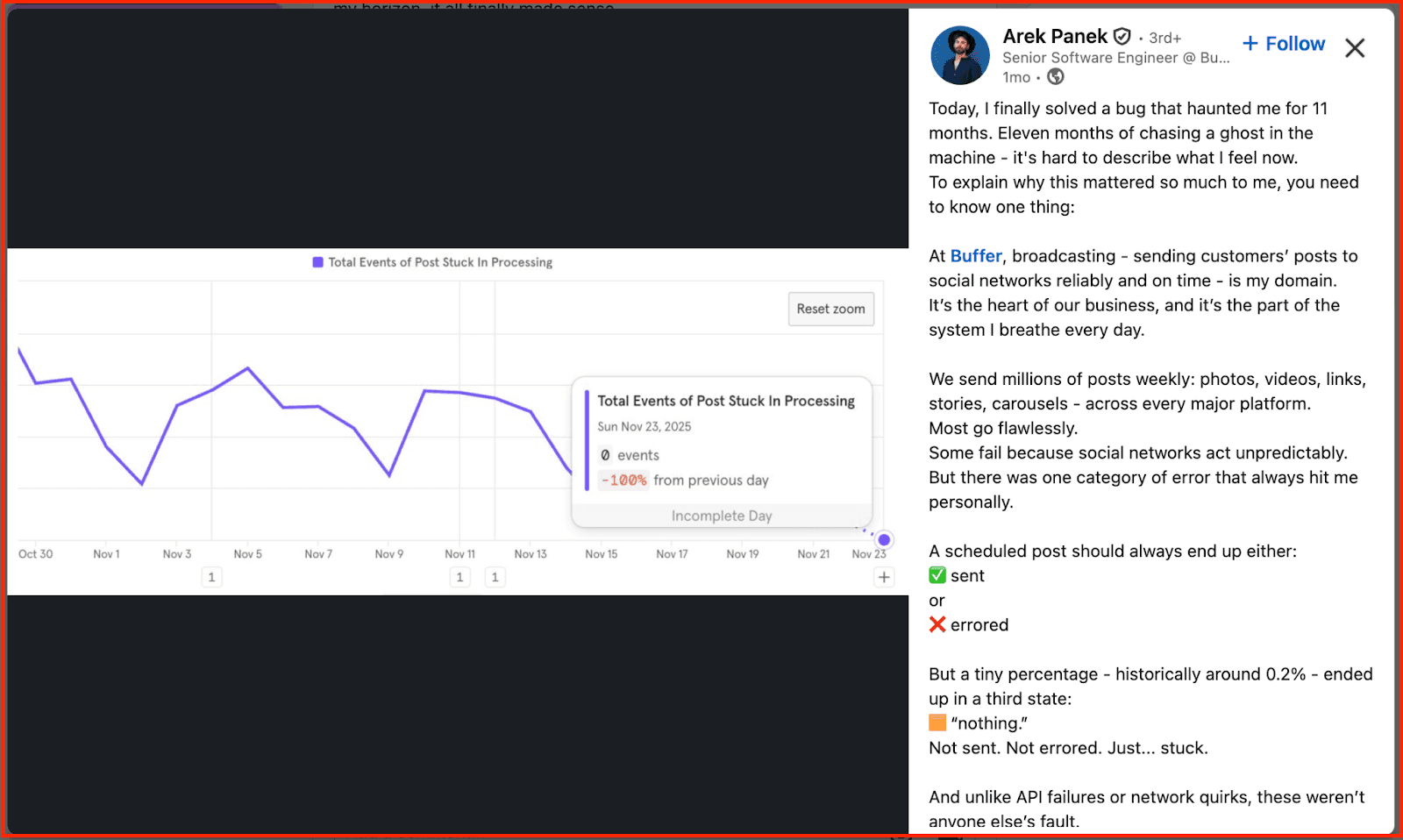
Such posts from Buffer generate many leads, without hashtags or an ad budget. Just trust.
2. Feeds Are Built for Opinion, Not Promotion
Almost six out of ten consumers (59%) think there is ‘too much’ advertising on social media, and over half (52%) find self-promotional brand content exhausting.
That’s why many traditional employee advocacy programs failed: they treated employees as distribution nodes rather than as independent voices.
What they did:
-
Reposted brand announcements with minor caption tweaks
-
Corporate tone that doesn’t match the employee’s usual voice
-
Calls to action that feel sales-led (“Check out our latest…”)
-
Identical messaging across dozens or hundreds of profiles
Such posts receive lower engagement because they lack strong POVs, which signals inauthenticity to both humans and ranking systems.
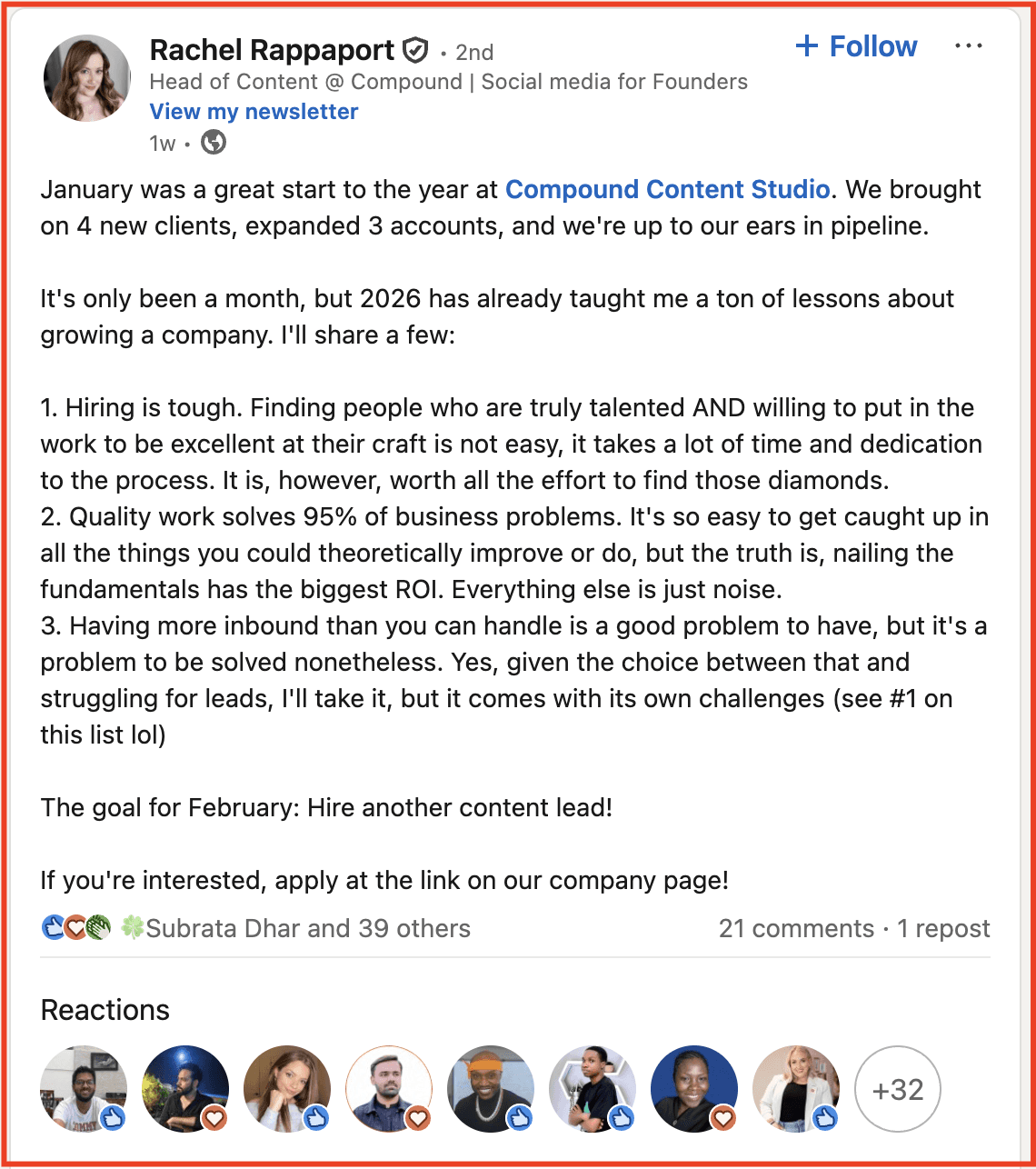
This post by Rachel Rappaport is an amazing mix of promotion and opinion. It not only highlights the progress of Compound Content Studio but also shares her learnings along the way. Such posts bring businesses the authenticity and humanizing element they need to connect with their target clients.
3. Trust Is the Real Currency of Advocacy
Trust isn’t an abstract emotion. It’s the foundation of every transaction, every customer decision, and every lasting business relationship.
For businesses, that makes trust-building inherently non–one-size-fits-all. Brands don’t earn trust by speaking louder; they earn it by showing up through the right people, in the right contexts. And there’s no channel more credible than employees.
Employee advocacy programs can generate an average annual reach of nearly 27 million for brands. Compare that to brand-owned social media, where organic reach typically sits between 2%–15% of total followers, depending on the platform and content type.
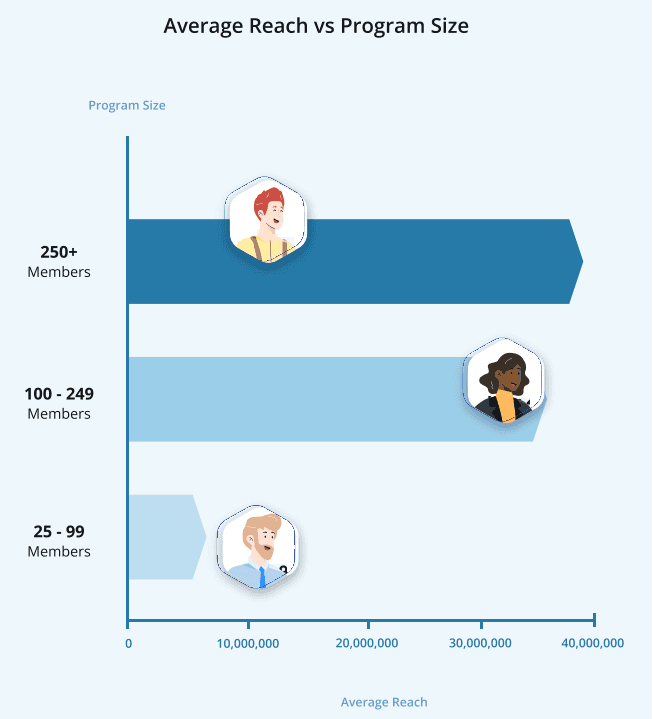
Even if each employee has just 100 followers, and only 2–15 people see a shared post, the compounding effect is powerful. Multiply that across teams, departments, and networks, and suddenly your brand isn’t broadcasting, it’s present.
That’s the real advantage of employee advocacy: not just more reach, but more believable reach. When trust travels through people, not logos, your chances of showing up and being trusted increase exponentially.
How Employee Advocacy on Social Media Actually Works in 2026
According to Statista, almost 5.4 billion people were active on social media. This is more than half of the world's total population. On average, people spend 141 minutes per day on these social media networks.
Therefore, social media is a great place for brands to not only reach their audience but also build connections with them.
Employee Advocacy Is a Behaviour System, Not a Content System
When businesses think of employee advocacy, they often default to control. Carefully written messaging. Clear guardrails. Approved language. Everything is neat.
The problem is that this no longer reflects how trust is built in practice.
Advocacy works when employees act as individuals, not brand extensions. People don’t trust brand statements alone–they look for signals. They notice how people behave when no one's selling to them.
Employees' content performs well not just because its algorithm is favoured, but because of audience expectations. People expect professional honesty, not promotion.
A more sustainable approach is to offer simple guidance while leaving room for individual voice. One commonly balanced content mix, where employees primarily share:
-
Industry insights
-
Personal professional experiences
-
Occasional company-related updates
Evidence from various social media research suggests that overly promotional content reduces trust and engagement, while insight-led sharing performs more consistently over time.
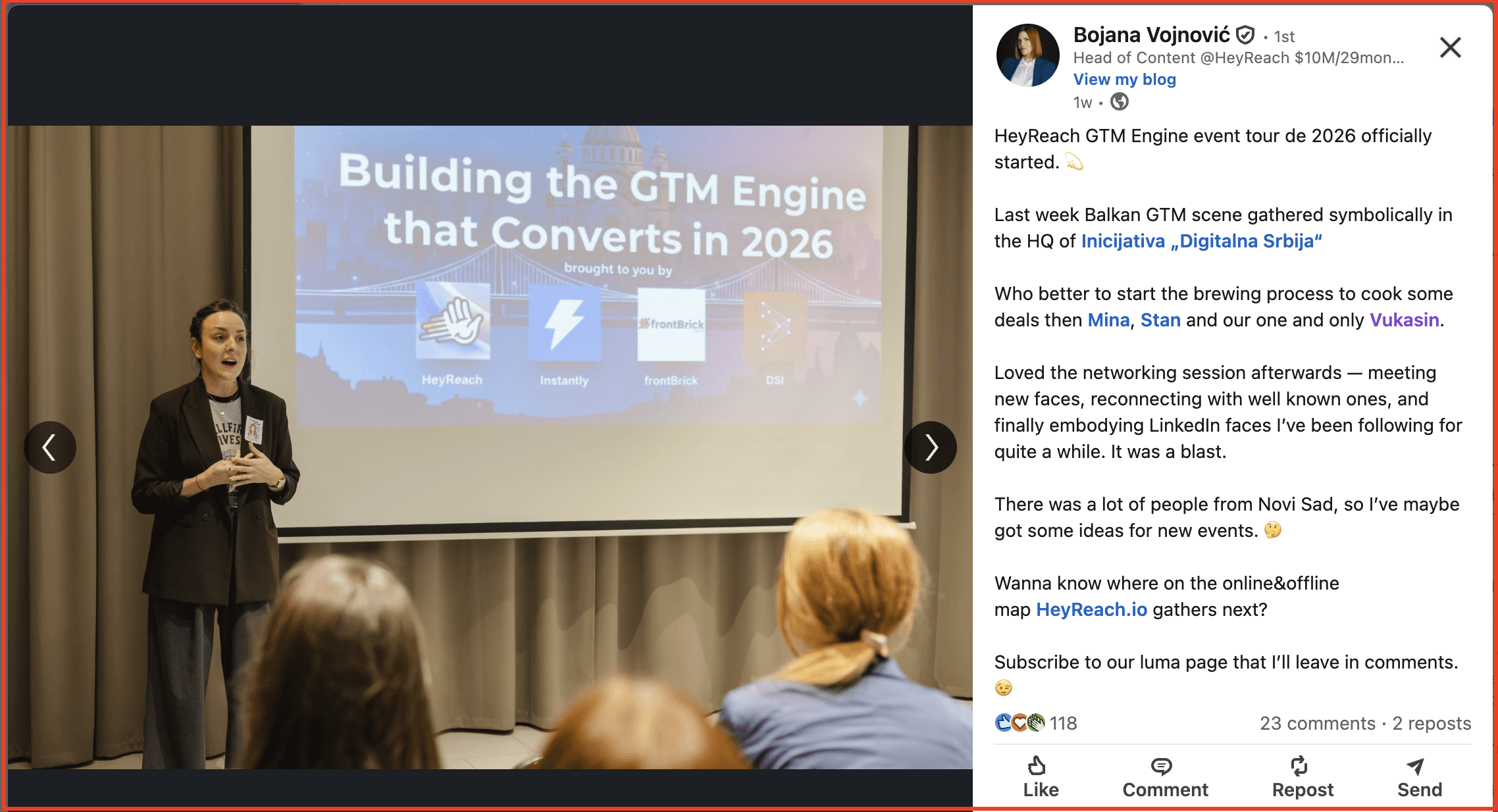
For instance, this post by Bojana Vojnović about attending a HeyReach event performed well not because it pushed the brand, but because it captured what actually attracts people: real experiences, real relationships, and the momentum of a growing HeyReach community.
Treat Employee Content Differently Than Brand Content
Organizations often worry about loss of control. In practice, the greatest risk lies in silence and inauthenticity.
Successful employee advocacy programs today begin with understanding employee motivation. Not everyone wants to post publicly, and participation should never be mandatory. The aim of launching an employee advocacy program should be authority, not compliance.
When every employee posts points back to your business, it starts to feel promotional, and people switch off.
Unlike traditional marketing materials developed by corporate teams, employee advocacy should offer a more authentic and relatable view of the organization.
A healthier approach is to encourage a mix of content that feels useful, relevant, and personal: industry insights, professional opinions, lived experiences, and only occasional company updates.
This is why the same content performs differently on personal profiles vs company pages.
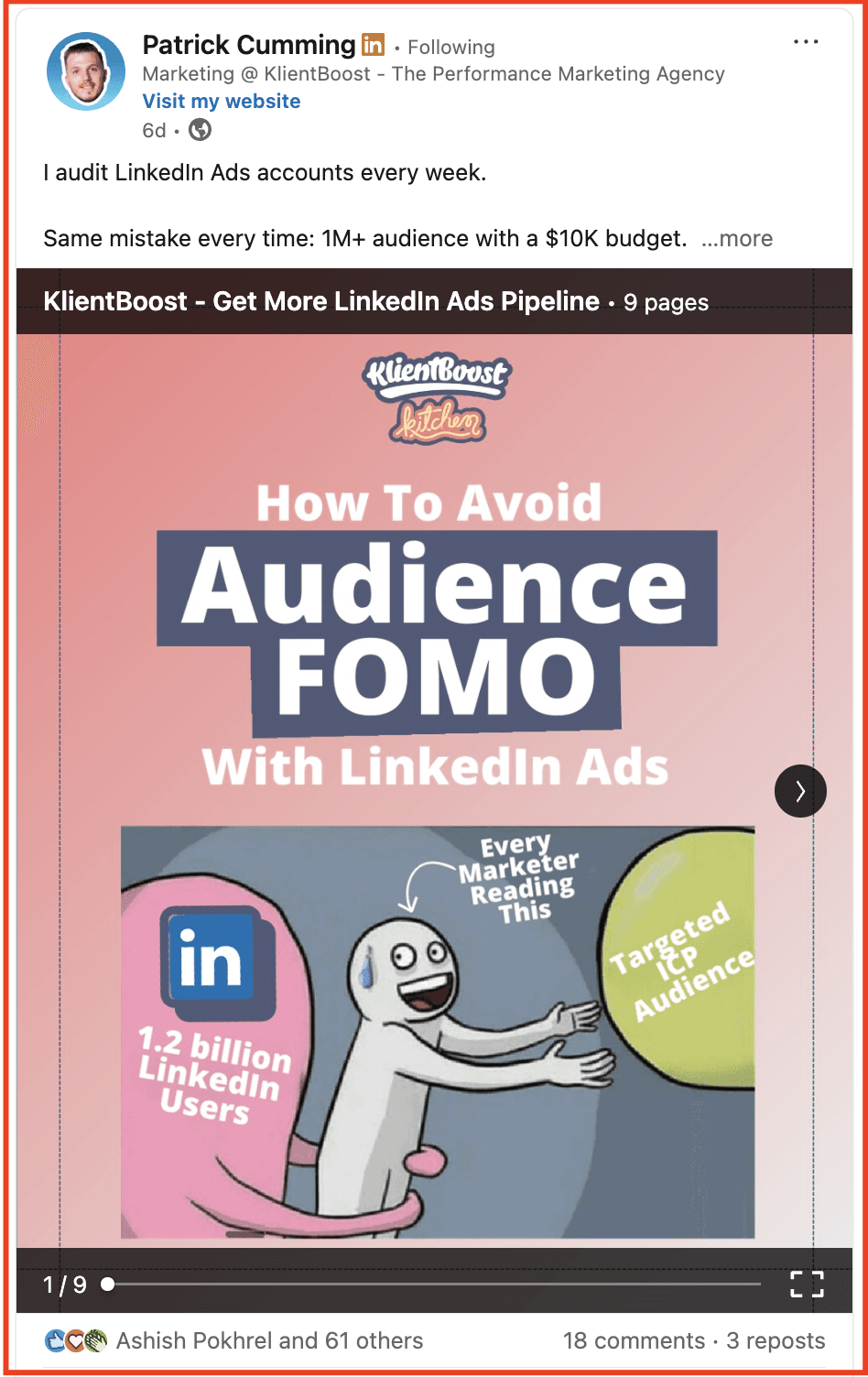
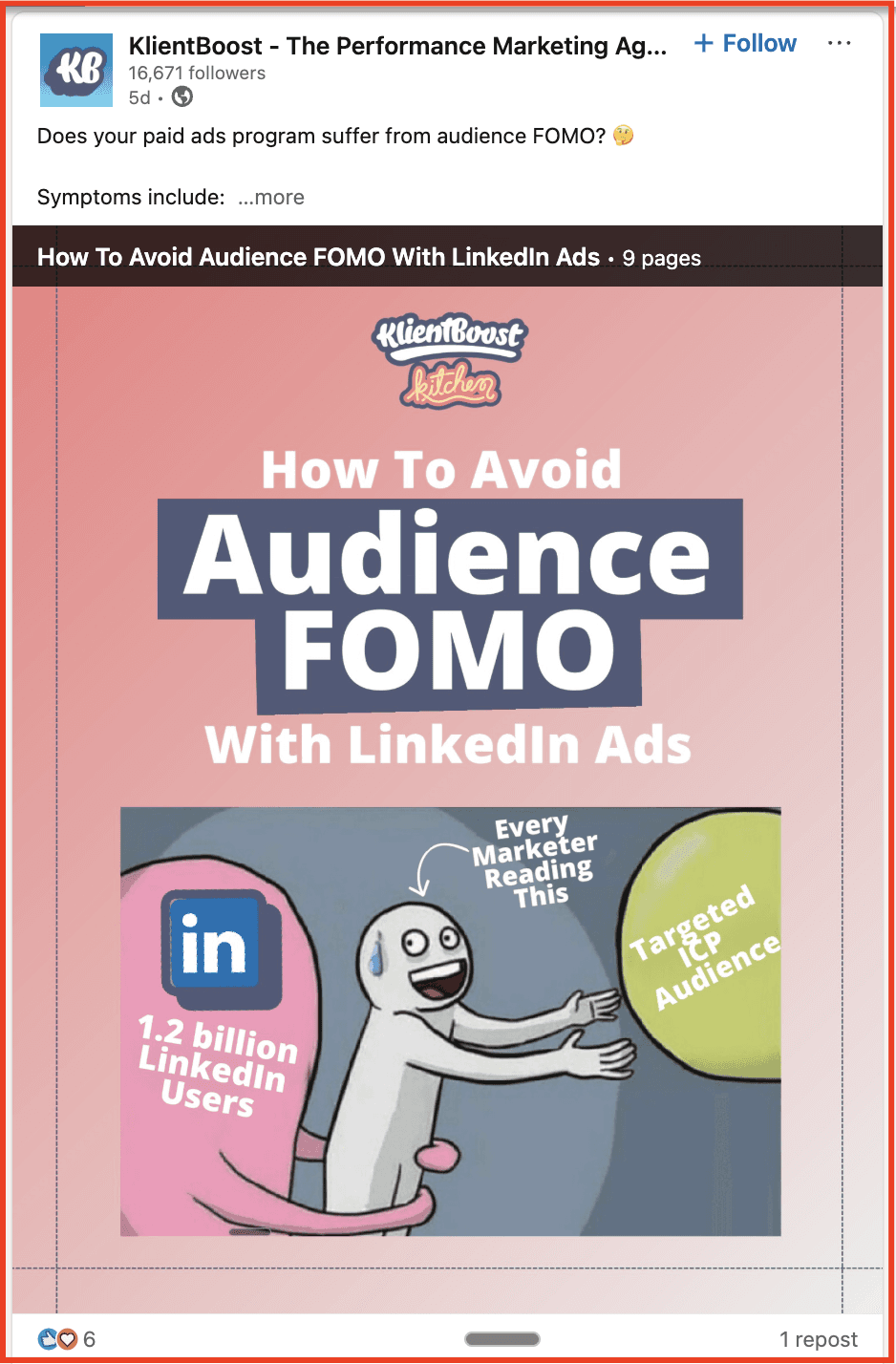
This post shared by Patrick Cumming has over 10 times the engagement of the company page.
Platform Strategy for B2B Employee Advocacy
Effective employee advocacy isn’t about being everywhere; it’s about being present where it matters.
Your target audience’s ability to pay attention is lower than a goldfish, believing that a single email, social media post, call, or message isn’t enough. Moreover, placing your entire advocacy efforts in a ‘algorithm’ algorithm that can change at any time is risky.
Only a multi-channel advocacy campaign can rescue your advocacy efforts in 2026.
Platform choice is not neutral. Each platform shapes how advocacy shows up.
Here are a few stats to help you choose the best employee advocacy platform:
-
Employees are 10 times more likely to share content on their LinkedIn and Twitter accounts than on other platforms.
-
Employees prefer one-click activities to boost algorithms, whereas savvy program managers value comments to drive relationship engagement.
-
LinkedIn Comment and Facebook Photo activities generate the highest reach, followed by LinkedIn Video and LinkedIn Re-share posts.
-
While LinkedIn saw a 3% increase in total activities, Twitter and Facebook saw declines of 8% and 14%, respectively, among B2B marketers.
Lastly, when selecting your employee advocacy platform, ensure the company already has a presence, employees feel confident sharing content, and the platform has built a few relationships or an audience that encourages their posts.
Employee-Led Content Pillars Drive Advocacy
An advocacy program is nothing without content.
There are mainly three types of content that should be part of your advocacy program. Different types of content have different goals and varying levels of effectiveness. This can range from how engaging the content is to how likely employees are to share the content with their networks.
We believe that employee advocacy program content can be divided into three main categories:
Behind-the-scenes
Stories create context. They explain not just the backstory of what just happened, but why it mattered.
On LinkedIn, workplace stories consistently outperform formal announcements because it reflects lived experience.
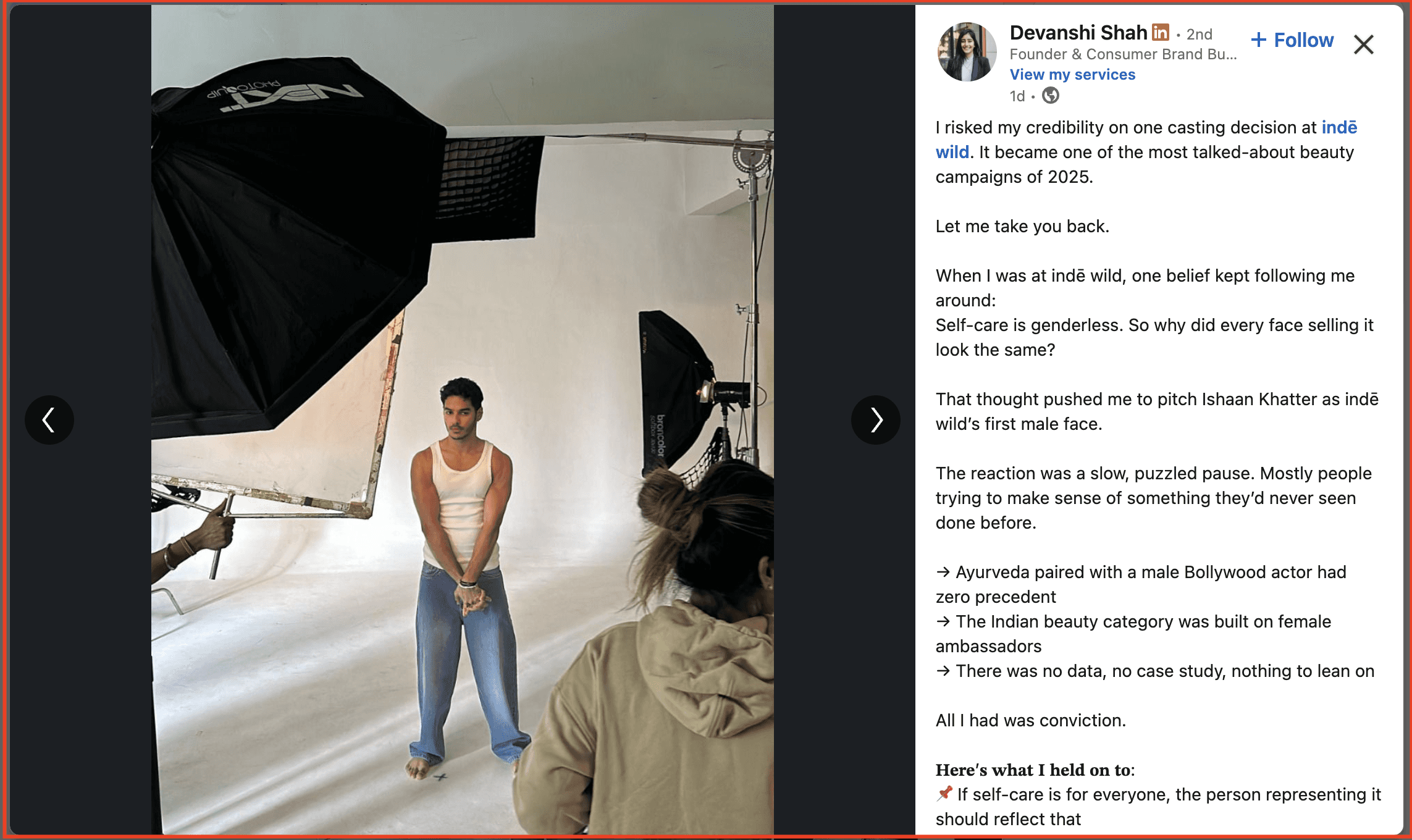
Post by Devanshi Shah from Indie Wild shares a personal narrative on doing a marketing campaign for the brand. The storytelling structure keeps posts grounded and professional while remaining personal.
Role-based POVs
The most effective employee posts on LinkedIn tend to follow a simple pattern:
-
A real situation or challenge
-
What changed or was learned
-
How does it affect the way the person works now
Such POV posts reduce the risk of oversharing by keeping the focus on learning rather than emotion. This includes learning experiences, everyday posts, and honest reflections on work.
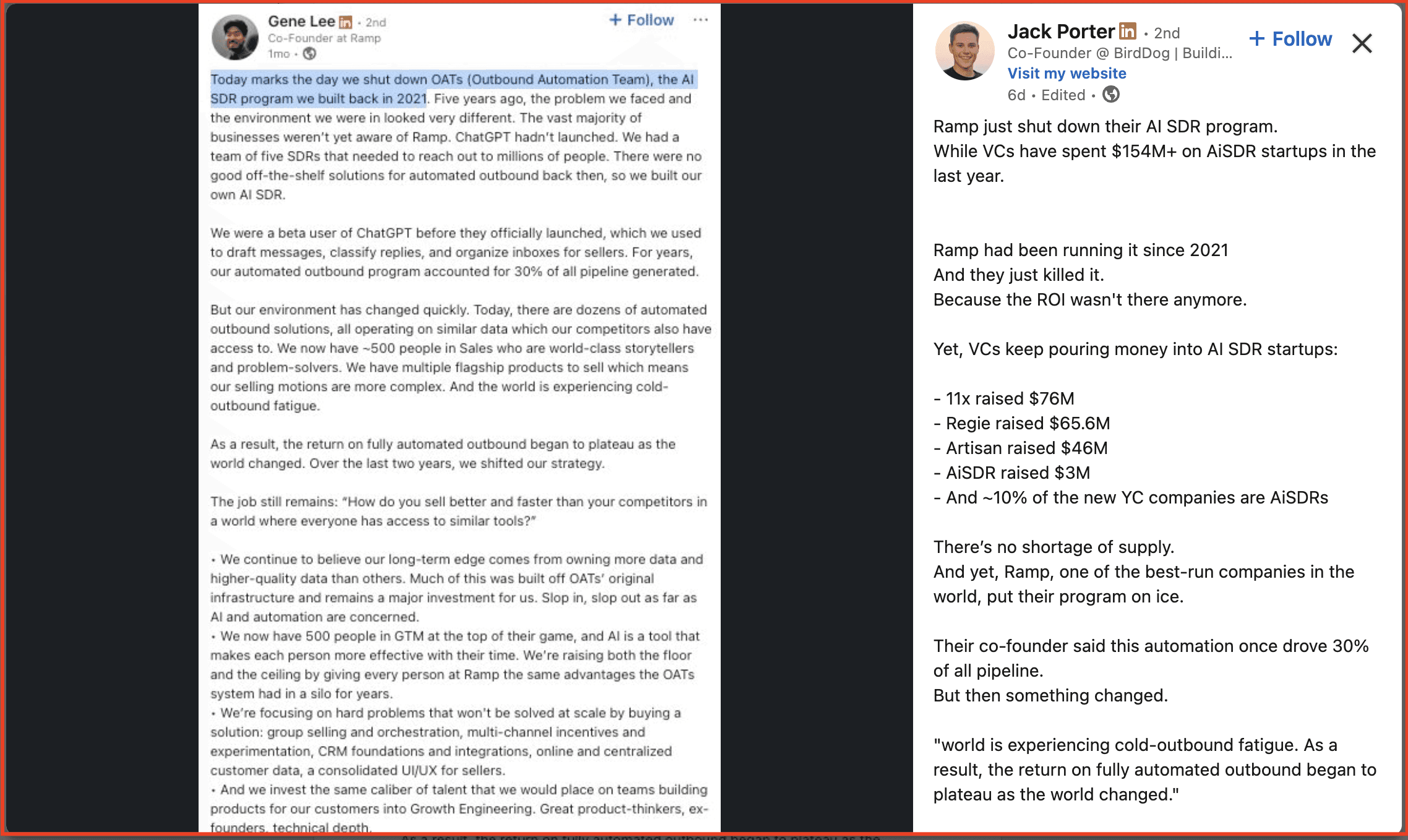
Jack Porter, the CEO of BirdDog, consistently shares industry insights and striking perspectives that his audience finds genuinely helpful.
Tactical Breakdowns From Real Campaigns
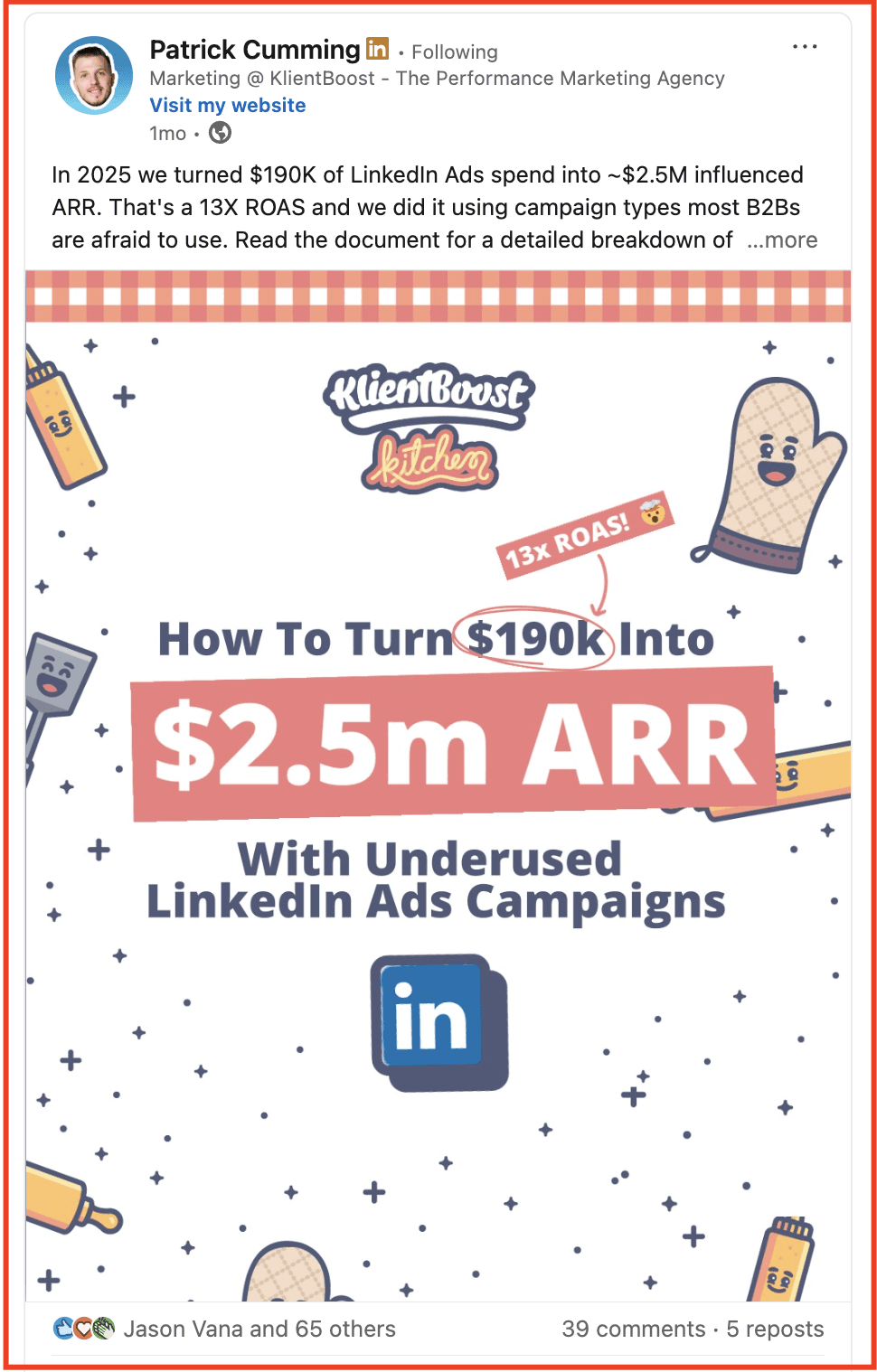
Patrick Cumming, marketing leader, regularly pulls back the curtain on real client work, sharing screenshots, charts, and concise narratives.
This carousel post for LinkedIn Ads Campaign shows prospects that KlientBoost isn’t theorizing from the sidelines; they’re making trade-offs, spending real budgets, and learning in real time.
Consistency Happens Without Scripts or Burnout
Most employee advocacy programs fail for predictable reasons. Not because the employees lack interest, but the environment doesn’t support them.
An employee’s LinkedIn profile belongs to the individual. That should never be in doubt. A more sustainable approach is to offer simple guidance while leaving room for individual voice.
If you want your employee advocacy program to scale:
-
Pre-approved content templates (like a “Content Buffet” to customize)
-
Dashboards for employee impact (to track engagement and celebrate wins)
-
Light-touch approval workflows (optional for low-risk posts)
-
Dedicated employee advocacy platforms and tools (like Supergrow)
Employees don’t want to be policed; they want to be empowered through employee advocacy. The best advocacy programs provide guardrails, not cages.
As an organization, your role is to clarify boundaries, not to script messages. This balance avoids two common pitfalls: a feed that feels disconnected from the organization’s messaging and one that feels overly promotional.
The Signals That Show Advocacy Is Actually Working
The earliest signs of effective advocacy rarely show up in dashboards. They appear in behaviour, conversation quality, and the natural fit of advocacy in everyday work.
More meaningful conversations, not just impressions
When advocacy is working, posts stop attracting passive likes and start triggering authentic dialogue. Prospects ask follow-up questions. Peers share their own experiences. Industry conversations unfold in the comments. This shift from surface-level engagement to thoughtful exchange signals credibility, not visibility alone.
Employees posting without reminders
The strongest indicator of success is when advocacy no longer needs nudges, calendars, or internal prompts. Employees share because they want to, not because they’re told to. They speak up when something resonates, when they’ve learned something, or when they feel proud of the work, without checking whether it “fits the campaign.”
Advocacy is becoming part of daily work, not a campaign task
True advocacy blends into everyday workflows. A win from a client call, a lesson from a failed experiment, or an insight from a team discussion becomes share-worthy by default. Posting isn’t a separate activity; it’s simply how employees reflect, learn publicly, and build professional authority over time.
When advocacy reaches this stage, it stops feeling like a program you manage and starts functioning like a culture you’ve enabled.
From Social Posting to Scalable Advocacy
Employee advocacy has proven an effective strategy to amplify brand reach on social media, close more sales, and drive more revenue with tighter budgets and smaller teams.
Finally, companies across industries can achieve a positive ROI through employee advocacy.
Advocacy succeeds when organizations stop treating employees like distribution channels and start treating them like credible voices. Doing so will unlock your brand’s potential to reach new audiences, connect with potential customers and talent, and take the lead over your competitors.
Scaling your employee advocacy on LinkedIn is straightforward with Supergrow.
Supergrow helps B2B teams manage an employee advocacy program at scale—without chasing employees, scripting posts, or relying on one-off campaigns.
Want to build an employee advocacy program that scales and brings ROI? Sign up on Supergrow now!