
Not every employee advocacy tool delivers what it promises in the demo.
I tested seven of the most-used employee advocacy platforms to understand what actually drives participation once the initial rollout energy fades. And where each one breaks down for real teams.
The pattern I found was consistent.
Most employee advocacy software is built around distribution: give employees content, make sharing easy, track the numbers. That works for reach. It rarely works for sustained adoption.
The seven tools below are evaluated on fit, real usage, and outcomes — so you can choose the one that matches how your team actually works, not how you hope they will.
TL;DR — Best Employee Advocacy Tools for 2026
Employee advocacy software helps B2B teams turn employees into consistent LinkedIn creators — handling content creation, approvals, scheduling, and performance tracking across multiple profiles.
Here is how the seven platforms in this guide compare:
-
Supergrow — Best LinkedIn-first employee advocacy platform for B2B teams focused on content creation and consistent employee voice
-
DSMN8 — Best for structured, campaign-driven advocacy with strong central control
-
EveryoneSocial — Best for large enterprises running advocacy at company-wide scale
-
Octopost — Best for B2B enterprises with complex social and compliance requirements
-
Haiilo — Best for internal communications-led advocacy tied to culture and messaging
-
Sociabble — Best for global organizations combining advocacy with training and engagement
-
PostBeyond — Best for content distribution at scale
Each tool below is evaluated based on how employees actually use it — not just what it promises on the features page.
The 7 Best Employee Advocacy Tools That Teams Actually Use in 2026
We break down the top employee advocacy tools based on how they work within teams, not just on the features they market.
Each platform is evaluated by who it’s best for, how employees use it in practice, and where it fits within modern advocacy programs, so you can choose a tool that drives real participation.
1. Supergrow
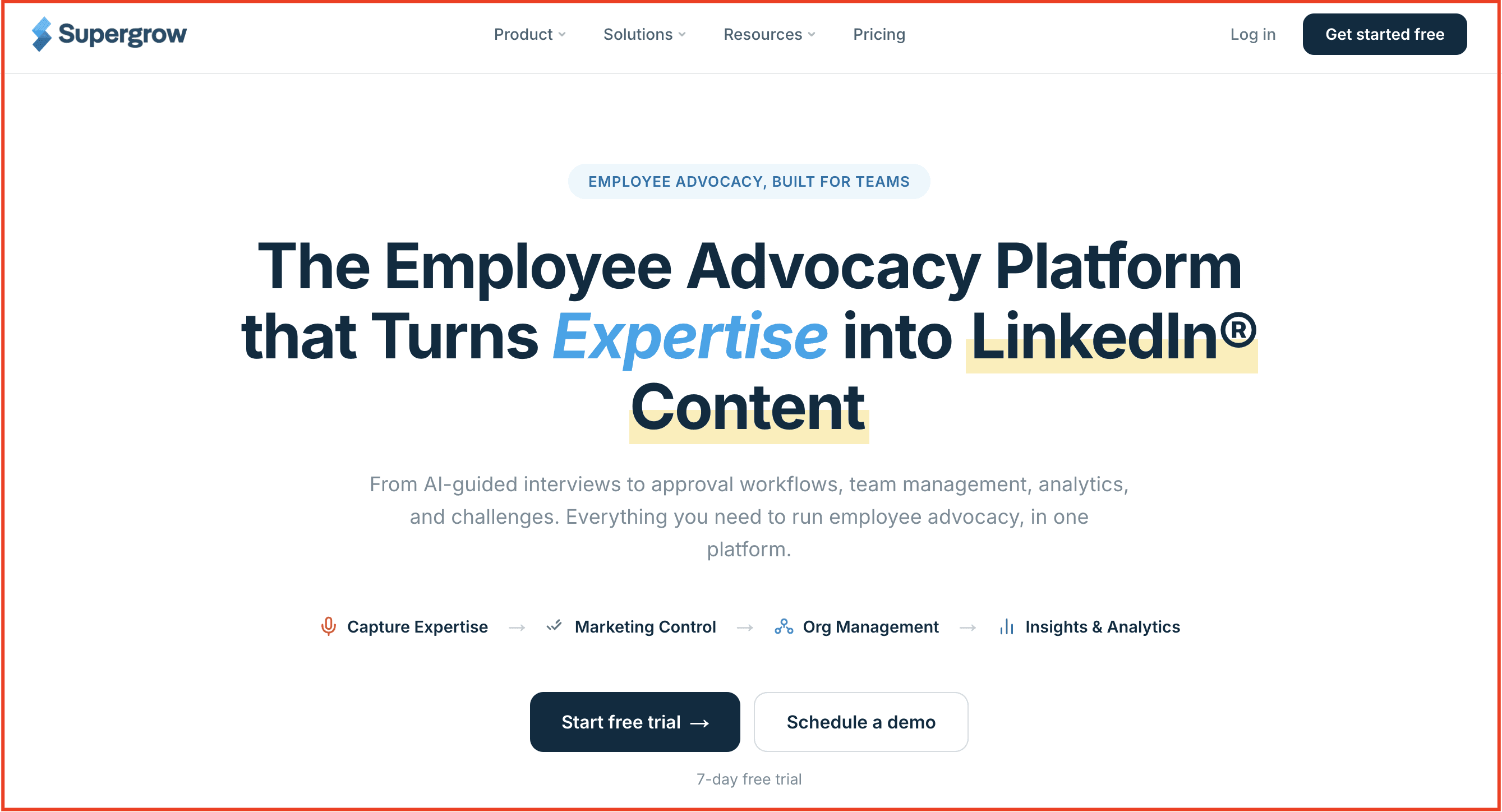
Supergrow is an employee advocacy platform that turns expertise into LinkedIn content for B2B teams. Most advocacy tools solve the distribution problem. Supergrow solves the one before it: getting employees to create something worth sharing.
Programs stall not because of buy-in. It is the blank page. Employees have real expertise, real wins, real perspectives buyers want to hear — but between their day job and a blinking cursor, advocacy slides to the bottom every week. PostCast fixes that. Employees join a 10–15 minute AI interview, talk through what they know, and walk away with 3–5 LinkedIn-ready drafts.
What keeps those drafts from sounding generic is Content DNA — a unique voice profile per team member that captures tone, vocabulary, and topic ownership. Every draft draws from that profile before it reaches the editor. Executives approve on the first read because it sounds like them. Marketing stays in control through the Content Board: a centralized workflow where every draft moves through review, approval, and scheduling without a Slack thread.
The programs that compound are the ones that do not depend on admin reminders. Team Analytics tracks which employees drive the most engagement and reach — per member, in real time. Weekly reports land in Slack every Monday. Leadership gets a shareable live report link, no login required. Challenges and Leaderboards keep teams competing.
When Experts Create, Advocacy Actually Works
-
Solves creation, not just sharing. Every team member — sales, engineering, customer success — gets a structured way to turn expertise into original LinkedIn content without becoming a writer.
-
Brand consistency without losing individual voice. Per-workspace brand context shapes every draft automatically while approval workflows keep messaging on-brand across the team.
-
Track which employees drive results. Team Analytics surfaces impressions, engagement rate, and posting consistency per member — so marketing directors know who is driving reach and who needs support.
-
Built for teams where experts rarely write. Engineers and product leads have the insights buyers trust most. PostCast captures them in 15 minutes. Content DNA makes the output sound like them.
-
Scales without becoming a full-time job. One shared calendar, automated weekly reporting, and challenges that sustain participation — whether activating 4 executives or 40.
Best for: B2B marketing directors activating mixed teams — sales, engineering, product — who need original LinkedIn content at scale, with brand control and real performance data.
Key Features
-
AI-Guided Interviews (PostCast) — 10–15 min sessions generate 3–5 post drafts per employee; adaptive questioning, no prep needed
-
Content DNA — unique voice profile per member covering tone, vocabulary, and topic ownership
-
Content Board with Approval Workflows — Kanban pipeline from draft to published; configurable chains to comms, legal, or direct publish
-
Organization Management — role-based access (Admin, Manager, Member); per-workspace brand context applied to every draft
-
Team Analytics Dashboard — real-time impressions, engagement rate, and posting consistency per member; period-over-period comparison
-
Weekly Report and Instant Reporting — Monday digest to Slack or email; one-click PDF export; shareable live link, no stakeholder login needed
-
Challenges and Leaderboards — posting frequency, engagement, and streak competitions; posting frequency doubles within 30 days
-
Content Library with Personalize and Distribute — push one idea to the full team, adapted to each member's Content DNA
Pros
-
Tracks which employees drive the most engagement and reach — per-member, real time, no manual exports
-
Brand consistency and individual voice coexist — approval workflows enforce guidelines without overriding the person
-
Scales across mixed B2B teams without operational complexity — most teams post on day one
-
Leadership reporting in two clicks — weekly digest and shareable live link, no formatting required
Cons
-
Challenge reward fulfilment is manual — prize delivery is outside the platform
-
LinkedIn-only — not suited for multi-platform
Pricing
-
Teams: $139/month billed monthly | $133/month billed yearly ( 4 LinkedIn workspaces + admin dashboard free)
-
Enterprise: Custom pricing for 10+ executives — dedicated onboarding, SLA, and custom reporting
Start your 7-day free trial — and build the employee advocacy program your team will actually sustain.
Activating 10+ executives? Get a guided demo and see how Supergrow runs at scale.
2. DSMN8
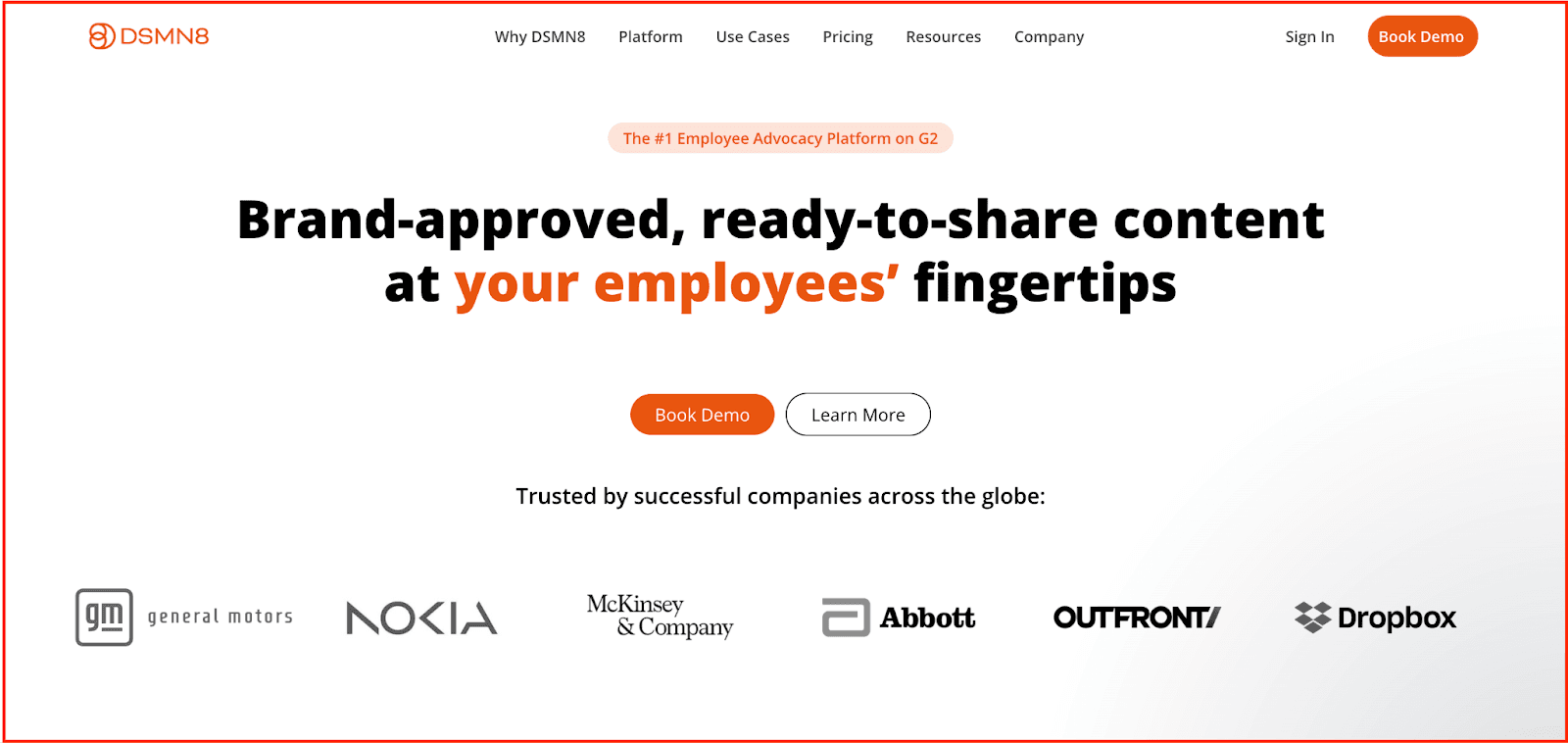
DSMN8 is an employee advocacy platform built for organizations that want to run advocacy as a structured, centrally managed program. It’s designed for internal communications and employer branding teams that need consistency, control, and clear governance over what gets shared and when.
The platform is rooted in a campaign‑first model. Content is curated by central teams and distributed to employees through defined advocacy campaigns, making it easier to align messaging with brand, compliance, and corporate objectives. This approach works especially well in regulated industries or large organizations where message control matters more than individual expression.
DSMN8 prioritizes scale and predictability over flexibility. Advocacy participation is guided and often incentivized, which helps drive adoption in formal programs but leaves less room for employees to create or adapt content in their own voice.
Best for: Teams running structured, campaign‑led employee advocacy programs with strong internal communications oversight.
Key Features:
-
Centralized content hub for approved advocacy posts
-
Campaign‑based content distribution and scheduling
-
Employee participation and engagement tracking
-
Brand governance and compliance controls
Pros:
-
Strong focus on brand safety and message consistency
-
Well-suited for large teams and regulated environments
-
Clear campaign structure simplifies advocacy rollouts
Cons:
-
Limited autonomy for employees to create or personalize content
-
Participation often depends on incentives or internal push
Pricing: DSMN8 offers custom pricing based on organization size and needs, with paid plans typically starting at around $850 per month.
3. EveryoneSocial
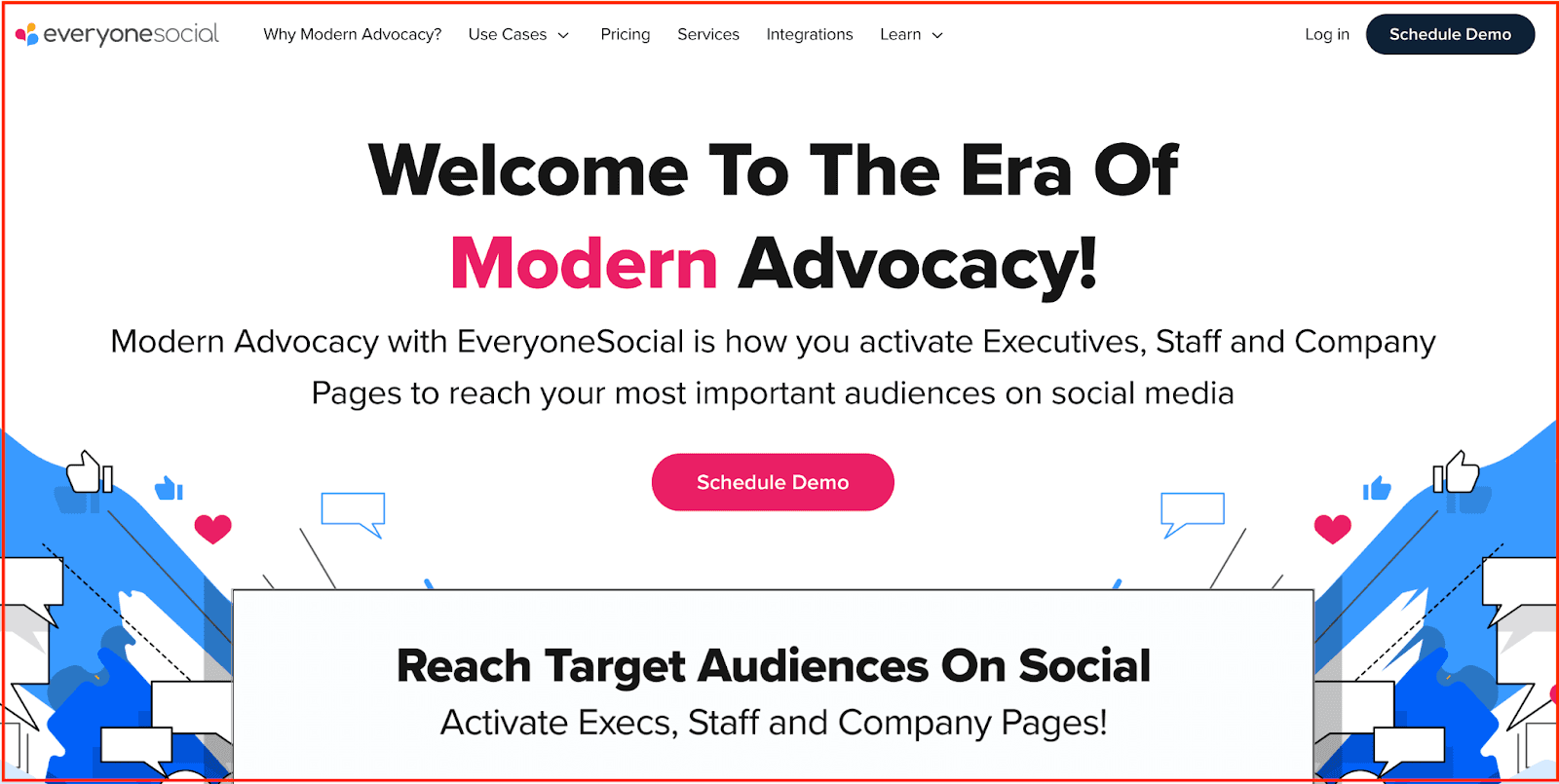
EveryoneSocial is built for enterprises that want to activate advocacy at scale with structure, visibility, and control. Designed to support entire organizations, it empowers both marketing and employee communications teams to drive consistent social sharing across thousands of employees.
At its core, EveryoneSocial functions as a central content hub where admins can curate posts, track performance, and manage permissions. Employees access ready-to-share content and can contribute their own, all within defined parameters. The platform is geared toward enablement, compliance, and adoption at scale, not lightweight creator workflows.
This tool excels in governance and analytics, offering in-depth reporting, integrations with major enterprise platforms, and the administrative controls large organizations need. But with that depth comes a learning curve and typically, a heavier lift during onboarding.
Best for: Enterprises running organization-wide advocacy programs that require robust governance and integrations.
Key Features:
-
Admin-curated content feeds for different departments or groups
-
Permissions and roles tailored to enterprise org structures
-
CRM, SSO, and HRIS integrations
-
Content scheduling and approval workflows
Pros:
-
Built for enterprise needs security, scale, and oversight
-
Rich analytics for both engagement and attribution
-
Supports both top-down and user-submitted content
Cons:
-
Complex setup and onboarding process
-
Participation may skew toward active teams vs company-wide
Pricing: EveryoneSocial starts at $24 per user/month with custom pricing available for large teams.
4. Octopost
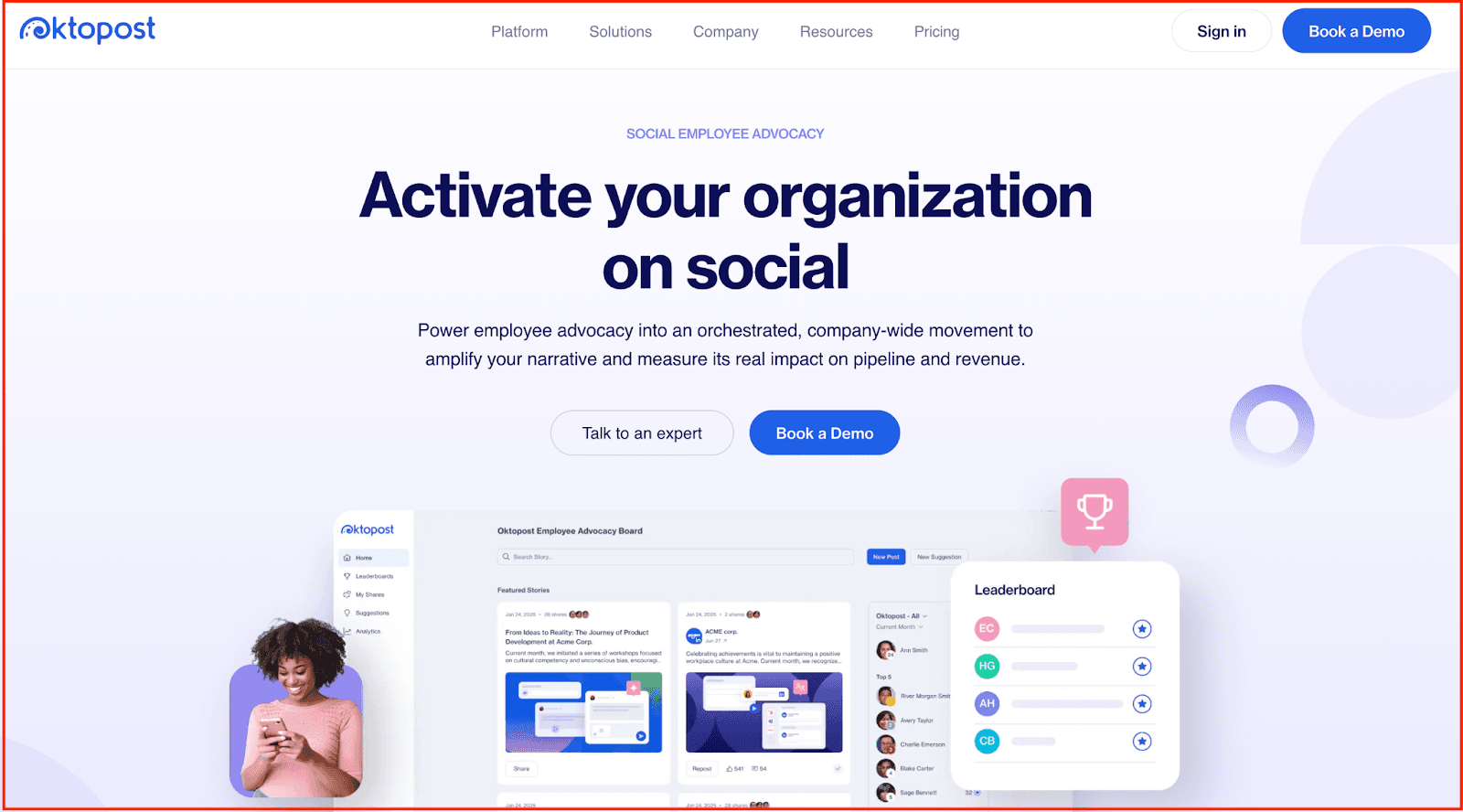
Octopost is a powerful employee advocacy platform designed for B2B organisations managing large-scale, multi-brand social media operations. Unlike tools focused solely on content sharing, Octopost integrates advocacy directly into broader social marketing workflows with enterprise-ready controls over publishing, permissions, and performance attribution.
Built with marketers and comms leaders in mind, Octopost offers deep integrations, compliance-ready governance, and robust analytics, making it a solid fit for organisations that need to align advocacy with broader social strategy rather than run standalone programs.
Best for: Multi-brand, multi-region B2B organisations with advanced social media operations
Key Features
-
Centralised content library with role-based access and approval workflows
-
Employee advocacy portal to streamline team participation
-
Compliance and security features for regulated industries
-
Social inbox and listening for brand monitoring
Pros
-
Tightly integrates with CRM and marketing automation tools
-
Offers advocacy analytics and attribution to pipeline impact
-
Strong user permissions and approval workflows
Cons
-
Not optimised for bottom-up, employee-led content creation
-
Interface can feel complex for smaller teams or first-time users
Pricing: Custom pricing only. You’ll need to contact the Octopost sales team for a tailored quote.
5. Haiilo
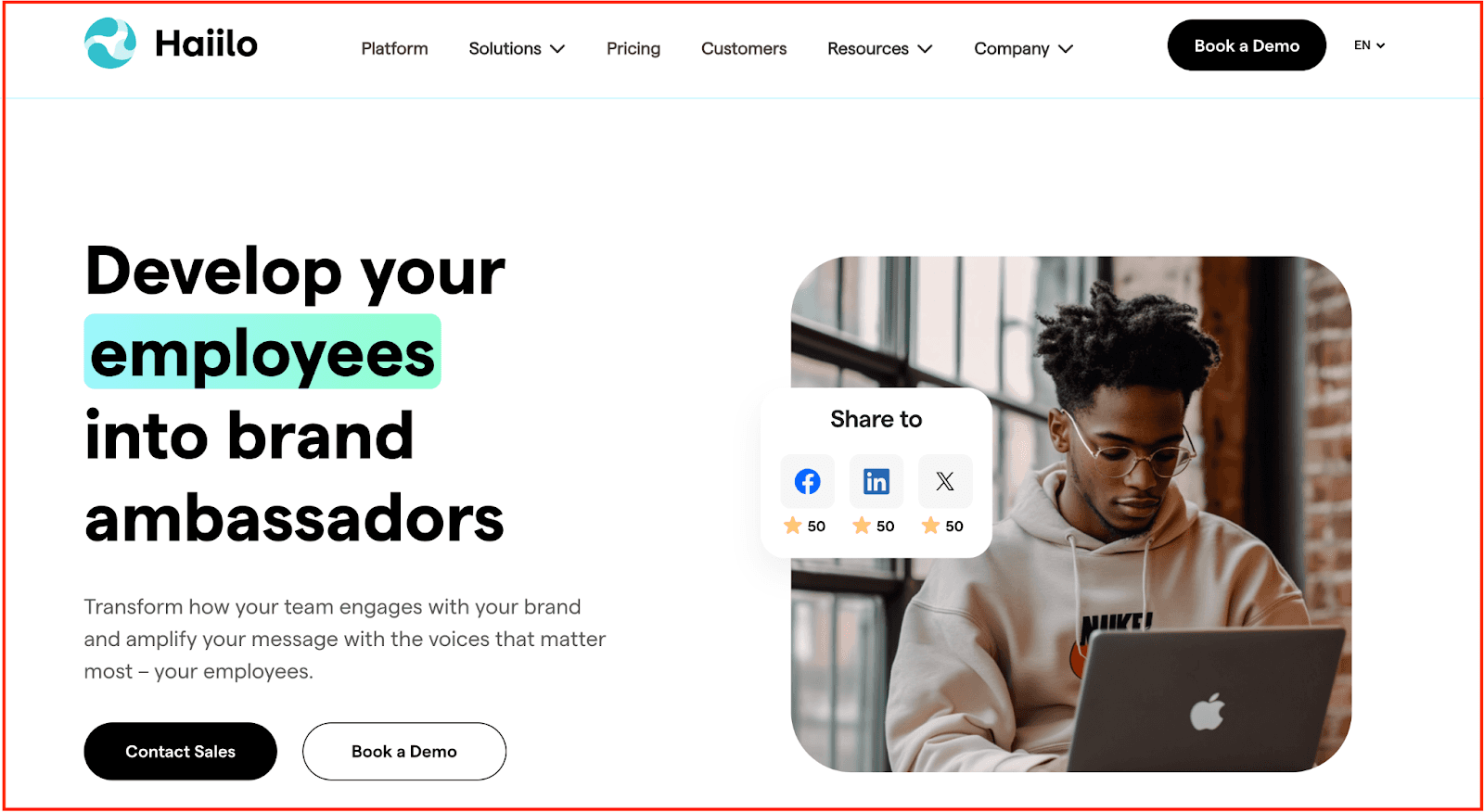
Haiilo positions itself as an all-in-one communications and engagement platform that combines intranet, top-down messaging, and employee advocacy into a unified experience. Its employee advocacy solution is designed more as an extension of internal communications, helping companies amplify curated content through employees while reinforcing company culture.
Rather than treating advocacy as a standalone initiative, Haiilo helps companies embed it into broader engagement and communications strategies. It’s especially useful for organisations where leadership-driven messaging is core to the employer brand or change management efforts.
Best for: Companies where advocacy is driven by internal comms and cultural initiatives
Key Features
-
Unified internal communications and advocacy dashboard
-
Admin-curated content feeds that employees can easily share
-
Engagement analytics to monitor employee activity
-
Survey and feedback tools for two-way internal comms
Pros
-
Seamless integration of internal messaging and advocacy
-
Helps create alignment across teams around key initiatives
-
Easy sharing experience encourages passive participation
Cons
-
Limited flexibility for employees to create their own content
-
Less suited for LinkedIn-first or creator-led strategies
Pricing: Starts at approximately $29 per user per month for the Employee Communications module. Pricing for additional features, such as advocacy or engagement analytics, may vary based on configuration.
6. Sociabble
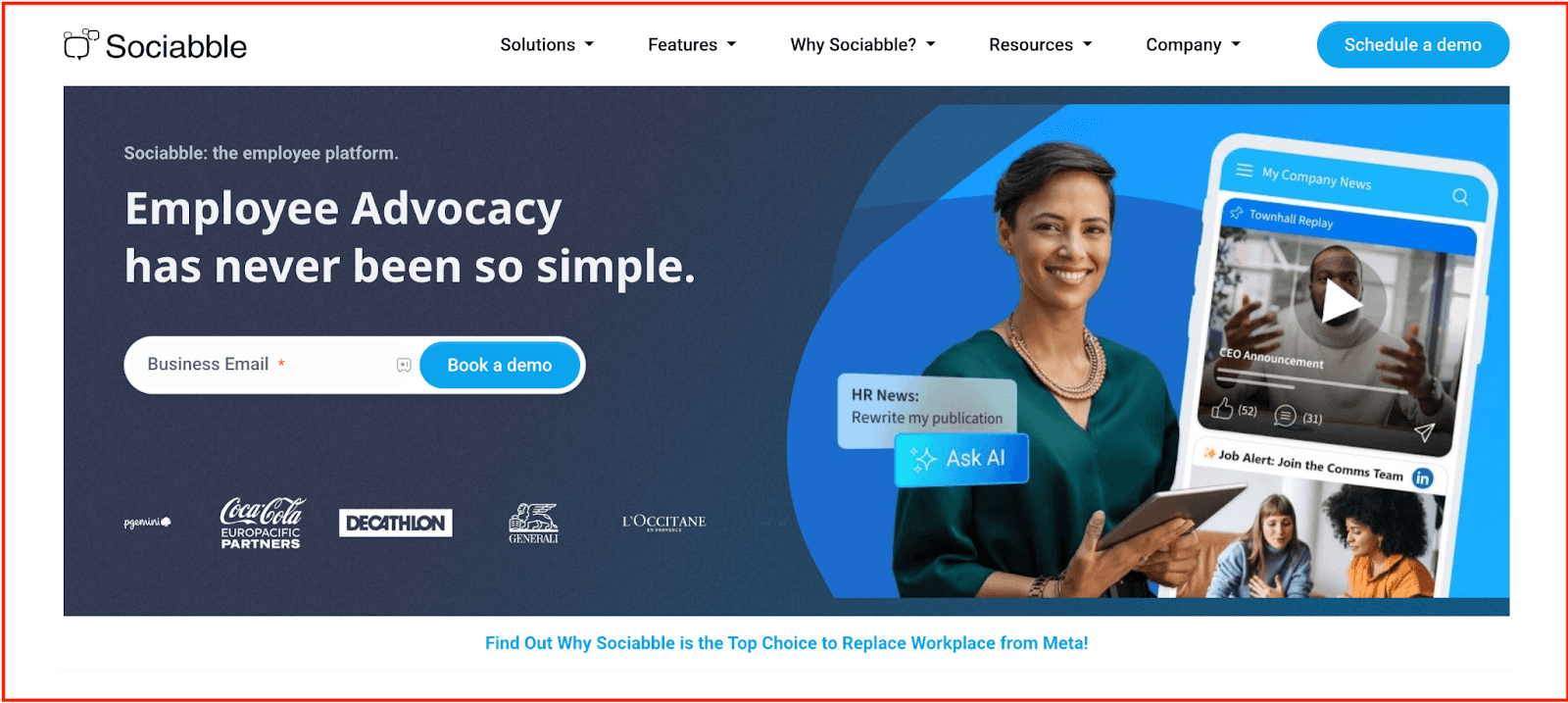
Sociabble is an employee advocacy and internal communication platform that helps organisations unify communication, engagement, and advocacy in a single global system. It’s built to help large, distributed teams stay informed, access curated content, and share relevant posts across social channels, all while maintaining brand consistency and measuring impact.
The platform brings together company news, industry content, and admin‑curated posts in one dashboard, making it easier for employees to discover, share, and engage with content that builds visibility and trust. Sociabble also supports gamification and rewards, which help motivate participation and sustain engagement over time.
For organisations that view advocacy as part of a broader employee engagement and communications strategy, Sociabble offers tools that bridge internal messaging with external amplification, helping drive reach, thought leadership, and social selling efforts at scale.
Best for: Global enterprises that want to combine employee advocacy with communications and engagement programs across multiple regions and business units.
Key Features:
-
Unified content library for company and user‑generated posts
-
One‑click sharing and scheduling to LinkedIn, Twitter, and Facebook
-
Engagement analytics and advocacy performance reporting
-
AI‑assisted content recommendations and moderation support
Pros:
-
Combines internal comms, engagement, and advocacy in a single platform
-
Intuitive interface that simplifies sharing and participation
-
Integrated analytics show reach, clicks, and lead generation value
Cons:
-
Broader feature set can feel complex for smaller teams
-
Some users note a learning curve before teams use all capabilities to full effect
Pricing: Starts at $4 per employee per month. Custom pricing is available for large enterprise deployments.
7. PostBeyond
PostBeyond is an employee advocacy platform built to help organizations scale content distribution through their workforce. Now part of Influitive, it focuses on making it easy for employees to discover, share, and amplify company-approved content across social channels, especially LinkedIn.
The platform is designed with marketing and communications teams in mind, offering a structured way to manage advocacy programs, track performance, and extend content reach. It works well for organizations that want to turn employees into a consistent distribution channel, with minimal effort required from participants.
Best for: Organizations looking to scale employee advocacy through structured content distribution
Key Features
-
Centralized content hub for curated and approved posts
-
One-click sharing across LinkedIn and other social platforms
-
Campaign tracking with engagement and reach analytics
-
Employee engagement tools like leaderboards and gamification
-
Integration with CRM and marketing automation platforms
Pros
-
Easy for employees to adopt with a simple sharing workflow
-
Strong analytics to measure reach and engagement
-
Scales well for large teams and distributed organizations
-
Supports structured, campaign-driven advocacy programs
Cons
-
Limited support for employee-generated content
-
Advocacy remains largely top-down and distribution-focused
-
Engagement may depend on incentives to sustain activity
Pricing: Custom pricing only. You’ll need to contact the PostBeyond team for a tailored quote.
Advocacy Works When Employees Actually Show Up
Every platform in this list solves the distribution problem. They make it easy to share content that marketing has already created. What most do not solve is why employees stop posting — no clear voice, no easy way to create, nothing that feels authentically theirs.
B2B buyers discover companies through people, not pages. That visibility is built through individual employee voices on LinkedIn, not one-click reshares of pre-approved posts.
Supergrow is the only employee advocacy software here built around creation first. Employees show up consistently because the system makes it easy to say something worth saying, in their own voice.
Build a LinkedIn-first employee advocacy program with Supergrow. Start your free trial