
Ignore what you might’ve heard about the LinkedIn algorithm working against you. Ignore the lazy advice of posting regularly means being recognised.
LinkedIn no longer relies on simple signals like hashtags, clicks, or posting frequency. It uses a large language model that determines who you are, what you know, and who should see you.
In 2026, influence on LinkedIn is built very differently. Instead of asking, “Did this post get engagement?”, LinkedIn now evaluates:
-
What is this person actually about?
-
Does their content match who they claim to be?
-
Are they credible on this topic?
LinkedIn influencers you notice today aren’t necessarily posting more than you. They’re saying fewer things, more clearly, in more places—and long enough for the LinkedIn algorithm to connect the dots.
This guide shows you exactly how to become a LinkedIn influence in 2026, one that turns attention into real influence.
Why Most People Never Become Influential on LinkedIn
If you ask all the creators who have grown on LinkedIn, they will all share one thing: they prefer longevity over popularity.
When someone starts creating on LinkedIn, their first question is often something like:
-
“What hook should I use?”
-
“What content type works best?”
-
And finally, “how can we get a viral post?”
But, most of the time, they haven’t answered the basics yet.
-
Who are we talking to?
-
What do they care about?
-
Why are we uniquely positioned to help?
Plus, here’s the truth about viral content: Random eyeballs on irrelevant content bring no positive impact on how people see you.
Influence compounds when these three work together:
Identify your offer-market fit
Being visible to everyone is useless. Being visible to the right people—repeatedly—is everything.
Too many LinkedIn creators jump into content without talking to actual customers. Or they rely on “intuition” rather than real market research.
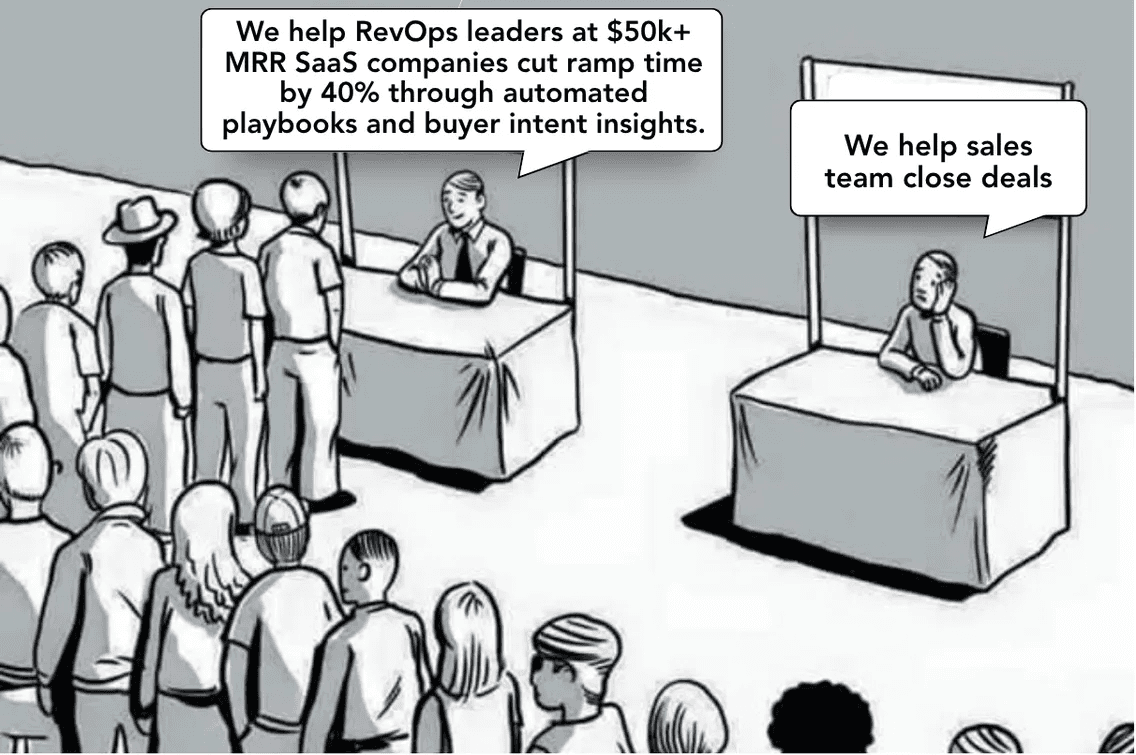
Let’s say you are a sales enablement expert for mid-market SaaS companies.
Your offer–market fit isn’t “I help sales teams close more deals.” Countless people and brands are claiming the exact same thing.
Your real offer–market fit is “I help RevOps leaders at SaaS companies doing $50k+ in MRR reduce ramp time by 40% using automated playbooks and buyer-intent insights.”
A positioning strategy with clear messaging
Positioning answers a simple question:
“Why should someone choose you over all other options?”
This is where most LinkedIn creators get stuck. They either copy what others are saying or stay generic to avoid alienating anyone.
But that makes them forgettable.
Here’s what you need to define to nail your positioning:
-
Your brand’s identity and enemy (who or what you stand against)
-
Your positioning statement
-
Your market differentiation
-
Your unique selling proposition (USP)
-
Your messaging
That fresh angle becomes the backbone of your content.
Track how people react
Social proof on LinkedIn isn’t about likes, followers, or impressions. Those are vanity metrics.
Most LinkedIn influencers show these signals that translate into how their ideas are influencing others to think and act.
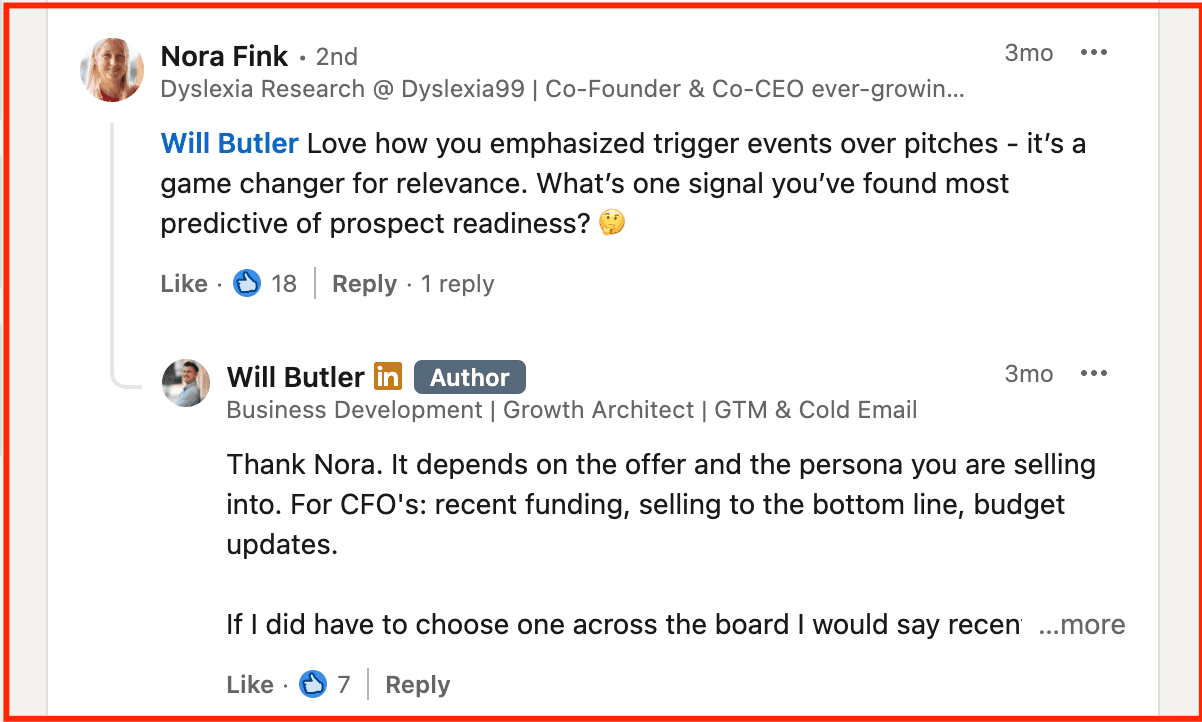
- Comments that continue the idea: Not “great post,” but thoughtful responses that add examples, challenge your point, or explain how someone applied it. This shows your content is shaping perspective, not just earning agreement.
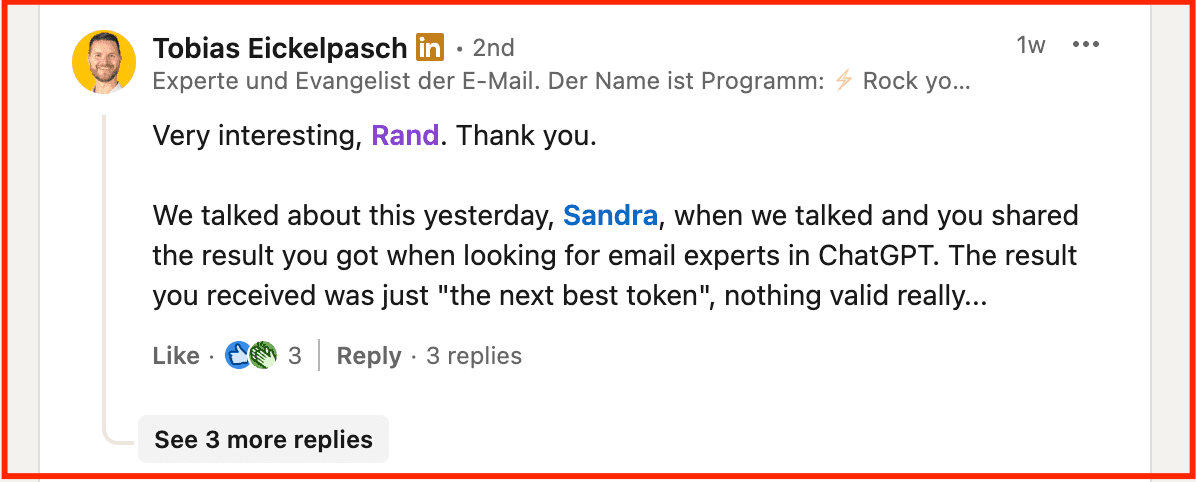
- People tagging others under your posts: When readers bring others into the conversation, your post becomes a reference point. It signals relevance and authority within a specific audience.
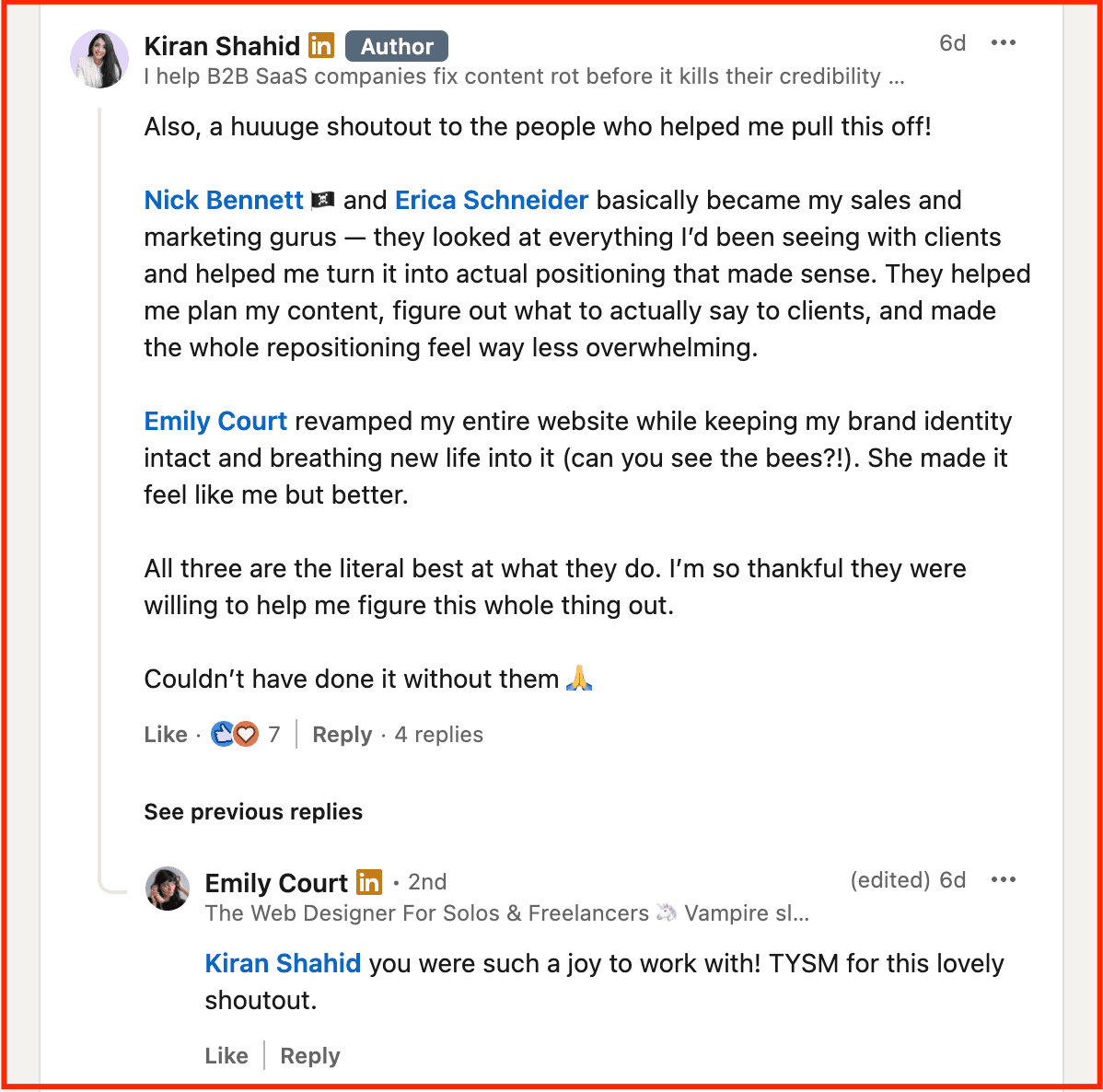
- Your name being mentioned when the topic comes up: When others reference your perspective elsewhere, inside comments or in their own posts, you start getting associated with the idea itself, not just the content.
For new readers, these signals act as trust shortcuts. They answer the unspoken question: “Is this person worth paying attention to?”
When social proof shows up consistently, it communicates one thing clearly: you’re not just talking—people are listening and responding.
Step-by-Step Growth System to Become a LinkedIn Influencer
Most creators struggle not because they lack ideas, but because they lack a system. They rely on isolated tactics, hooks, hashtags, and posting times, without a structured approach that compounds.
This step-by-step growth system is designed to change that. Instead of focusing on shortcuts, it breaks down how influence is built deliberately: let’s check out this step-by-step guide.
Step 1 — Define a Perspective People Can Recognize
Information is not the only currency to grow on LinkedIn. In fact, the most viral posts include two things: information and perception.
A niche defines the subject of your content. A perspective defines your point of view on that subject.
Many LinkedIn creators operate in the same niche, but only those with a clear perspective feel distinct. Without it, your content blends into the feed, no matter how good it is.
For instance, here’s a viral post from Britney Muller:
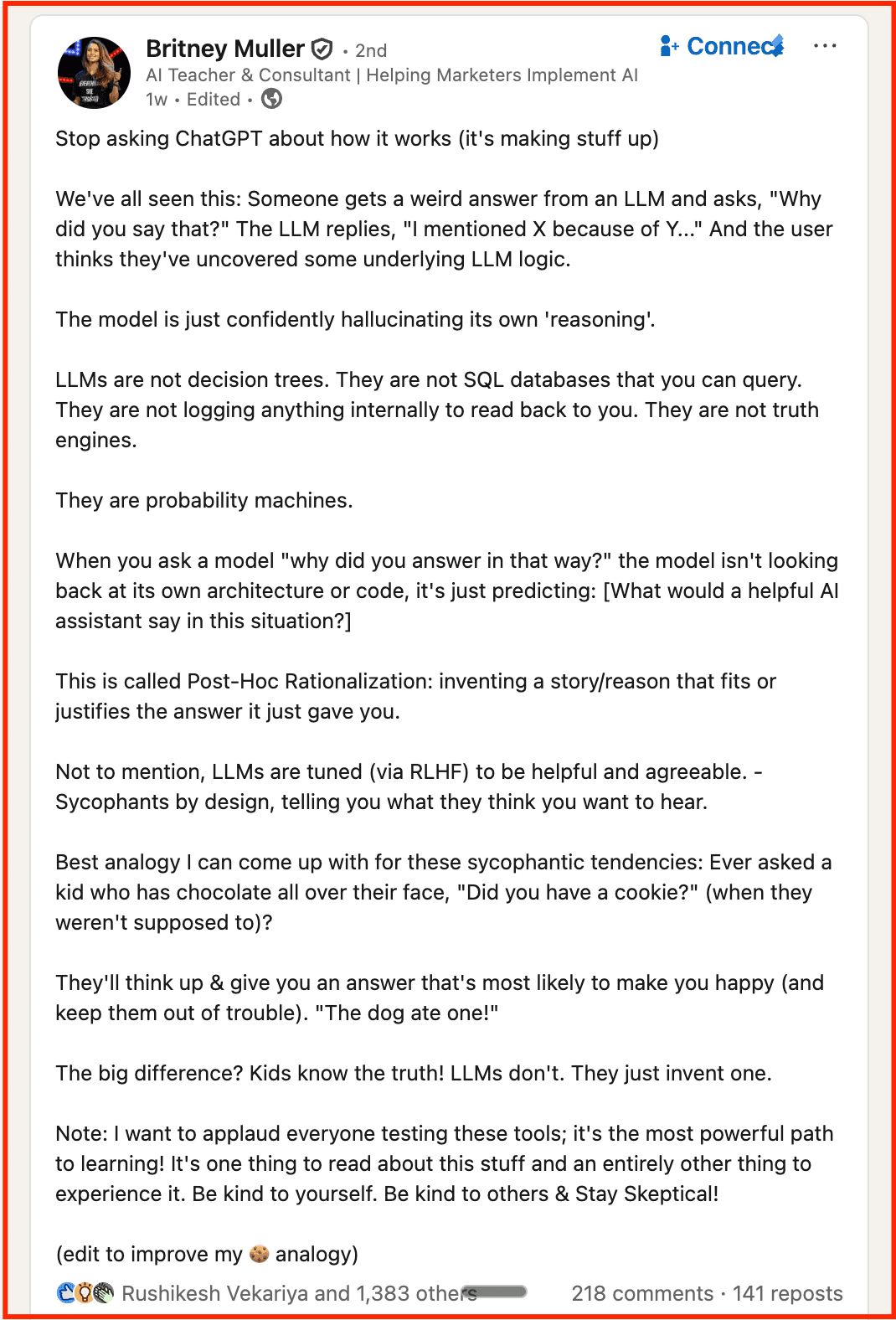
The hook doesn’t look like any modern LinkedIn growth influencer’s: No number game, no out-of-the-world storyline, no manufactured virality.
“Stop asking ChatGPT about how it works (it's making stuff up).”
So why did it go insanely viral? A unique perspective
-
The logic behind LLM answers
-
Why can’t you trust it completely
-
Challenges your perception of whether LLM answers are worth it
It’s not a high-level story. It’s the concrete details that make people remember you.
Step 2 — Build Recognition Before You Publish
When you post content on LinkedIn, your reach depends on your network size and engagement rate. But most people don’t realise that when you comment on someone else’s post, you instantly tap into their entire audience.
Whenever you comment on other people's posts, you're "inviting" others to visit your profile. It's the best way to create influence without having to build a large audience. Every small LinkedIn creator starts by engaging with other content to help people recognise their point of view.
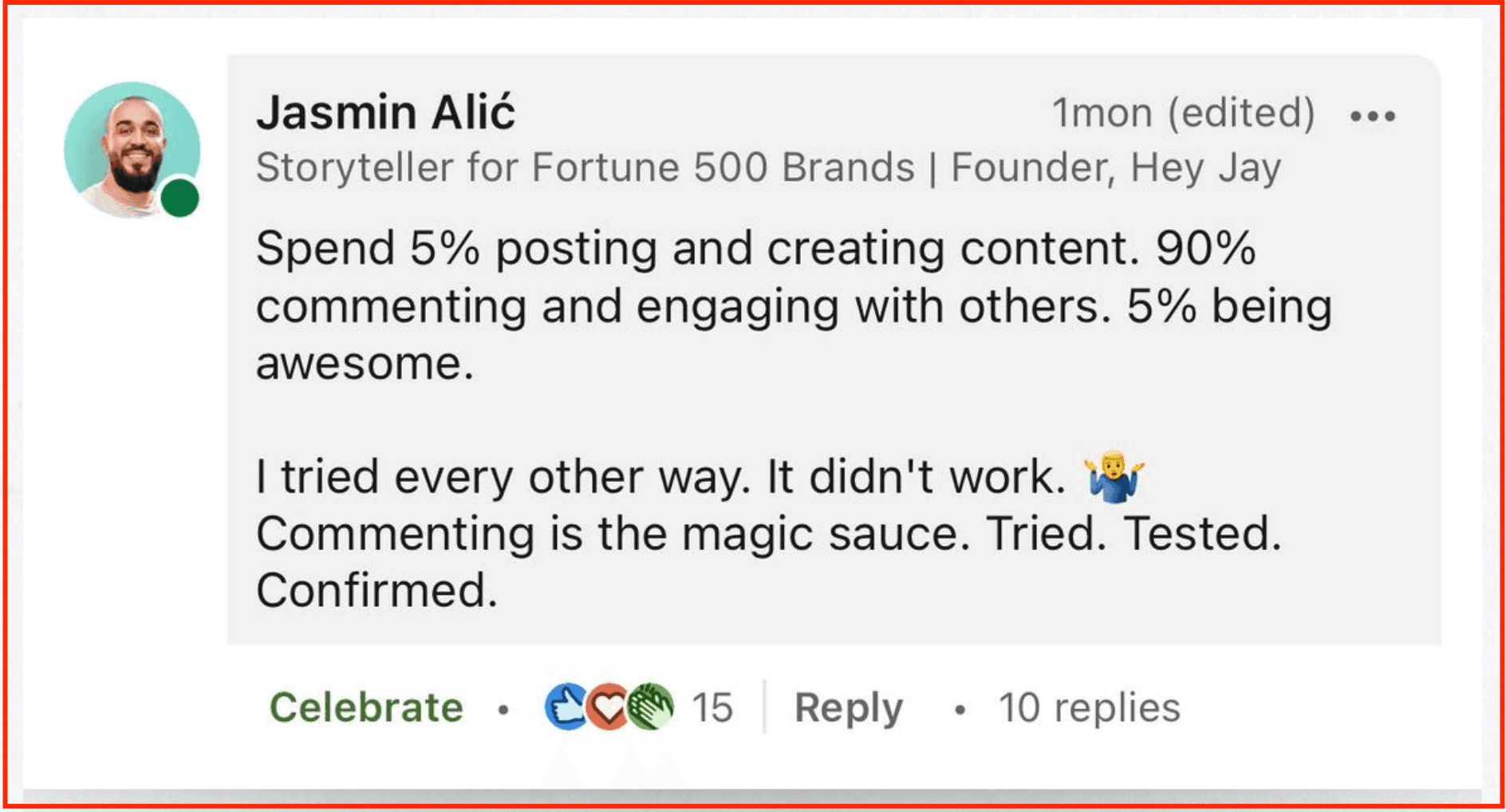
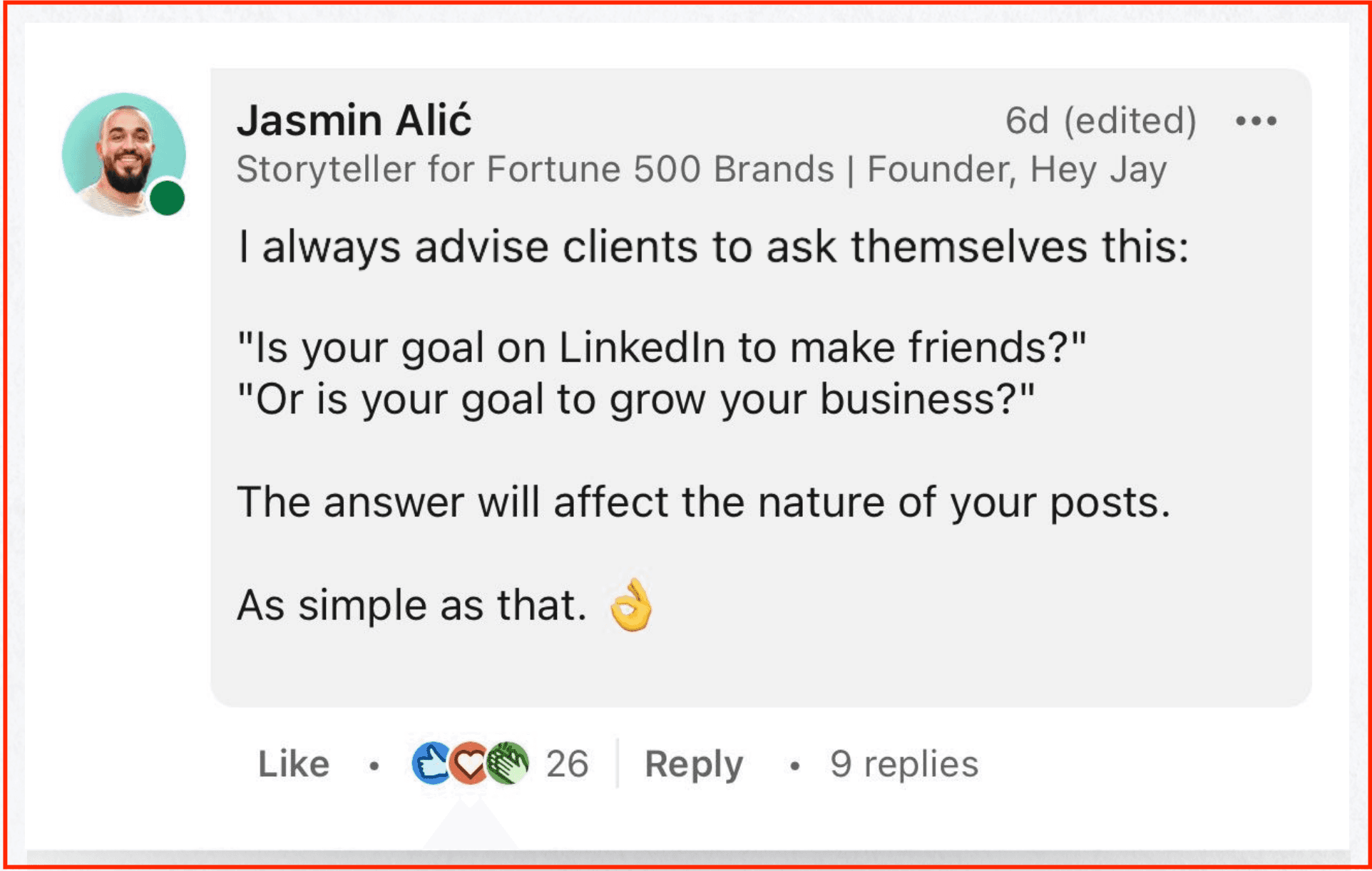
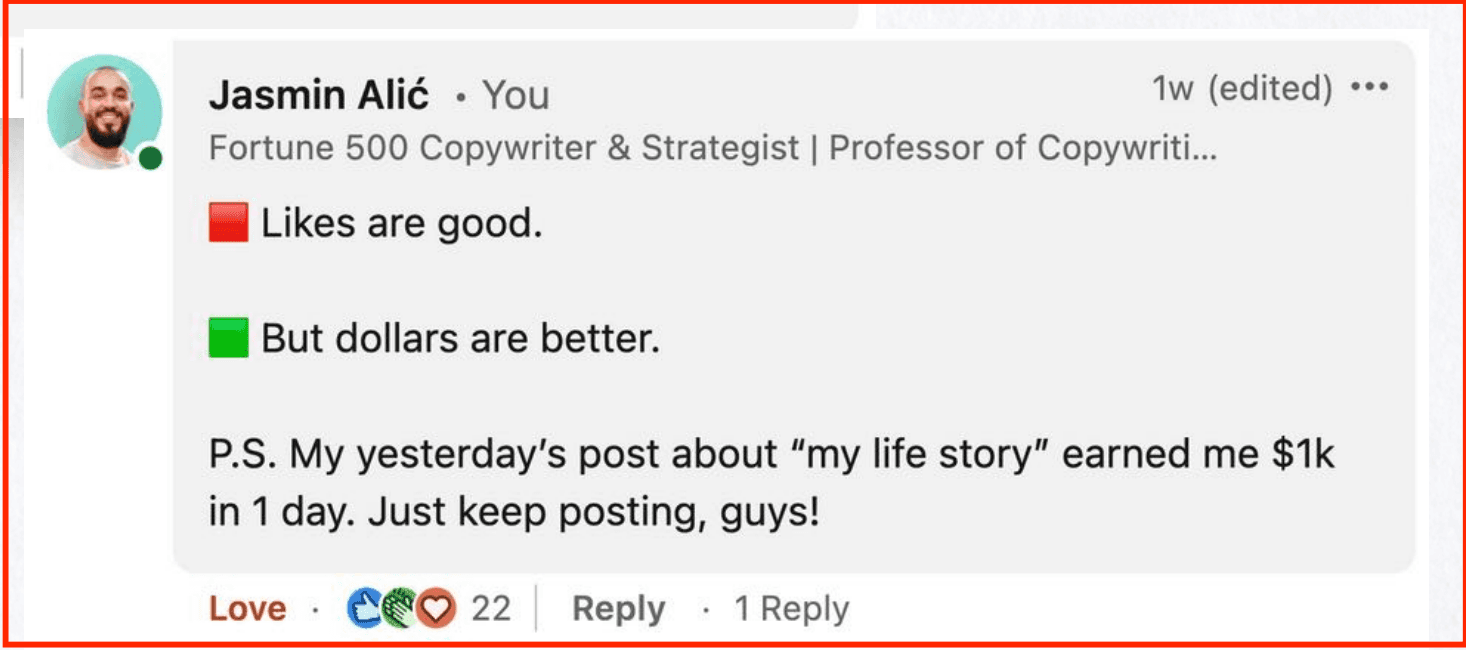
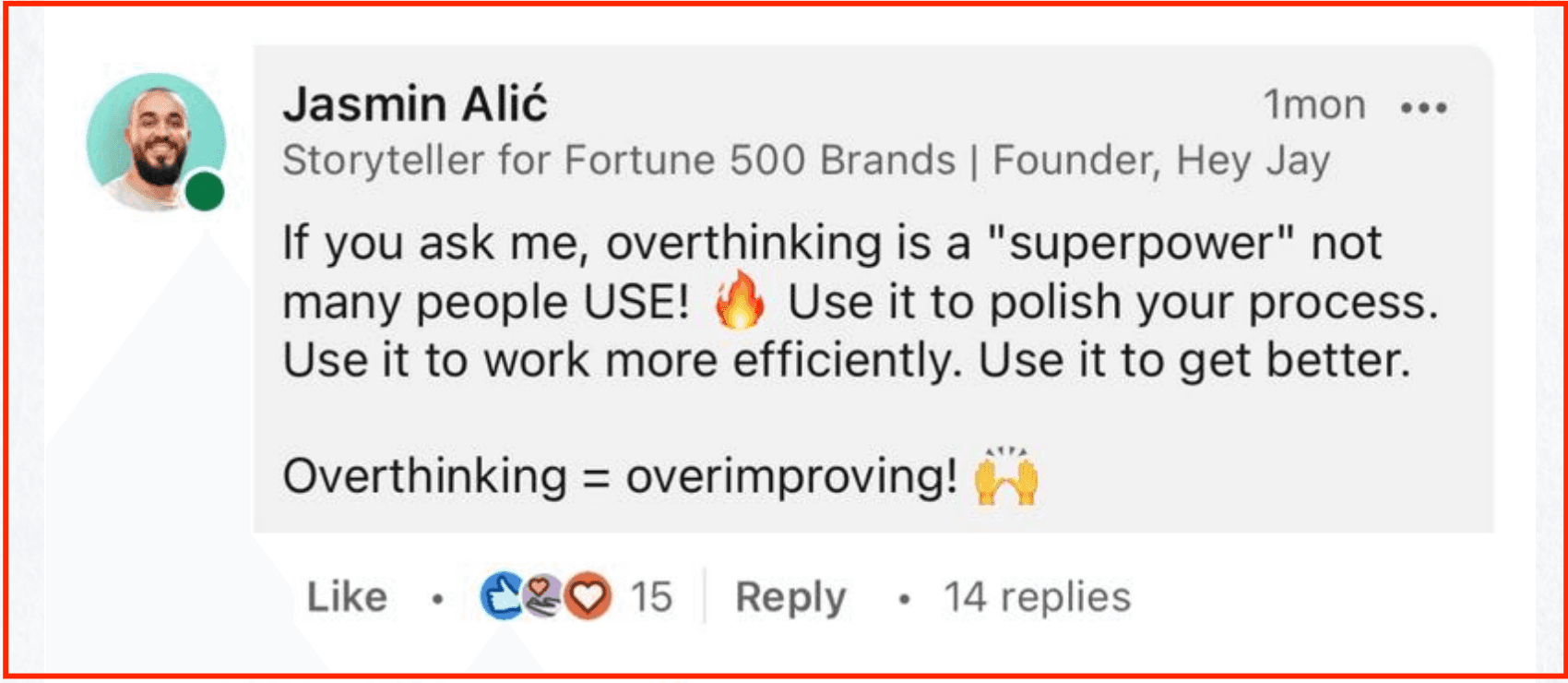
Jasmin Alić, a LinkedIn comment strategy expert, shares a simple but effective type of comments that bring him 100 to 1,000 new followers every day (even when he’s not posting):
- Personal advice: Share something you only learned after doing the work. Talk about the mistake you made, the assumption you had, or the shortcut you wish you’d taken earlier.
- Professional advice: Share something you typically share only with paying clients. You’re not giving away the entire system, but you are sharing how experts think.
Professional advice builds authority fast because it shows you don’t just know what to do—you know why it works.
- Comparisons: help people see progress instead of imagining it. They also reduce cognitive load; readers instantly understand what changes and what improves.
- Motivational: Motivational content works best when it reframes effort, patience, or consistency. A short quote, a sharp reminder, or a hard truth can reset how someone approaches their work.
Create a list of your ICPs who post consistently, and turn on notifications. Try to comment early, since that gets the maximum views.
Top LinkedIn commenters see high engagement and impressions when they comment strategically.
The bonus? Each strategic comment connects you to a new audience that you couldn't reach through posting alone.
The key is keeping this intentional. Create a list of 20–30 ICPs who post consistently, turn on post notifications for each of them, and comment early. Supergrow's post scheduling feature lets you batch your content and first comments in advance, so your publishing stays consistent while you focus your live time on engagement.
Step 3 — Publish Less, But Make Every Post Memorable
Influence on LinkedIn has very little to do with how often you post—and almost nothing to do with likes, followers, or impressions. That’s why some people on LinkedIn “own” the space so clearly while others treat LinkedIn like a broadcast channel. If you want to be seen on LinkedIn, your posts need to come from a place of earned insight. That means starting with your own experiences, lessons learned, and unique perspective.
Here are a few proven ways to turn your expertise into posts people care about:
Story + Lesson
Tell a quick story from your career, and turn it into a takeaway.
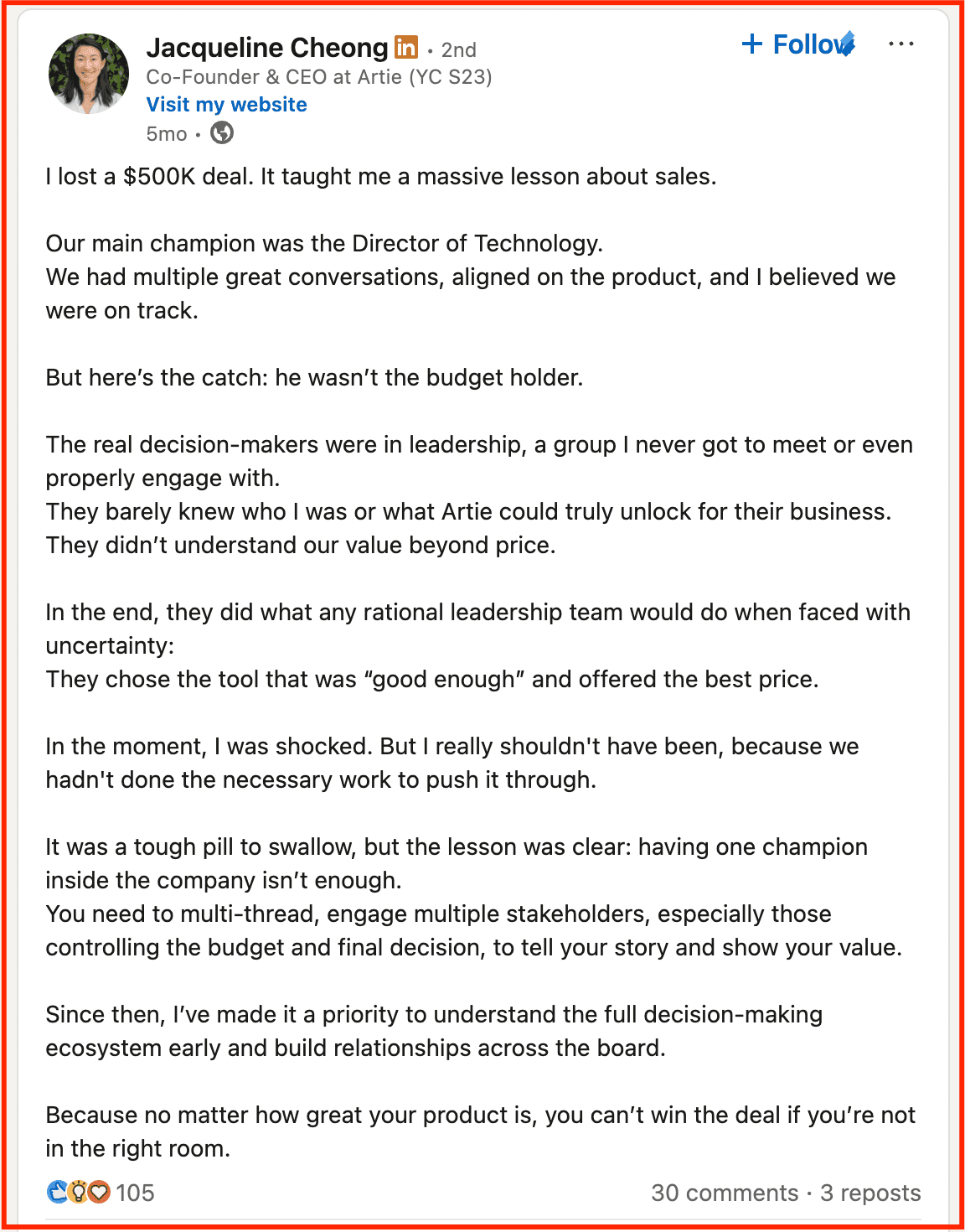
Example: “I once lost a $500k deal because I failed to ask one critical question…”
→ A short post narrating what happened, followed by unpacking the insight and what to do differently next time.
Problem + Mistake + Fix
Show that you’ve been where your audience is now—and that you know the way forward.
Example: “We spent six months building a product no one wanted. Here’s how we stopped guessing and started validating what actually mattered.”

Myth-Busting
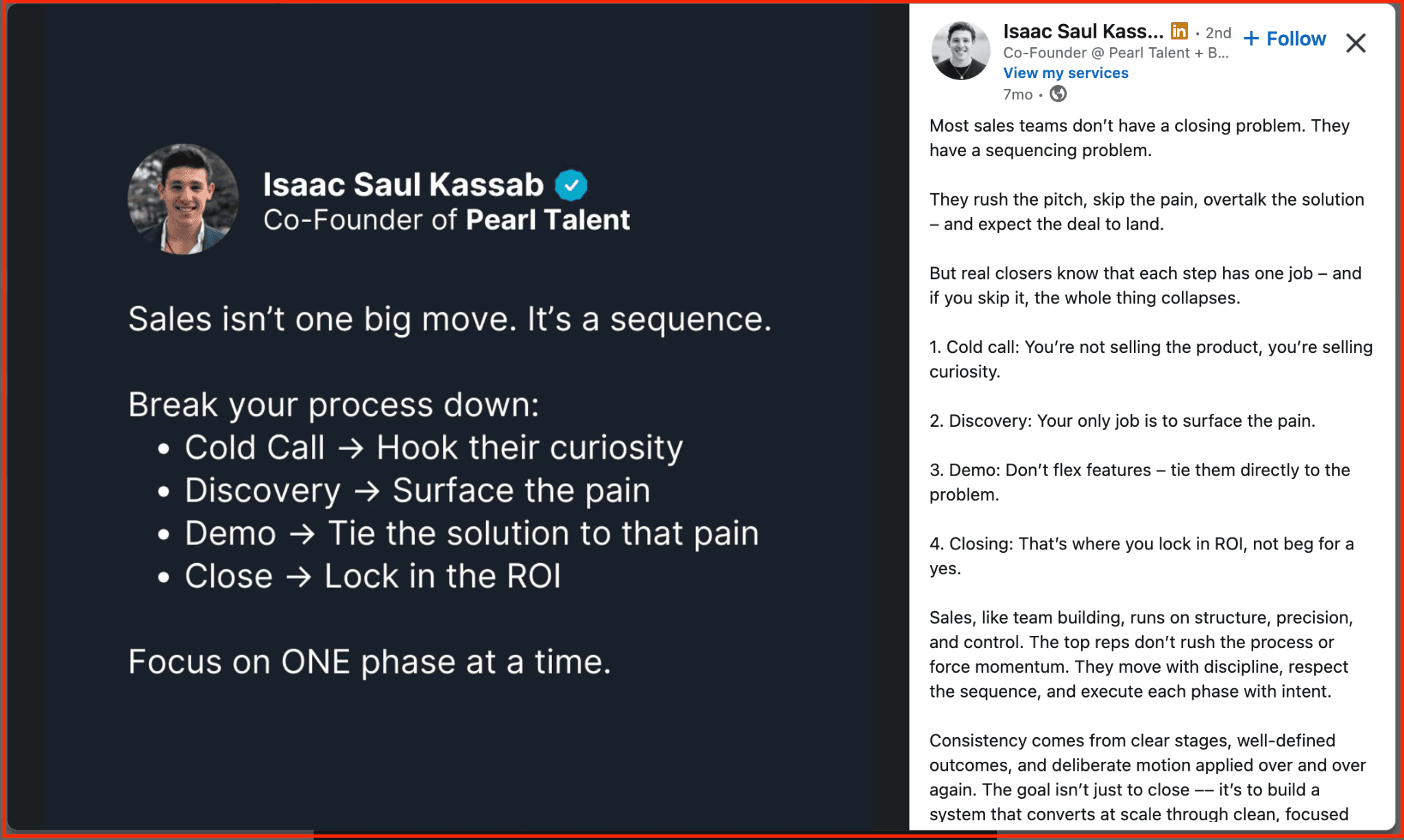
Challenge a widely held belief in your industry, then offer your alternative.
Example: “Everyone insists on a 10-step sales process. That rigidity is exactly why most teams struggle to close deals quickly.”
Behind-the-Scenes
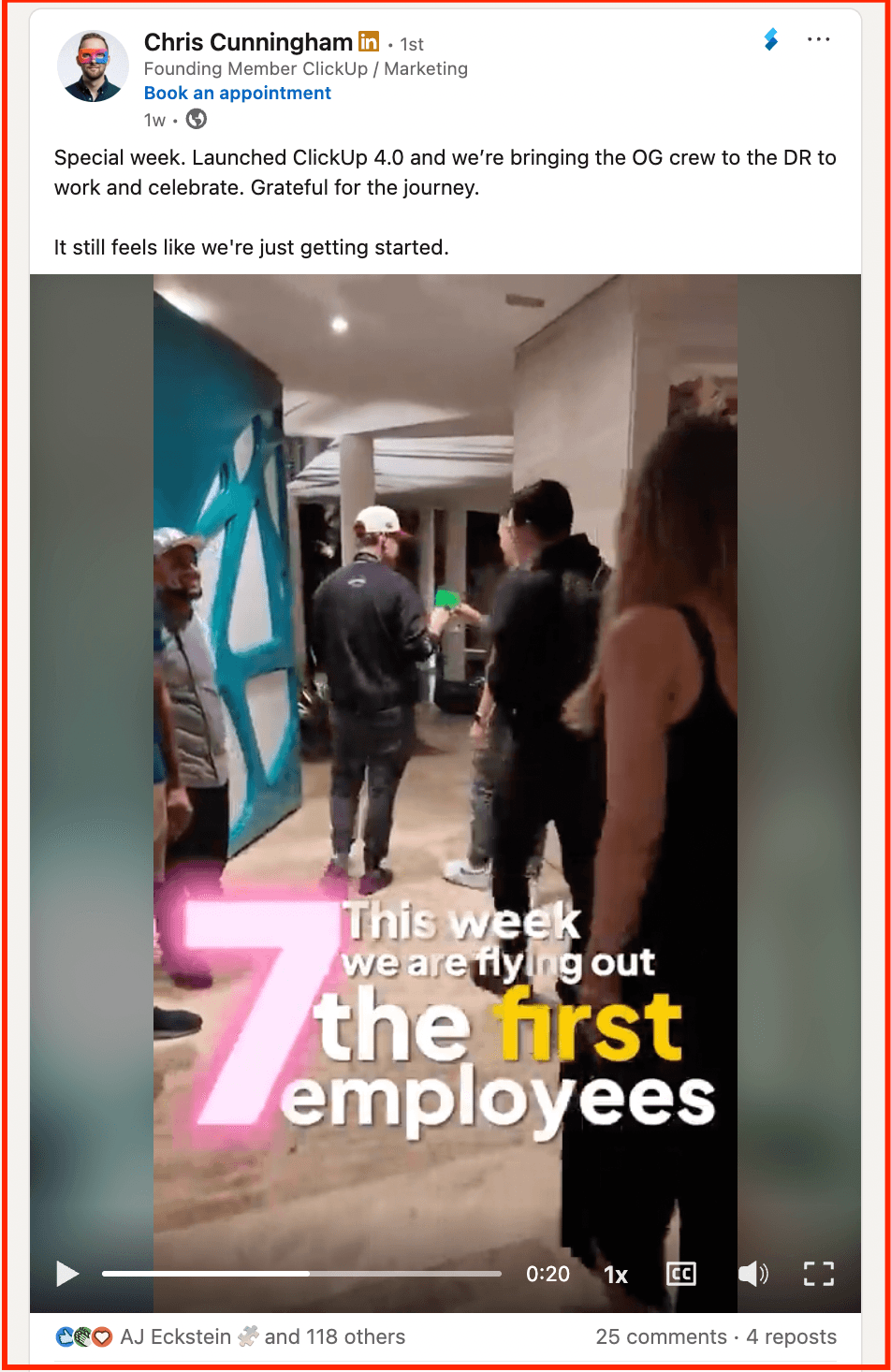
Pull back the curtain on how you actually do the work.
Example: Share behind-the-scenes at how your team celebrates feature launches and add context in the video to explain what’s happening and why it matters.
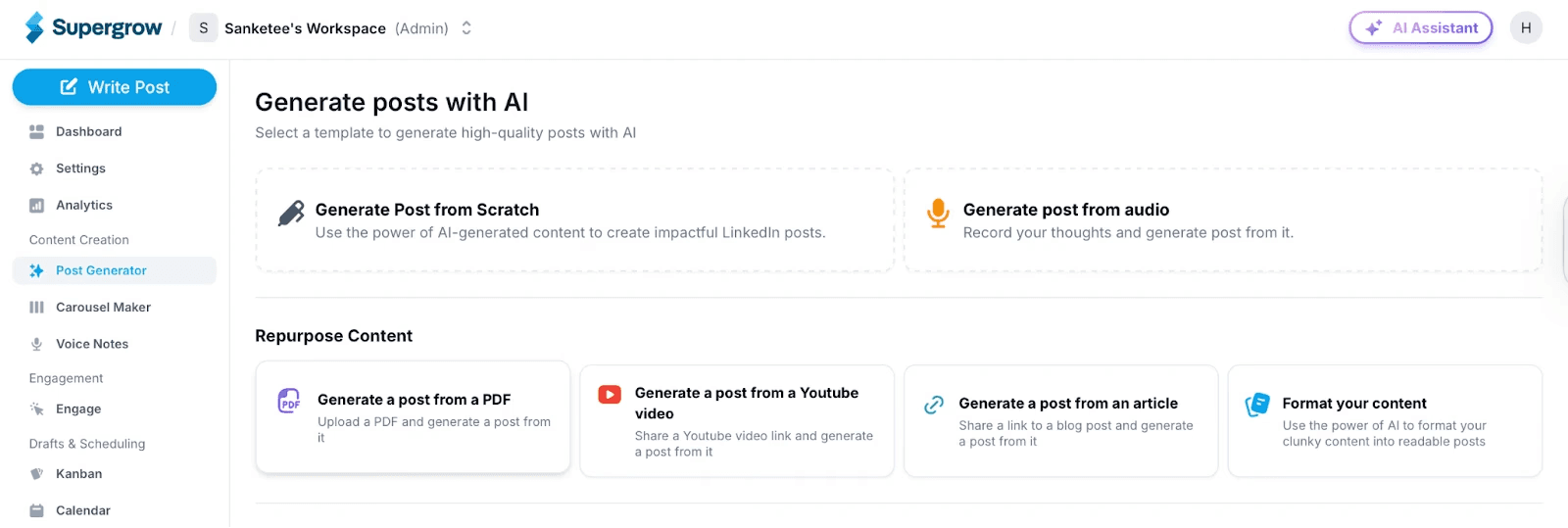
But if you struggle to write your own posts. Supergrow can be trained on your past posts or your favorite LinkedIn influencer to help you generate content that mirrors your authentic voice so every story is distinctly yours.
You can also use Supergrow's post scheduling feature to plan posts, auto-schedule first comments with links or bonus insights, and keep your calendar consistent without chasing reminders.
Step 4 — Create Anchor Content People Refer Back To
If you analyse LinkedIn creators who have grown on the platform, they will all share one thing: an incredibly high bar for what they consider quality content.
Top 1% craftsmanship usually means one thing: spending that amount of time on the post because it's better to write 1 good post than 5 bad ones, especially when the barrier to entry in creating LinkedIn content is negligible with AI.
The best long-term differentiators are your frameworks, processes and POVs. Many LinkedIn creators have achieved success through this.
For instance, Chris Donnelly, co-founder of Searchable, has grown 270K followers over the last 6 months with daily cheat sheets:
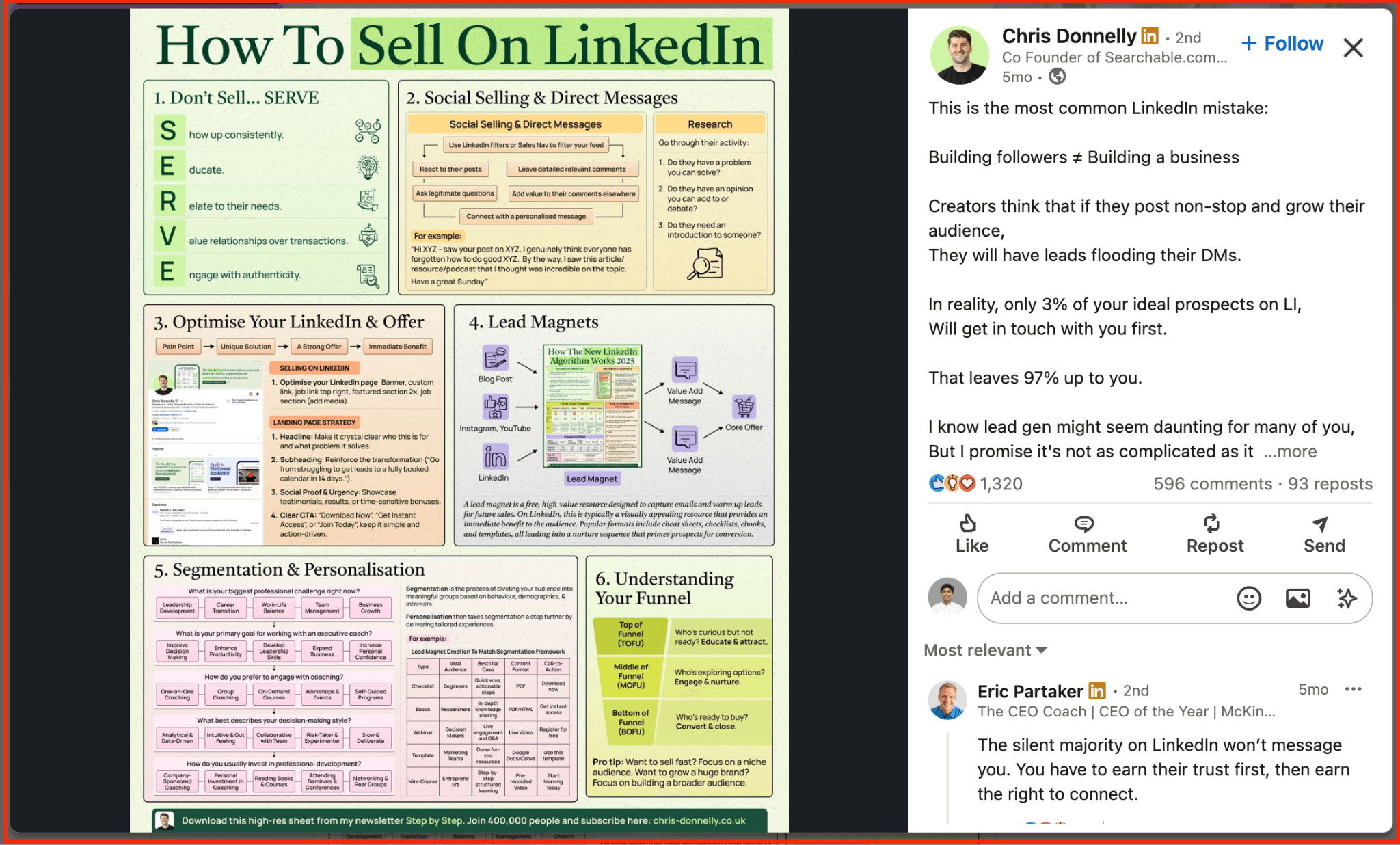
And, why does it work?
What the best posts have in common is that they’re experience-based and theoretical. They come from real observations, experiments, and lessons, but never from recycled advice.
In 2026, there is only ONE way to win the LinkedIn game: transform your lived experience into content.
-
A lived experience that quietly helps your audience see themselves differently
-
A market perspective that challenges assumptions and sparks innovation
-
An anecdote that reframes how the real problem is understood
-
A transformational story that shows what actually changes when you act
-
An inspirational idea that nudges people from insight into action
LinkedIn influencers focus on craftsmanship; their ideation process is not I know something or achieved something, let’s publish this. Their focus is on creating content that provides value to their audience and helps them achieve similar results.
Step 6 — Let Other People Validate Your Ideas
Influence compounds when people recognize themselves in your ideas. When someone comments, “This is so true,” or reshapes your point in their own words, they’re not just engaging; they’re validating your thinking publicly. That validation travels further than likes because it turns your idea into a shared belief, not a personal opinion.
Inviting validation of your ideas can happen in multiple ways on LinkedIn, including:
-
People are reposting it on their feed
-
They’re talking about your ideas in their post
-
People extend your idea in the comments
-
Your language shows up in their comments elsewhere
-
If someone disagrees, others defend the idea for you
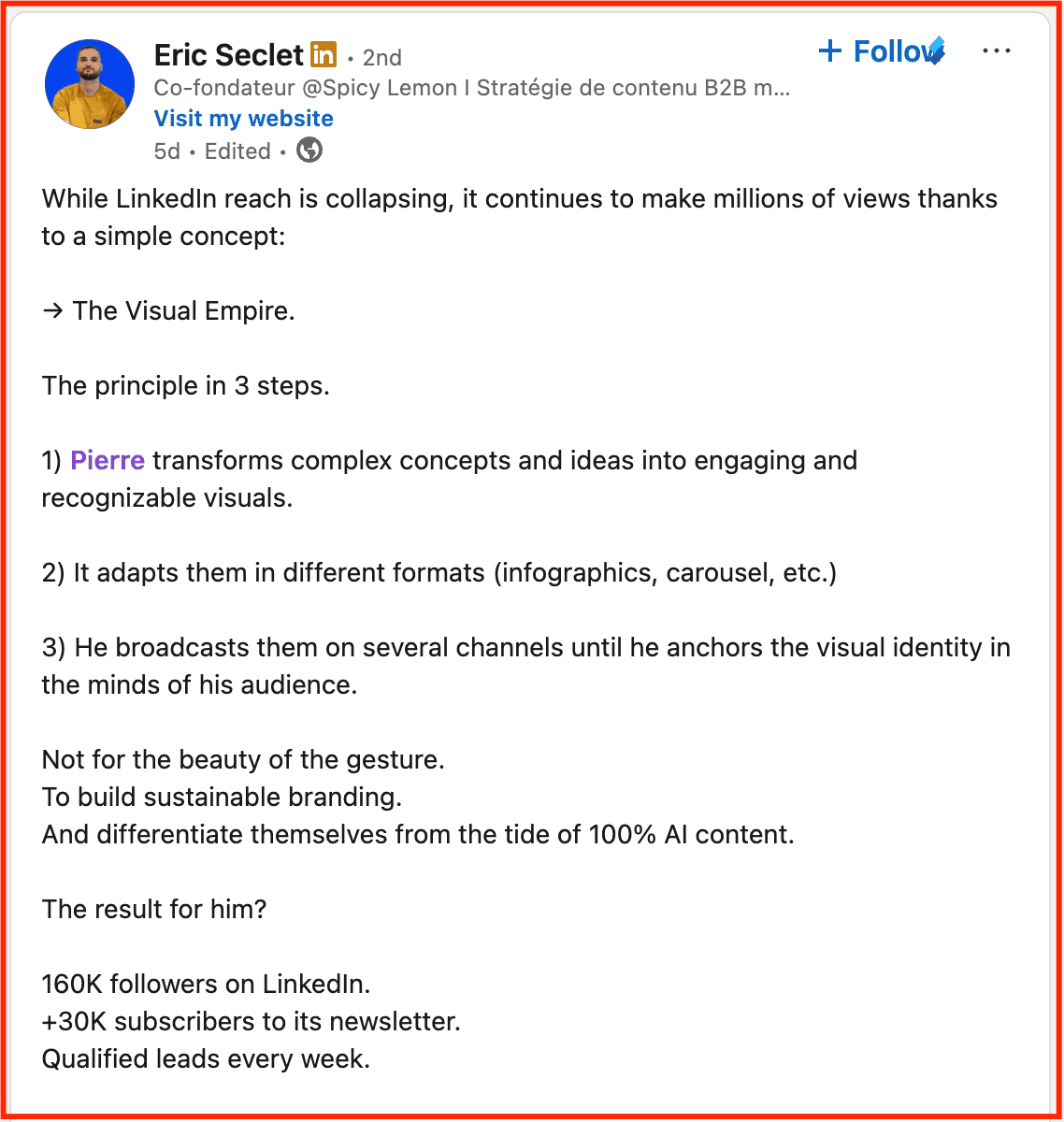
For instance, Pierre Herubel is recognised for using a visual framework to highlight high-level marketing strategies. Eric Seclét, co-founder of SpicyLemon, publicly endorsed one of Pierre’s ideas in his own post.
Instead of just praising Pierre, Eric reinforced the concept—showing how the framework matched his real-world experience. This is where influence grows the fastest, when others echo your ideas.
Step 7 — Build Narrative Consistency Over Time
Ever noticed why some LinkedIn creators stick to the same writing style, focus on just one or two topics, or reuse the same visual style again and again?
That’s not laziness, but a strategy. Having signature content turns your content from good to unforgettable. From “can be found anywhere” to “I need to follow this person.”
You don’t need 100 different posts. You need one consistent story told 100 different ways.
When you analyze creators experiencing hypergrowth, you’ll often notice they have a signature format. It makes their work instantly recognizable and helps their audience identify their post before seeing their name.
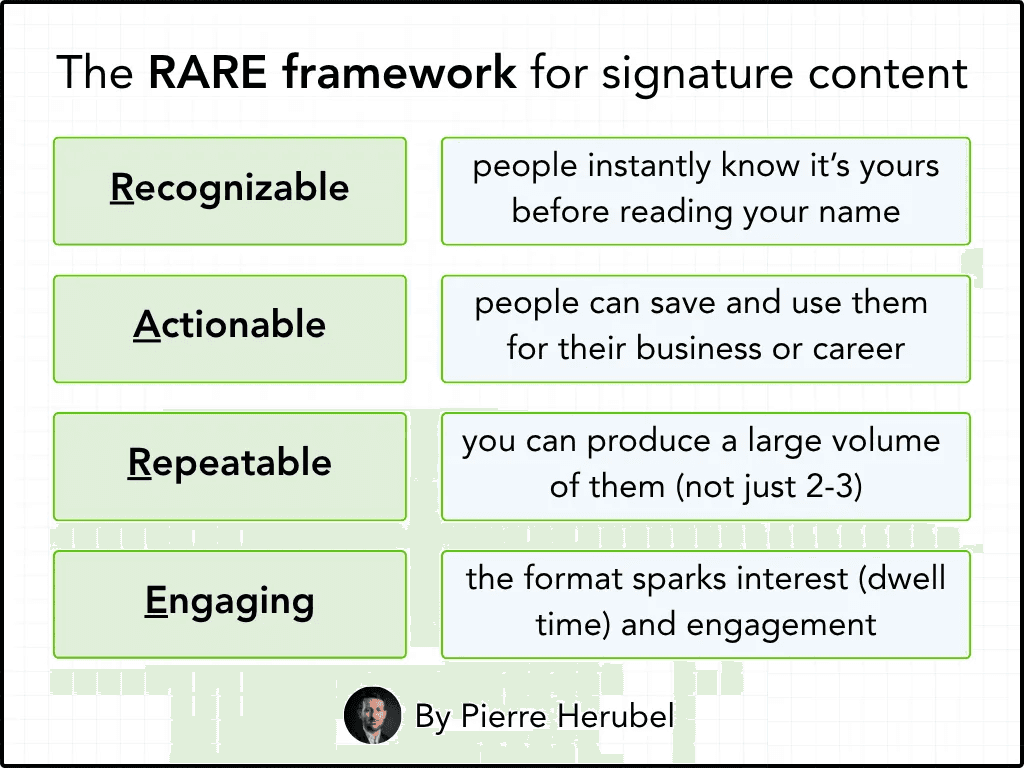
Follow Pierre Herbul’s RARE framework to build narrative consistency:
-
Recognizable: People can tell it’s your content before they even see your name.
-
Actionable: Readers can save it and apply it directly to their business or career.
-
Repeatable: You can produce a large volume of them (not just 2-3).
-
Engaging: The format naturally holds attention and invites interaction.
Look at your top-performing posts, and stopping makes your content feel different. It could be your layout, insights, tone, visuals, or the way you explain ideas. Turn that pattern into a consistent narrative.
Stick to the same visual cues, layout, and structure long enough that people recognize your content instantly.
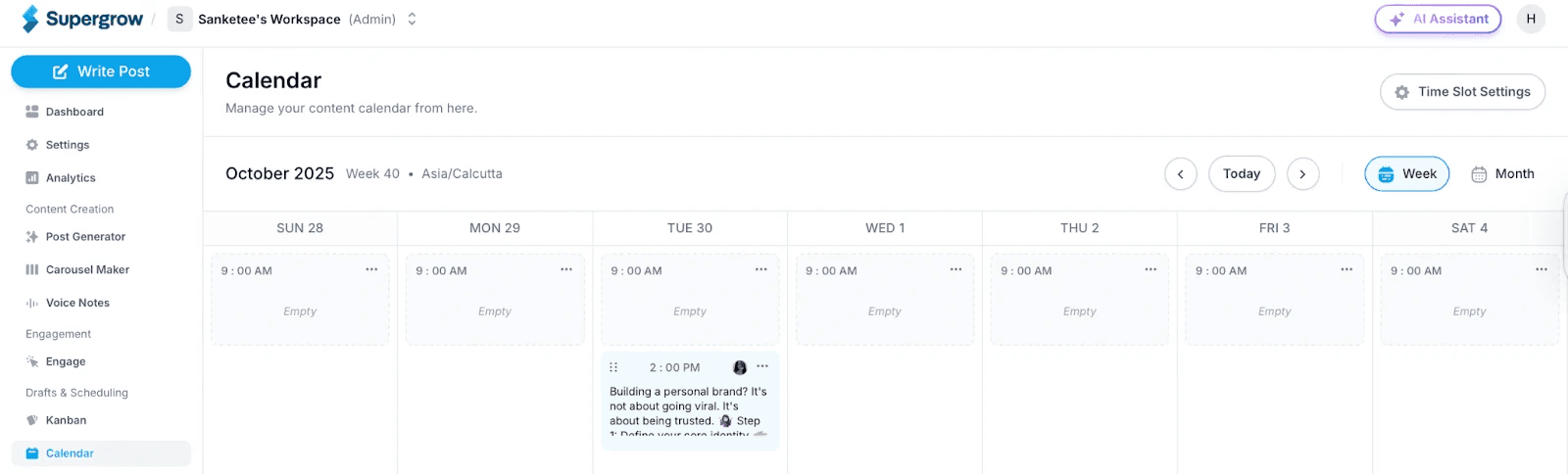
Supergrow gives you a calendar and Kanban-style view of your posts. Unlike LinkedIn’s native option, you can see your entire content plan for weeks or months at a glance. This way, you can easily track and manage narrative consistency across your posts.
Step 8 — Measure Influence, Not Vanity Metrics
Let’s face it: many LinkedIn creators have a vanity problem. For years, they have chased likes, shares, and impressions – the kind of shiny numbers that look great in a report but don’t necessarily translate into influence.
A post can go “viral” and still leave you invisible when it matters.
Instead, track these LinkedIn analytics to get a clear picture of what’s working and what’s not. Let us break down what metrics you should track in 2026:
Repeat profile visitors
When the same people return to your profile, it means your content created mental availability. They remember you enough to look you up again.
Inbound DMs referencing your content
A DM-triggering post makes someone think: “I want to talk to you directly.” These aren’t vanity metrics; these are purchase-intent signals.
When a post sparks a DM, it tells you that your audience sees you as someone who can solve a painful problem.
Comments from peers
When people leave thoughtful comments on your posts or start tagging you in relevant conversations, it signals a shift in how they perceive you.
They’re no longer treating you as just a content creator—they see you as a reference point. Someone whose opinion adds weight. Someone worth pulling into the discussion.
While these strategies can be applied manually, Supergrow’s advanced analytics dashboard shows you exactly which formats, topics, and posting patterns drive the highest impressions on LinkedIn.
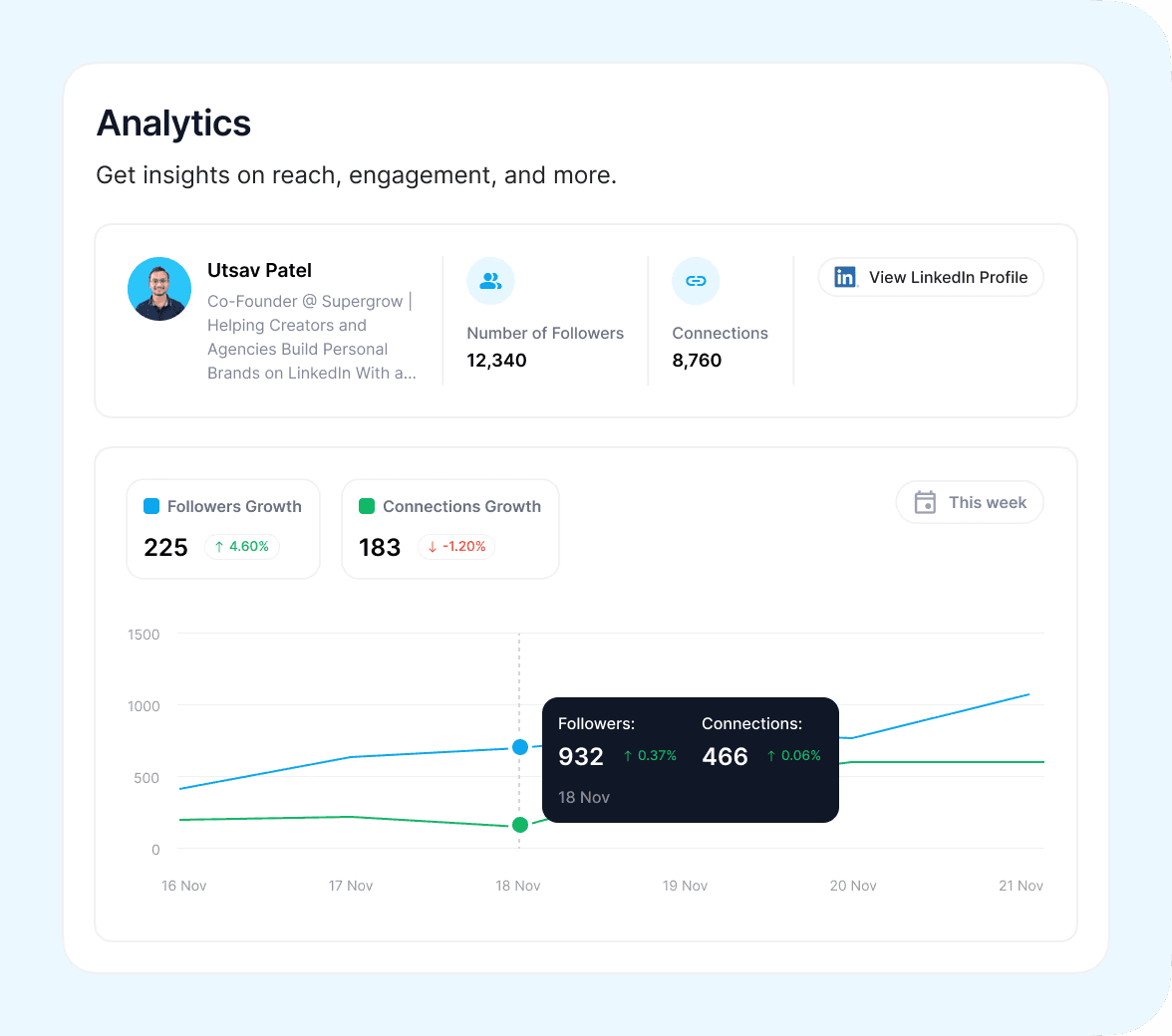
This allows you to focus on interpreting the insights and shaping your strategy, while Supergrow handles the heavy lifting behind the numbers.
Influence Is Built Through Trust, Not Volume
Most people assume LinkedIn influence is a content problem.
“If I post more… if I post better… if I crack the algorithm… I’ll grow.”
That belief keeps them stuck.
The creators who will matter most on LinkedIn in the coming years won’t be the ones who posted the most, but the ones whose thinking people relied on.
Supergrow makes this effortless. By analyzing which formats perform well and repurposing your ideas into carousels, text posts, videos, and more, you support consistency without adding unnecessary complexity.
The goal isn’t to post more—it’s to post with intent, while saving time and reducing burnout.
For creators who want to run this system end-to-end, Supergrow is built to support it. Start your free trial today.