
While it seems easy to start an employee advocacy program by simply asking employees to share content on social media.
The biggest challenge starts right there.
"What can I say?'
"'Is it OK to say this?"
"But, I don't have time to write."
Writing feels like an extra task on an already full calendar. The fix is to change the input format entirely.
And that's where having a content strategy for employee advocacy comes into play. It answers the "What should I post about" question and maintains brand messaging without taking the human element away.
We've put together a step-by-step guide for B2B businesses to create and scale their employee advocacy program with the right content strategy.
What Employee Advocacy Content Strategy Actually Means
An employee advocacy content strategy is about designing the right inputs so employees can confidently show up as credible voices, without extra effort, risk, or guesswork.
Successful employee advocacy programs begin by understanding employee motivation. Not everyone wants to post publicly, and participation should never be compliance.
An ideal employee advocacy content strategy creates a series of content inspirations based on:
-
What employees feel confident sharing
-
What benefits their brand image
-
What conversations does your company want to influence
-
How content aligns with business positioning
-
Where employee voice supports long-term trust and visibility
The role of your content strategy is to clarify boundaries, not to script messages. This balance avoids two common pitfalls: feeds that feel promotional and feeds that feel disconnected from the organisation entirely.
Content Strategy for Employee Advocacy: A System for B2B Teams
Scaling content strategy for employee advocacy requires thinking in steps. When these steps are met, employee content becomes a natural extension of culture, not a separate initiative.
Let's dive in.
Define the Purpose of Advocacy Content
It's essential to get the foundations of your company's employee advocacy program right from the get-go.
Start by defining your program goals. Whether it's category authority, pipeline support, employer brand visibility, or executive positioning.
Here are some examples to get you started thinking about your employee advocacy strategy according to your organization's goals:
| Marketing | Sales | Recruiting |
|---|---|---|
| Reach and engage more of your target audience | Nurture customers and prospects in your salespeople’s networks | Boost awareness of and engagement with your employer brand |
| Increase brand awareness and followers | Create social sellers and position your salespeople as partners | Increase job views and applications |
| Drive leads for sales | Drive more leads and close more deals | Drive quality hires |
Besides establishing goals, you need quality, relevant content that employees will be interested in discovering and sharing.
Even though your marketing team is the social media experts, your advocates' opinions are also worthwhile. As your advocates work in departments like sales, customer success or HR, their content suggestions will help shape your strategy goals better.
Identify Core Content Pillars
To manage a successful employee advocacy program, your marketing team will need to create content for employees to share.
Core content pillars are not a content calendar or a list of post ideas. These are strategic guardrails designed to create consistency, clarity, and confidence among employee advocates without restricting their ability to express themselves.
Here's a framework for any business struggling to identify key content pillars.
Building Personal Connections
Such content helps establish an emotional connection between you and your target audience.
This requires two things to be done:
-
A deep understanding of the audience you want to appeal to
-
Comfort in publishing your personal views
For instance, memes, context, industry pain and lived experience are an excellent way to establish this emotional connection.
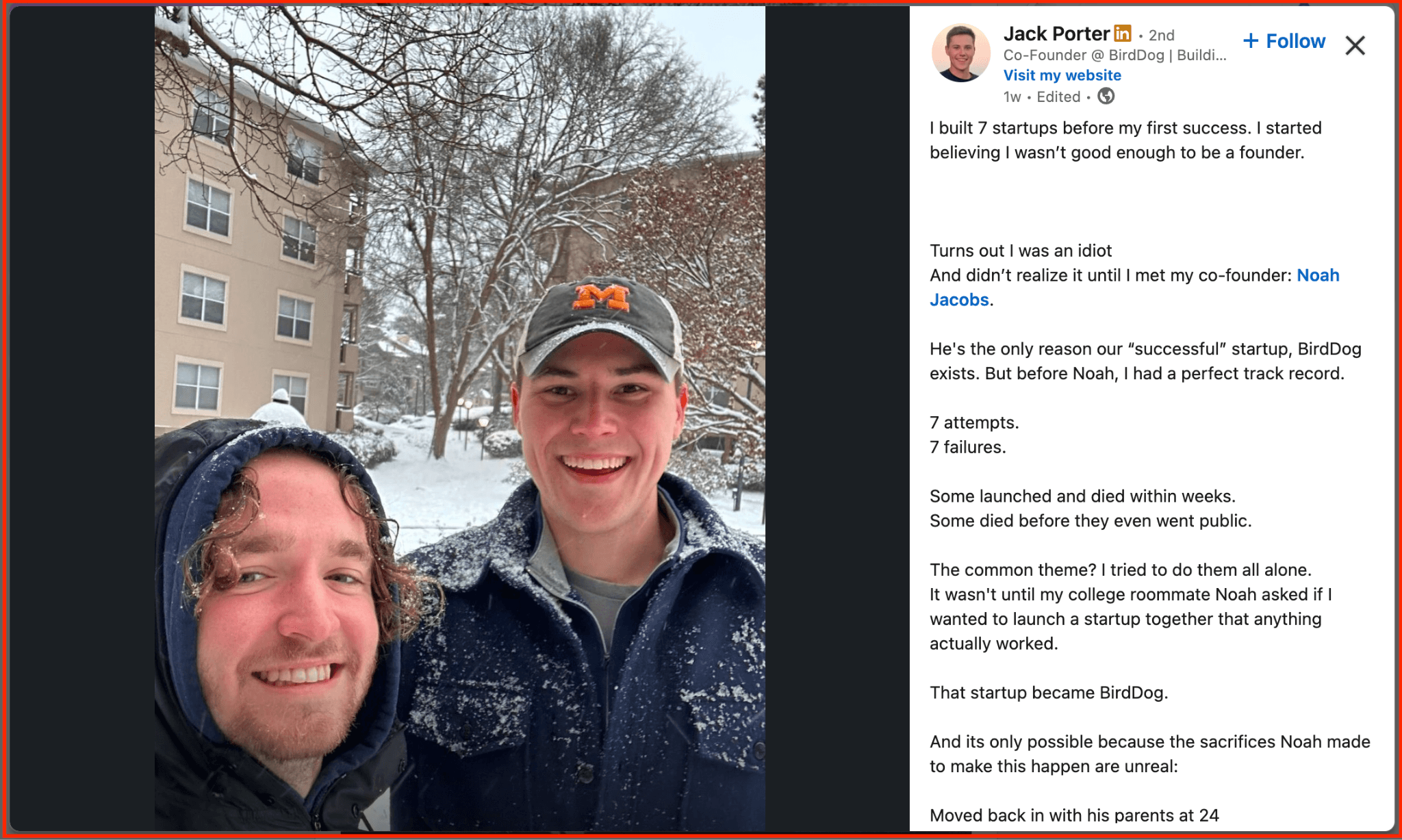
If you're the founder, this could be your origin story, like the successful BirdDog's CEO, Jack Porter shares about his co-founder's sacrifices, and they teamed up to build BirdDog. It clearly resonates with your audience and helps build a personal bond that people cherish online.
Educational content
Such content builds trust. Educational content comes into play when you understand the problems people are trying to solve and help them close that gap.
Some examples that work well here:
-
"How-to" content
-
Things "I wish I knew."
-
Your mental models and frameworks
-
Product walkthroughs
-
Industry news updates
-
Answering common questions
-
Favourite resources (the books, podcasts and people who influence you)
For instance, Maja Voje's content involves creating framework and walkthrough videos on GTM. Her knowledge of the subject has made her an expert in the field.
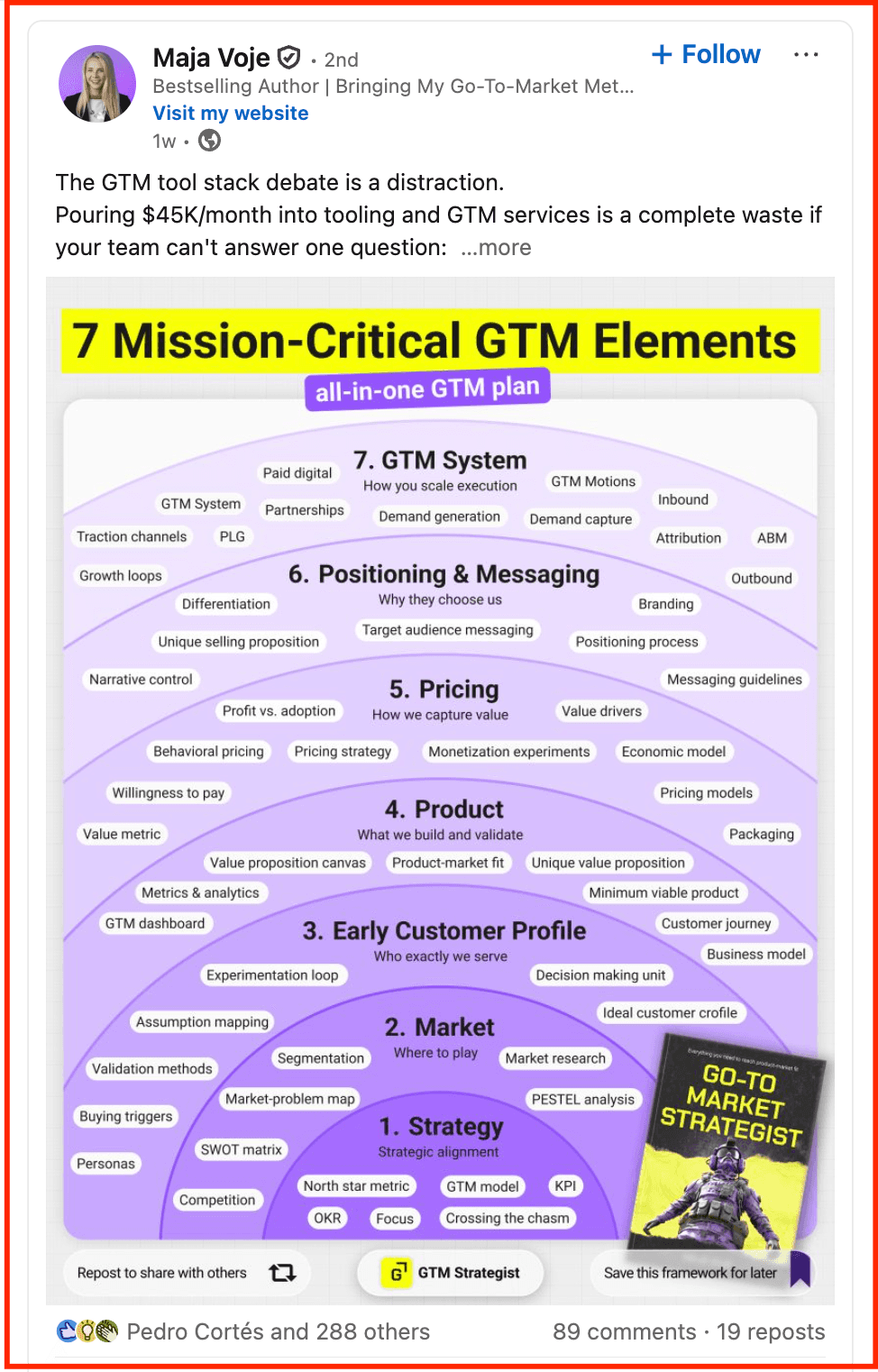
There's also power in being known for something. Imagine walking into a room, and someone says, "Hey, aren't you the guy who does this?" This is what employee personal branding means.
Showcase Brand credibility
Now that your audience has liked and trusted you, you need to demonstrate credibility and expertise. This theme is tricky to get right as it requires a delicate balance between promotion and storytelling.
Some employee advocacy example content ideas that work well in the Showcase theme.
-
Behind-the-scenes decisions
-
Day-in-the-life posts
-
Customer stories
Clearly, your audience comes first, and your product's benefits come second.
For instance, this real-life conversation between a co-founder and Clay's CEO about whether to invest in a Super Bowl sponsorship. This is a legit fly-on-the-wall moment that reflects the challenging questions marketers (their ICP) face daily.
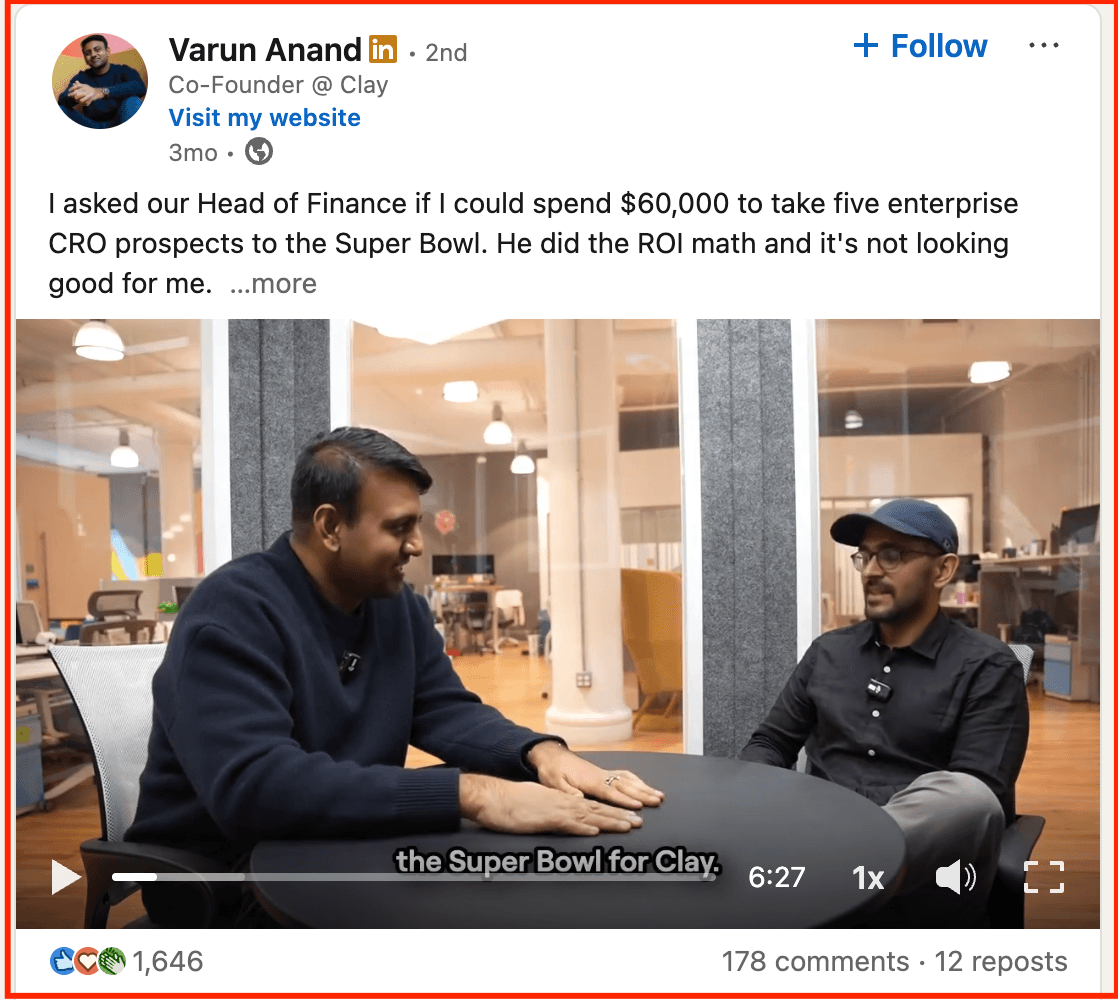
Such content answers "What are the behind-the-scenes moments in your business that your target audience would be interested in?"
Promotional content
Promotional content can only be mastered if the previous content types are mastered. This is where the balance goes off for many businesses.
Such content is easier to create, but it's important that it caters more to the audience than the brand itself.
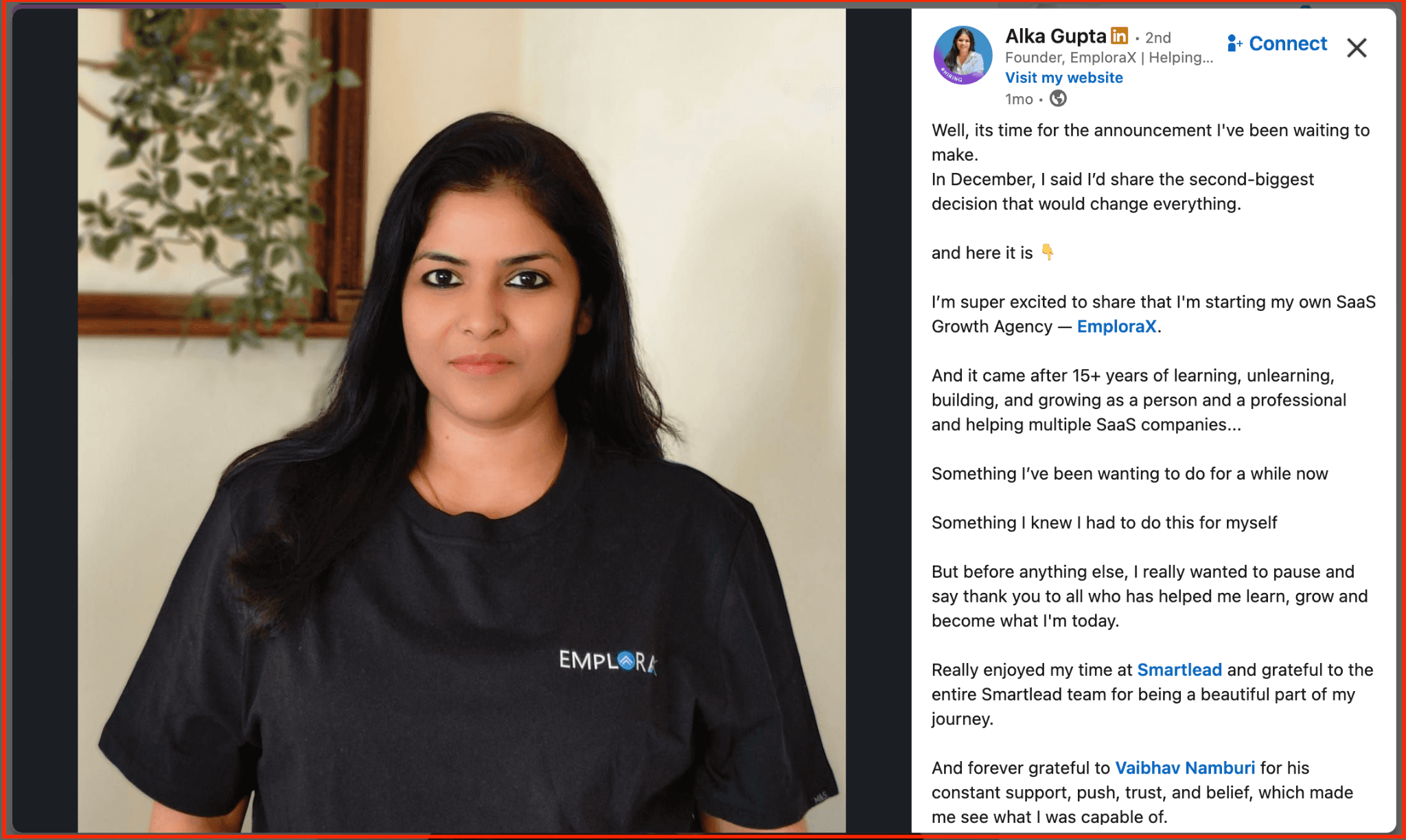
The example below is a perfect blend of promotional and trust-building content.
Alka Gupta has been posting consistently for the past few years, so brands reaching out is a testament to the trust she's built along her journey.
Assign Clear Topic Ownership by Role
Real Employee Advocacy isn't about turning your team into content distribution machines. It's about empowering them to build their own voice, credibility, and network, which, in turn, benefits your brand organically.
When everyone is encouraged to post "anything," content becomes noisy, repetitive, and uncertain. People hesitate, second-guess themselves, or default to resharing corporate posts.
Instead of everyone posting everything, define who owns which perspective:
The sales team owns the buyers' insights
Sales teams sit closest to the market. Every call, demo, and follow-up is a real-time signal of what buyers care about right now.
The sales reps who do so are seeing results. Salespeople who regularly share are 45% more likely to exceed quota.
Product teams understand how things work
Product teams own how and why things work. They sit at the intersection of user needs, technical constraints, and business priorities, making them uniquely qualified to explain the product's logic, not just the outcome.
Leadership owns market POVs
Leadership owns the market point of view, the perspective that looks beyond individual deals or features and answers the bigger questions: What's changing? Why now? And what does it mean for the category?
Marketing uncovers experiments and learnings
The marketing team is the second-largest contributor to employee advocacy, after sales.
As a marketer, you can share tactical breakdowns from real campaigns, behind-the-scenes team thinking and your POVs on the latest marketing tactics.
When you use traditional employee advocacy, we make it about the company. But today's employee advocacy is about the people.
That shift changes the conversation. It stops feeling like an obligation and becomes an opportunity. The advocate builds a durable personal reputation. The subject matter expert becomes known in their field. The organisation earns trust it couldn't buy.
Define Tone, Positioning, and Guardrails
When businesses think of employee advocacy, they often default to control. Carefully written messaging. Clear guardrails. Approved language. Everything is neat.
The solution isn't control, it's giving your team a version that actually knows how you sound.
Build your tone of voice doc
Not everyone magically finds the right words. Parts of your staff may be writing in a language that isn't their mother tongue, making it even more difficult for them.
If you're working on creating a tone of voice, your job simply is to make writing simple.
Your tone of voice should include:
-
Define 3–4 traits that describe how the brand sounds in real life
-
What Employees Can Talk About
-
What to Avoid (So People Feel Safe)
-
Examples rather than rules
Once you're done with your tone of voice, you can add it directly to your employee advocacy tool, like Supergrow.
Align every team around a shared brand voice
Your brand voice matters not only to marketing. Every team writes something. Create a shared system, and each department invents its own version of your brand.
When everyone writes in the same voice, your brand becomes recognizable across every touchpoint, and trust builds faster.
Specify inclusivity requirements
Specify things like gender-neutral phrasing, religious and cultural neutrality, or avoiding curse words, so posts reflect your company's values.
Employee advocacy content needs to sound authentic and follow your brand guidelines.
Establish the Ideal Content Mix
Employee advocacy breaks down when organisations rely on reposting company content. It signals a lack of trust and context for the audience.
One commonly used structure is a balanced content mix, where employees primarily share:
-
Industry insights
-
Personal professional experiences
-
Occasional company-related updates
Various research confirms that overly promotional content reduces engagement and trust, while insight-led sharing performs more consistently over time.
Strive for a balance of company-, industry-, and general-content.
Here's a proven formula for success: for every 6 pieces of content you share with employees, follow the 4-1-1 content rule.
4 should be personal/authority-based, 1 should be owned/company-related, and 1 should be promotional.
Since your goal is to drive engagement with employees and their networks, you need to provide information that syncs with their interests, which extend beyond what is happening at your company.
What Has Changed For Employee Advocacy In 2026
Employee advocacy has become stronger than ever in 2026. Three forces are reshaping the way B2B brands need to think about employee advocates:
Discovery is moving into AI faster than most people realise
Research says approximately 89% of B2B buyers now use generative AI tools to support discovery and decision-making, up from 32% in 2024.
But here's what's interesting: ChatGPT is now citing LinkedIn content 4.2 times more than it did three months ago. Perplexity, 5.7 times more. Of the 19,000 LinkedIn sources cited across major LLMs, over 15,000 are from LinkedIn Articles.
Employee advocacy is the best way to build trust and recognition for your brand, outpacing LLMs and people.
Trust in institutions is weakening
The Edelman Trust Barometer consistently tells a story: "people want to hear from other people". Seven out of ten people now report hesitancy to trust voices outside their existing circle. They trust someone who feels and talks like them.
59% of B2B decision-makers trust creator-led content on the platform more than traditional marketing materials, and 82% say it directly impacts their buying decisions. Nearly 79% engage with creator content at least once a month.
Humanising our brands is non-negotiable.
Reputation is now a machine-readable asset
When someone consistently shares thoughtful content on LinkedIn, it becomes indexed, referenced, and surfaced by the tools buyers rely on.
Personal credibility has become a durable form of brand equity in a way it simply wasn't before.
What This Ultimately Comes Down To
Authentic employee advocacy doesn't require heavy management.
It requires trust, clarity, and support.
When businesses focus on enabling rather than controlling, employees naturally become credible brand advocates.
In practice, strong employee voice on social media usually looks like this:
-
Employees posting occasionally, not constantly
-
Profiles that are clear and current
-
Content that teaches, reflects, or explains – rather than promotes
-
Managers who support participation rather than police it
Ready for an Employee Advocacy Platform? Check out Supergrow!