
Most teams don’t struggle to understand employee advocacy. What they struggle with is deciding whether it’s worth doing now.
That’s why we’ve studied multiple brands employee advocacy programs that focus on outcomes.
To make the value clear and repeatable, every example is broken down using a simple structure:
-
Context: the business challenge or opportunity that triggered the initiative
-
Action: what employees actually did in-market, in their own voices
-
Impact: the measurable results tied to growth, credibility, or performance
Together, these employee advocacy examples are meant to help teams move from inspiration to execution, showing not just what worked but why it worked and how similar systems can be applied within your organization.
Let’s quickly dive into some inspiring employee advocacy examples that have driven measurable impact for their businesses.
7 Inspiring Employee Advocacy Examples With Measurable Impact
Here are 7 brand advocacy examples to help you understand how employee advocacy drives measurable business results and how companies are using it.
1. Founder-Led Advocacy to Build Early Market Trust
A founder-led employee advocacy is a content and engagement strategy in which the company’s founder actively builds personal authority, brand visibility and thought leadership rather than solely relying on the company’s LinkedIn page.
LinkedIn thought leadership enables founders to build trust at scale, especially important for early-stage founders who usually lack social proof and brand trust at the beginning of their journey.
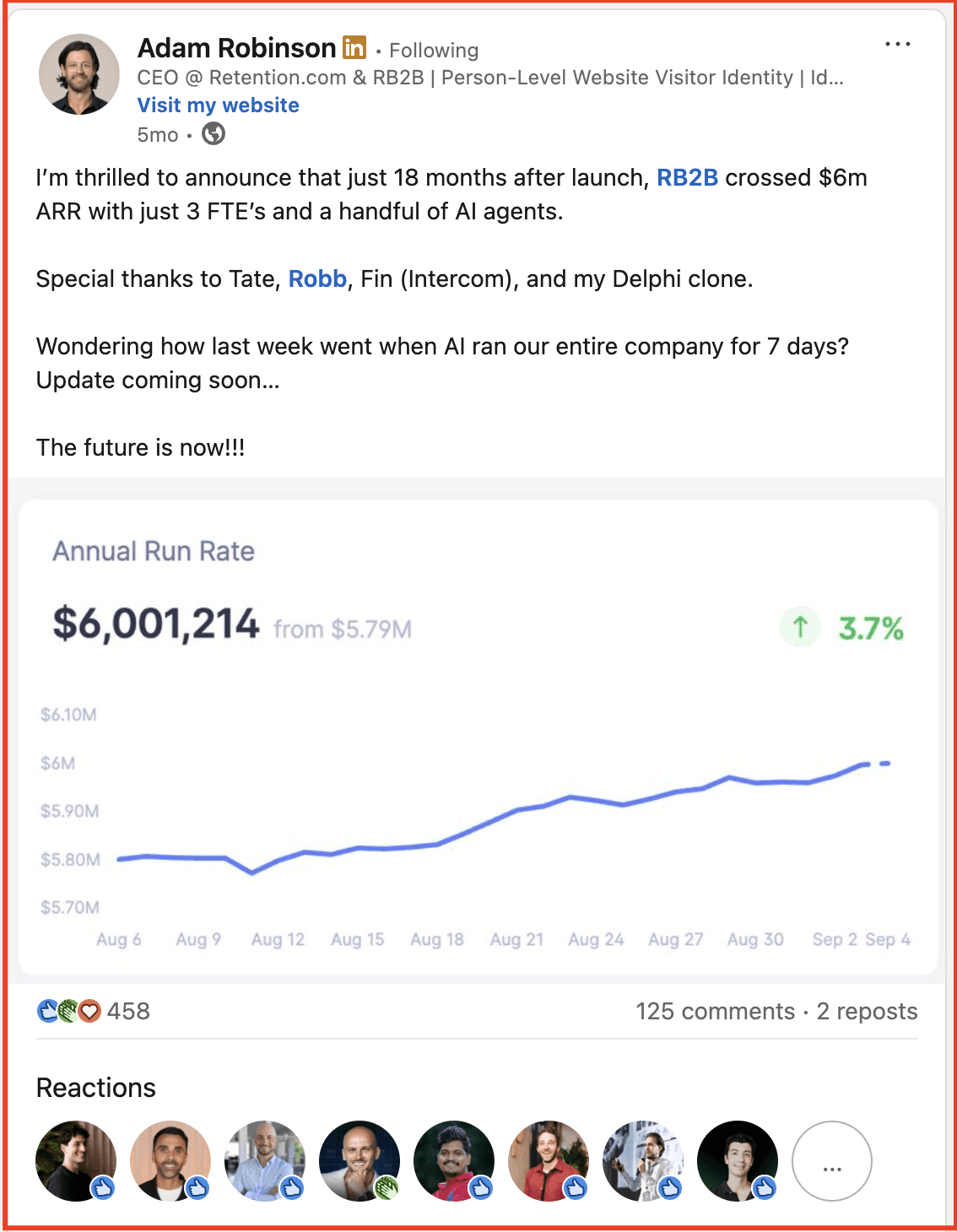
Adam Robinson is a prime example of founder-led advocacy on LinkedIn. He grew from $0 to $3M ARR in 200 days using LinkedIn.
His entire success came down to 4 core pillars:
Build in public
Adam shares his journey openly, what he’s building, what’s working, what’s broken, and what he’s learning along the way. There’s no overly polished narrative or retroactive success story: just real decisions, real experiments, and real outcomes shared in real time.
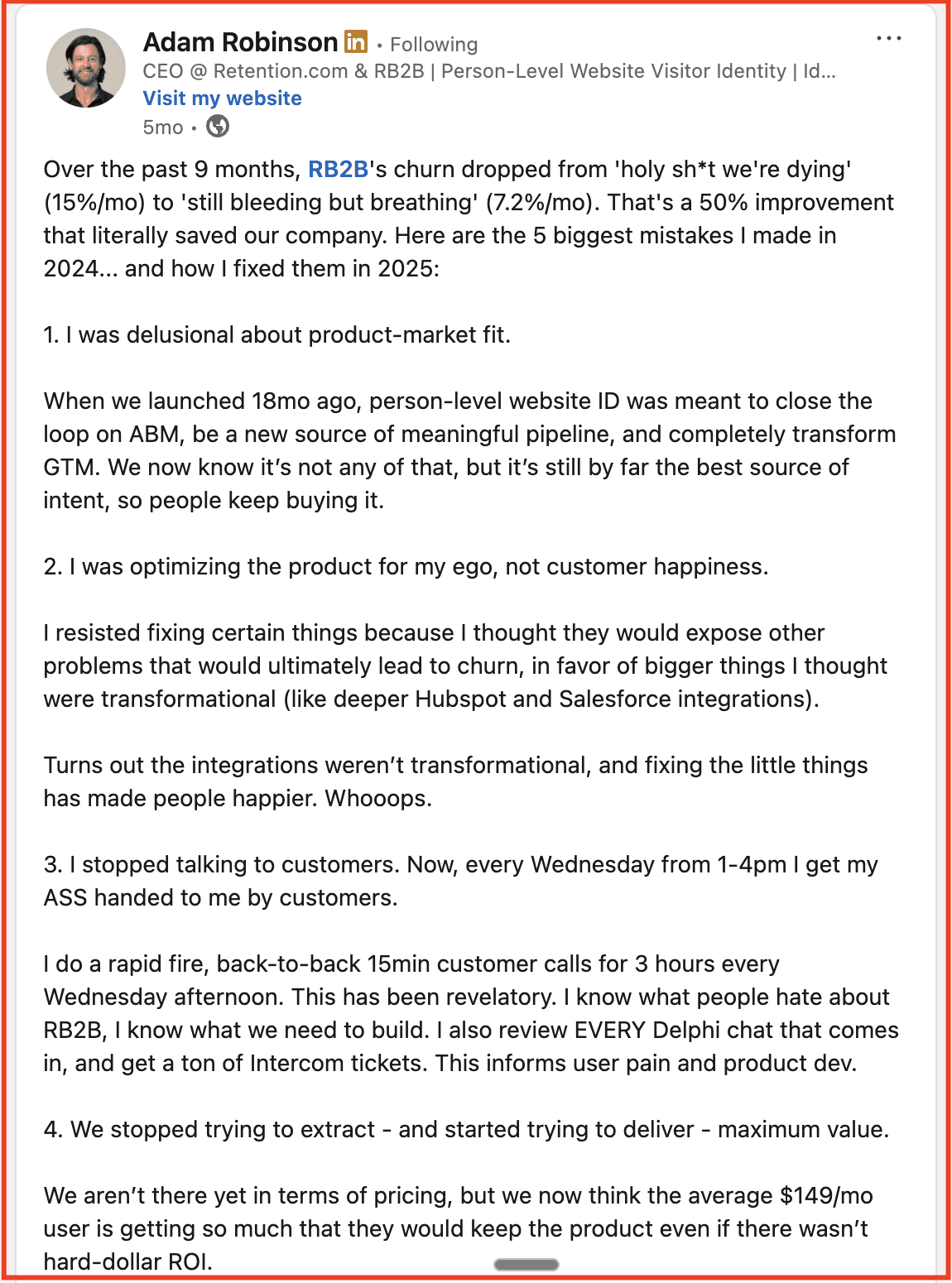
Content-Market Fit
Adam’s content spoke directly to SaaS founders, operators, and revenue leaders–pricing strategy, customer psychology, churn, positioning, and real-world experimentation. Every insight he put out was tightly aligned with the exact problems his audience was already trying to solve.
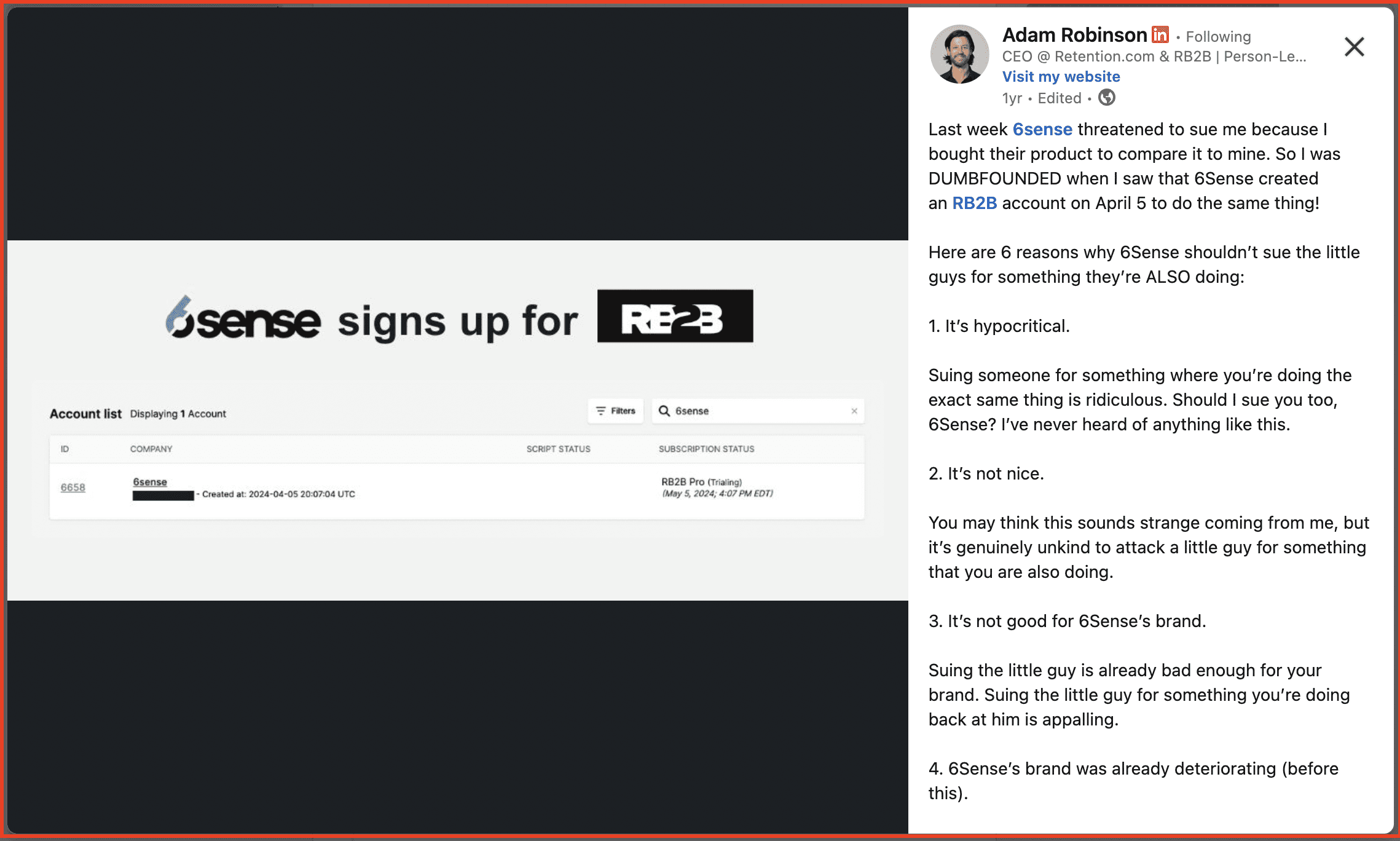
Strategic Polarization
Most people avoid polarizing opinions. They worry about backlash, uncomfortable comments, or being “too opinionated” in public. As a result, their content stays safe—and forgettable.
Adam took a different approach. He wasn’t afraid to challenge bigger players or call out ideas he believed were fundamentally flawed. For instance, the 6Sense beef with Adam fueled his initial growth.
Instead of relying on stale corporate content, founder-led advocacy puts a real person with real insights at the center of the business.
2. Engineering-Led Advocacy to Explain a Complex Product
When a product is inherently technical, the most credible advocates aren’t marketers; they’re the engineers who build it.
Engineering-led advocacy works because it replaces polished messaging with real understanding.
Engineers openly share how the system works, why certain decisions were made, and what trade-offs exist, translating complex technical concepts into clear, human language. This demystifies the product for both technical buyers and decision-makers who aren’t.
Liam Mahoney, a solution engineer at ClickUp, does a great job in translating:
-
Why was this feature introduced
-
Why we chose this architecture over the obvious alternative
-
What breaks at scale, and how we designed around it
-
The constraints we had to accept to deliver reliability, speed, or cost efficiency
-
Lessons learned from real failures, not just successes
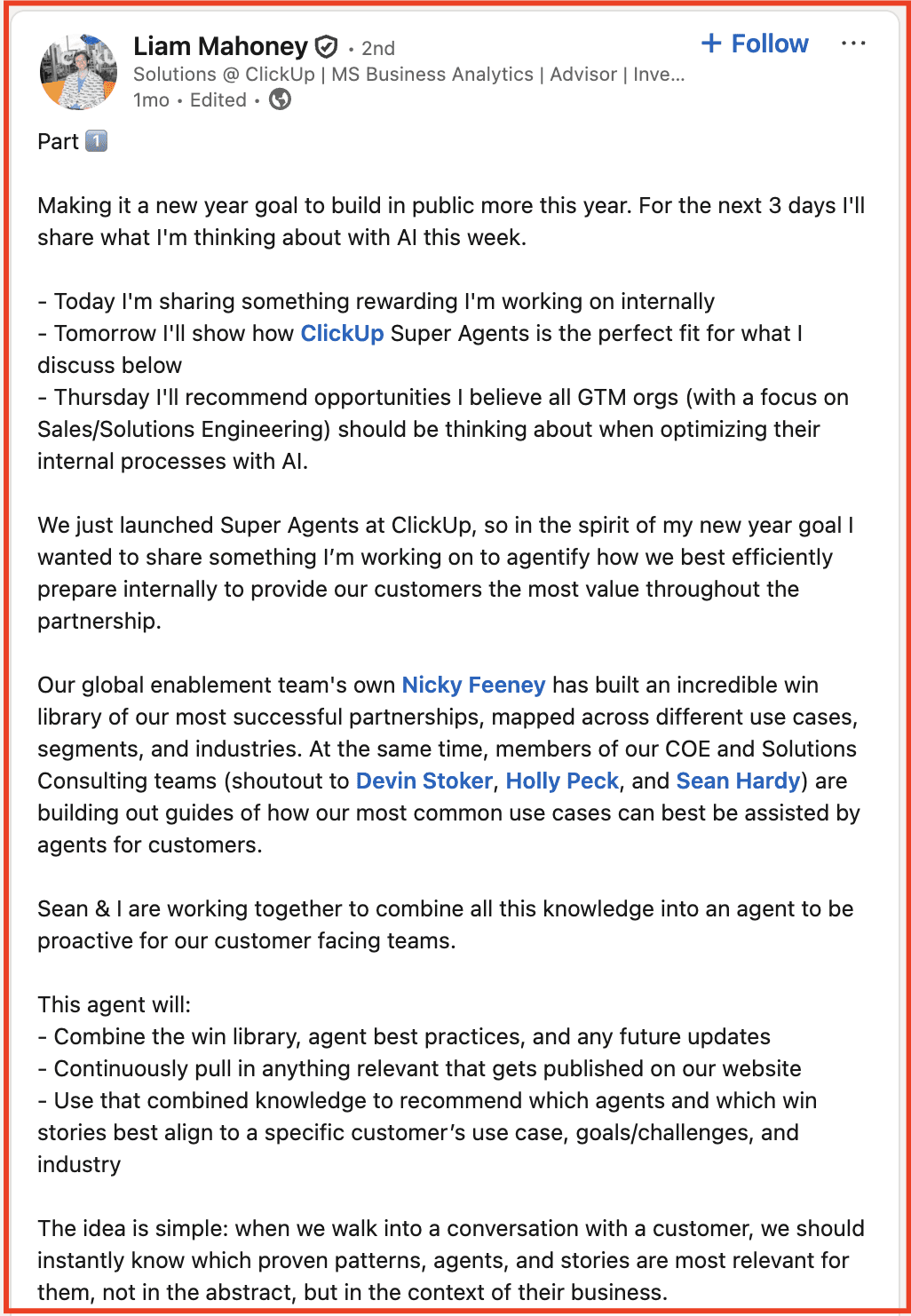
This kind of transparency builds trust fast. It signals confidence, maturity, and depth, especially in B2B SaaS, where buyers are tired of vague claims and buzzwords.
Most importantly, it turns complexity into an advantage.
When engineers explain the thinking behind the product in plain language, prospects don’t just understand what the product does; they understand why it’s hard to build and why your approach is different.
That’s advocacy that educates, earns respect, and shortens the trust gap long before a sales call.
3. Agency Founder Advocacy to Position the Firm’s POV
If you’re an agency owner, you’re already doing some version of agency-led sales.
You’re the one pitching customers, explaining their services, and getting people to buy in. Instead of repeating yourself in 1:1 calls, you’re putting your ideas out there for a much larger audience.
The KlientBoost is a great agency employee advocacy example of how you can leverage your expertise to advance your broader strategy. Majority of employees at KlientBoost share regular updates on what they’re working on, new povs and behind-the-scenes agency thinking.
Here’s how the KlientBoost strategy works:
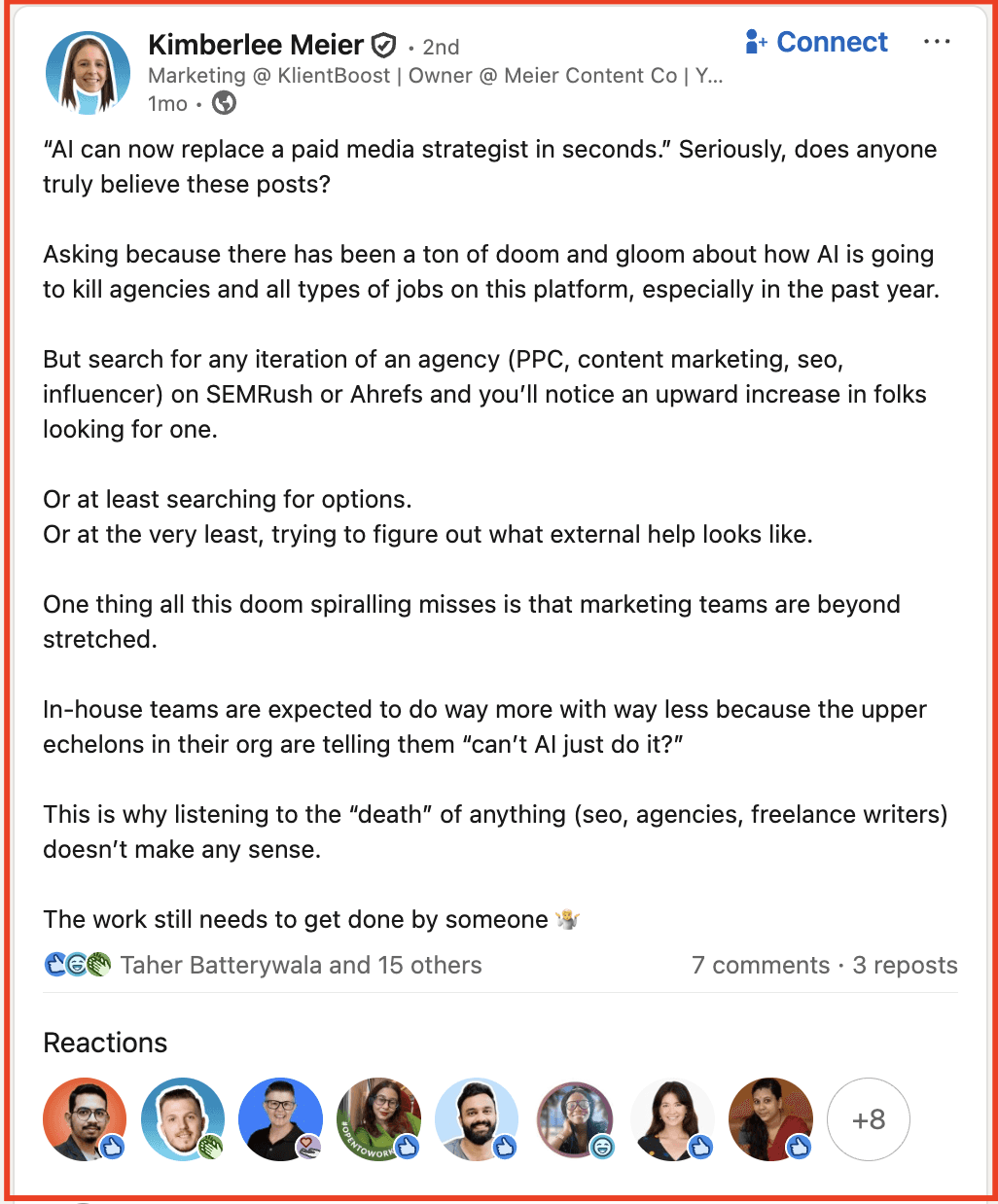
POV-Driven Contrarian Takes
Kimberlee Meier, a senior B2B marketer, widely challenges accepted marketing tactics and explains why they often fail in real-world accounts.
Over time, this kind of content acts as a qualifier. It attracts buyers who already agree with—or are willing to be convinced by- KlientBoost’s philosophy, while quietly pushing away those who are chasing vanity metrics or shortcuts.
Tactical Breakdowns From Real Campaigns
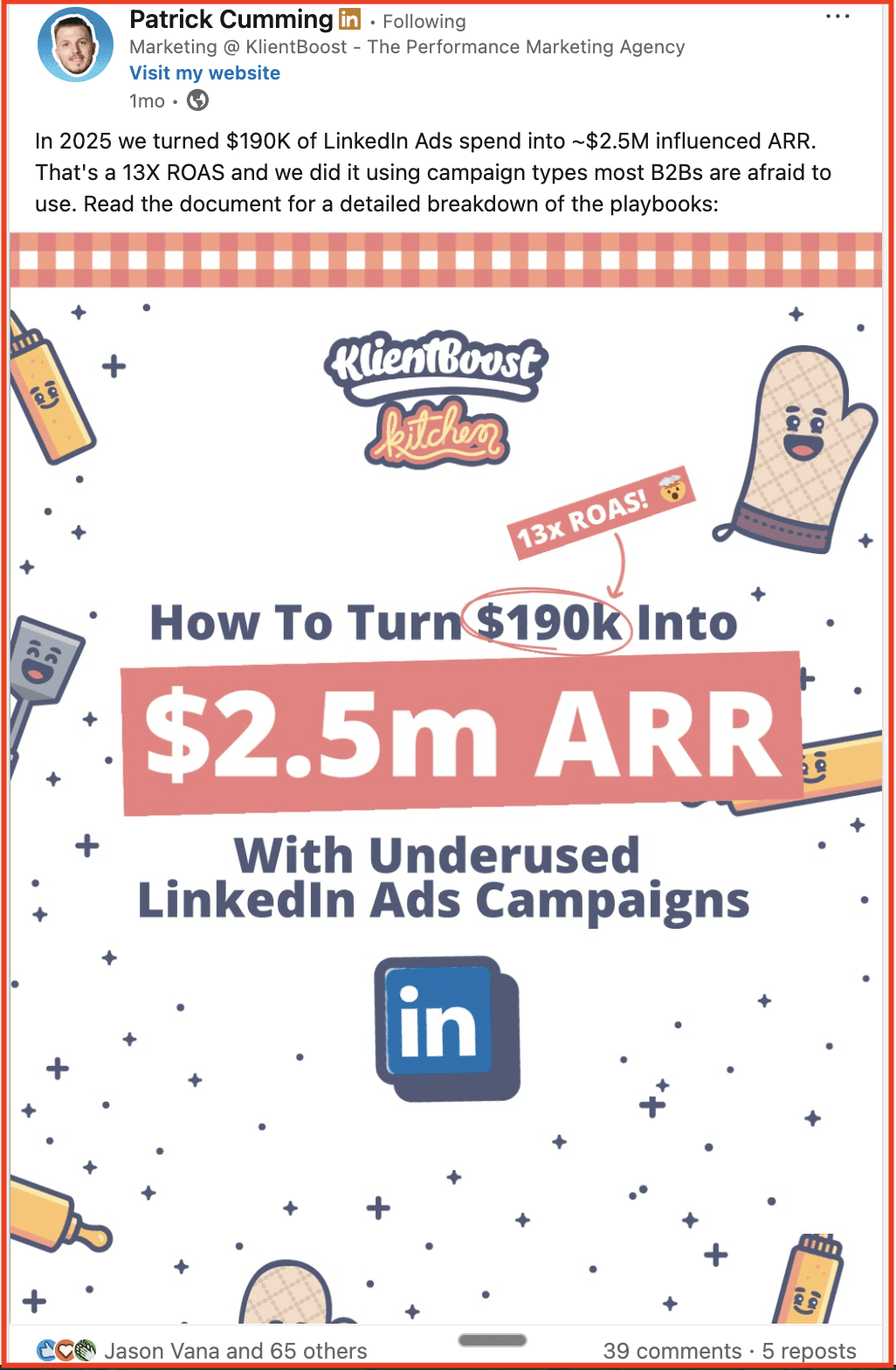
Patrick Cumming, marketing leader, regularly pulls back the curtain on real client work, sharing screenshots, charts, and concise narratives.
For instance, this carousel post for LinkedIn Ads Campaign shows prospects that KlientBoost isn’t theorizing from the sidelines; they’re making trade-offs, spending real budgets, and learning in real time.
Behind-the-Scenes Agency Thinking
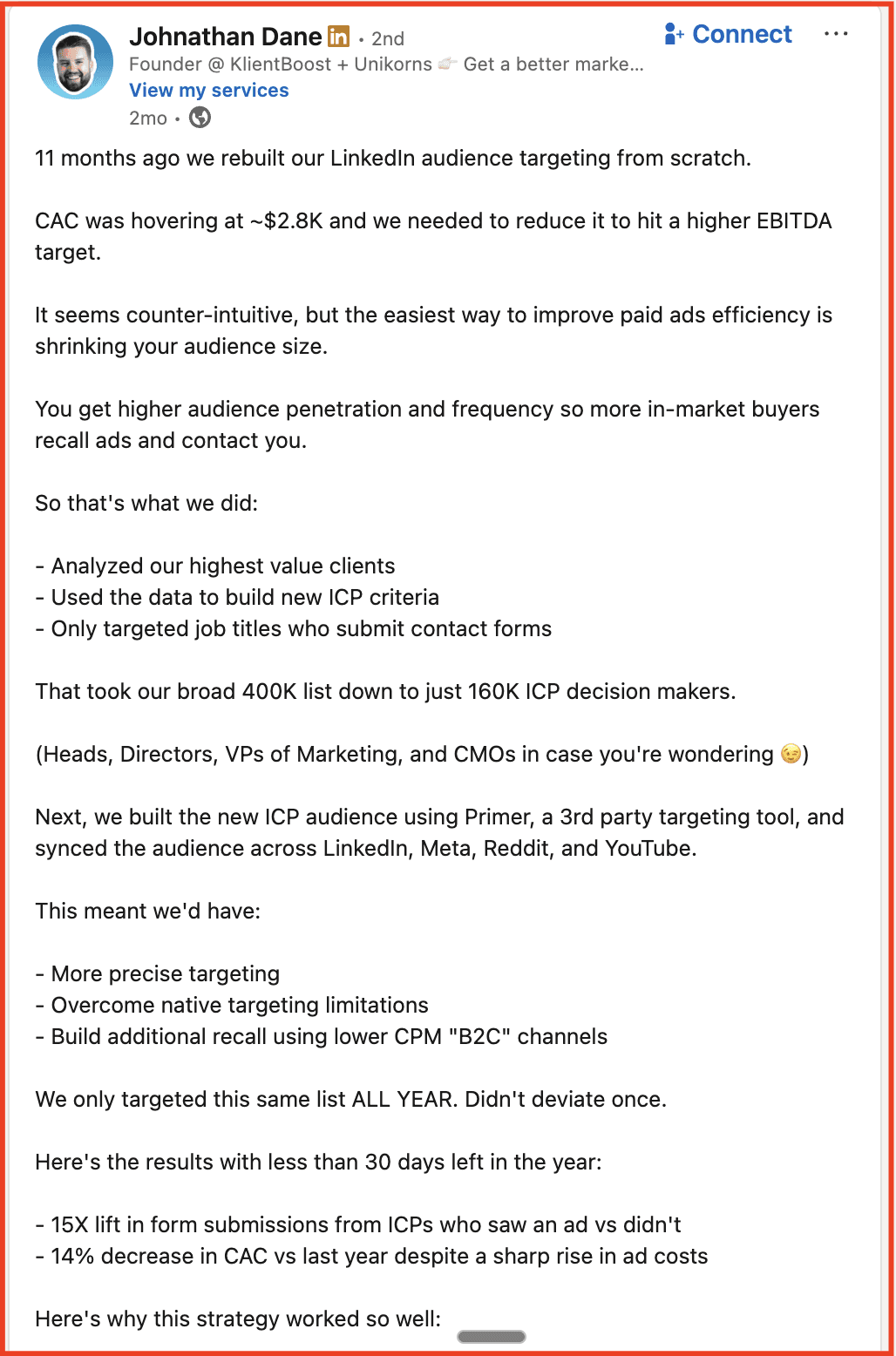
KlientBoost shares how the agency operates, not just the outcomes it wants the market to see.
This behind-the-scenes content gives prospects a clear view of the company's standards, decision-making, and internal discipline, well before a sales call.
This agency's employee advocacy program on LinkedIn has become its top client-acquisition channel.
Kimberlee Meier says, “The stat that made me most bullish about employee advocacy was that social-influenced deals were worth$11-15K more in LTV than deals from email or organic search. And double what LLM-sourced deals were worth.”
4. Marketing Team Advocacy Beyond Brand Pages
When marketers think about brand marketing, they often default to control. Approved language. Clear guardrails. Carefully written messaging. Everything is neat.
The problem is that this no longer reflects how trust is built, specifically on social media.
Employee advocacy works because it feels human. When a marketer talks about their work in their own words, it carries a different weight.
Think about the difference:
-
A company posting about a new feature
-
A marketer sharing their experience of talking to customers and understanding the need for this feature
The second example feels real because it is specific.
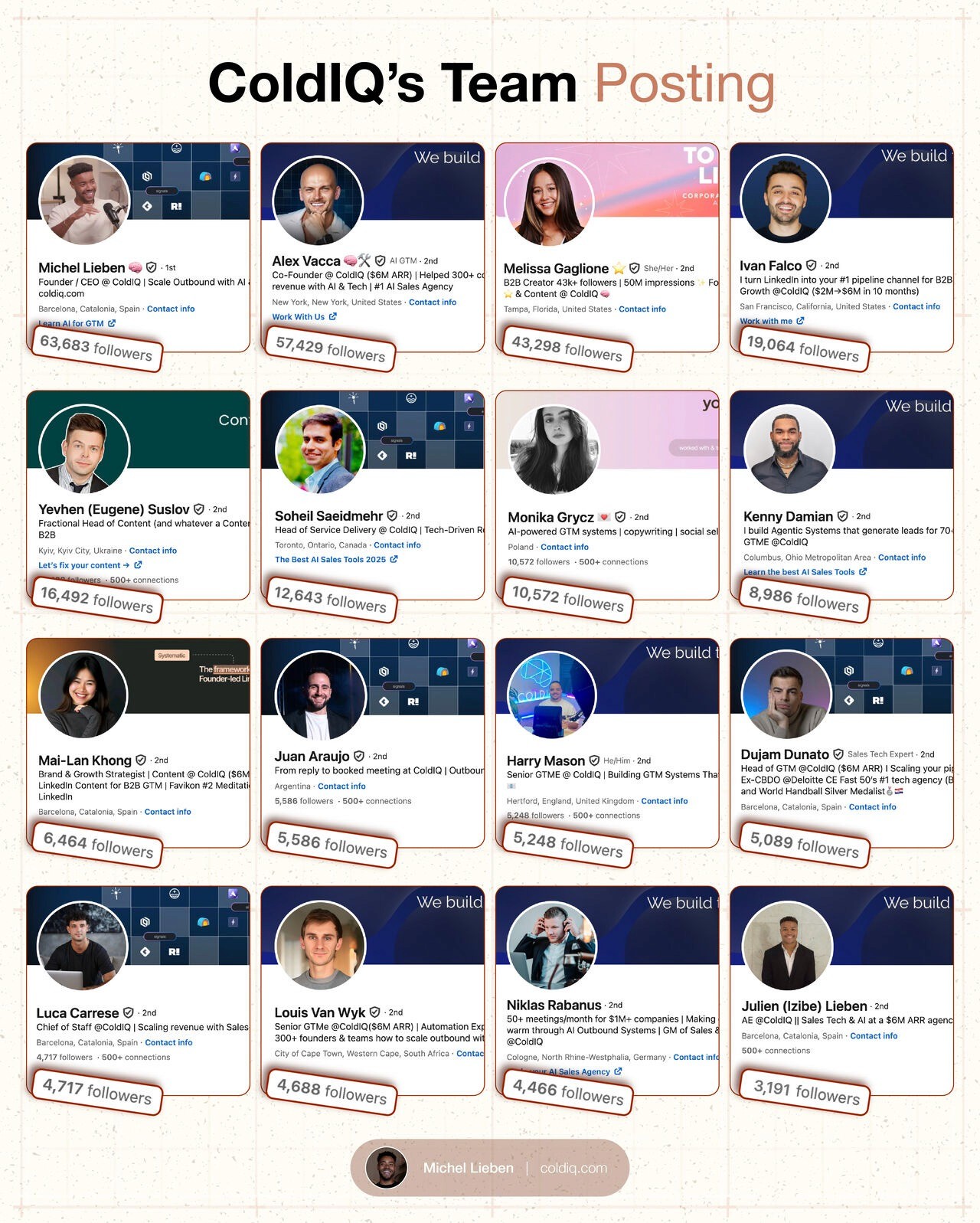
ColdIQ, an outbound lead generation agency, has built its entire ~$7M ARR acquisition funnel on marketing team advocacy. Prospects kept telling our sales team, “We see you guys everywhere.”
Here’s how ColdIQ made this happen:
Run an internal LinkedIn challenge
Successful programs begin by understanding employee motivation. Not everyone wants to post publicly, and participation should never be mandatory. Your aim should be to build contribution, not compliance.
Owing to this challenge, ColdIQ ran a competition & came up with a scoring system with a monetary reward:
-
🥇 $5,000
-
🥈 $2,500
-
🥉 $1,500
And, $500 for every team member who published more than 20 times during the quarter.
As a result, LinkedIn shifted from being perceived as “nice-to-have personal branding” to something far more concrete.
Made content creation effortless
ColdIQ made content creation simple and effortless. It provided their advocates with:
-
Well-structured writing guidelines
-
A proven angle or trendy topic
-
A strong hook
-
Nice visuals
ColdIQ gave them access to employee advocacy tools that provided proven topics and hooks to help the team create the best LinkedIn posts.
Invested resources in training the team
Not everyone’s job is to create content, so training sessions help employees understand what to share, how to share it, and where their voice fits, without making content another full-time responsibility.
So, this is what the ColdIQ team did:
-
1:1 working sessions — rewriting real posts, tightening hooks, fixing structure, and building repeatable content calendars
-
Team sessions — sharing best practices, live teardowns of what was actually performed, and why
-
Expert sessions with practitioners like Lara Acosta and Pierre Herubel — not theory, but lived experience and playbooks people could copy
This is how ColdIQ converted its entire team into advocates, resulting in over $153,000 in MRR in just 90 days.
5. Leadership Team Advocacy to Shape Category Narrative
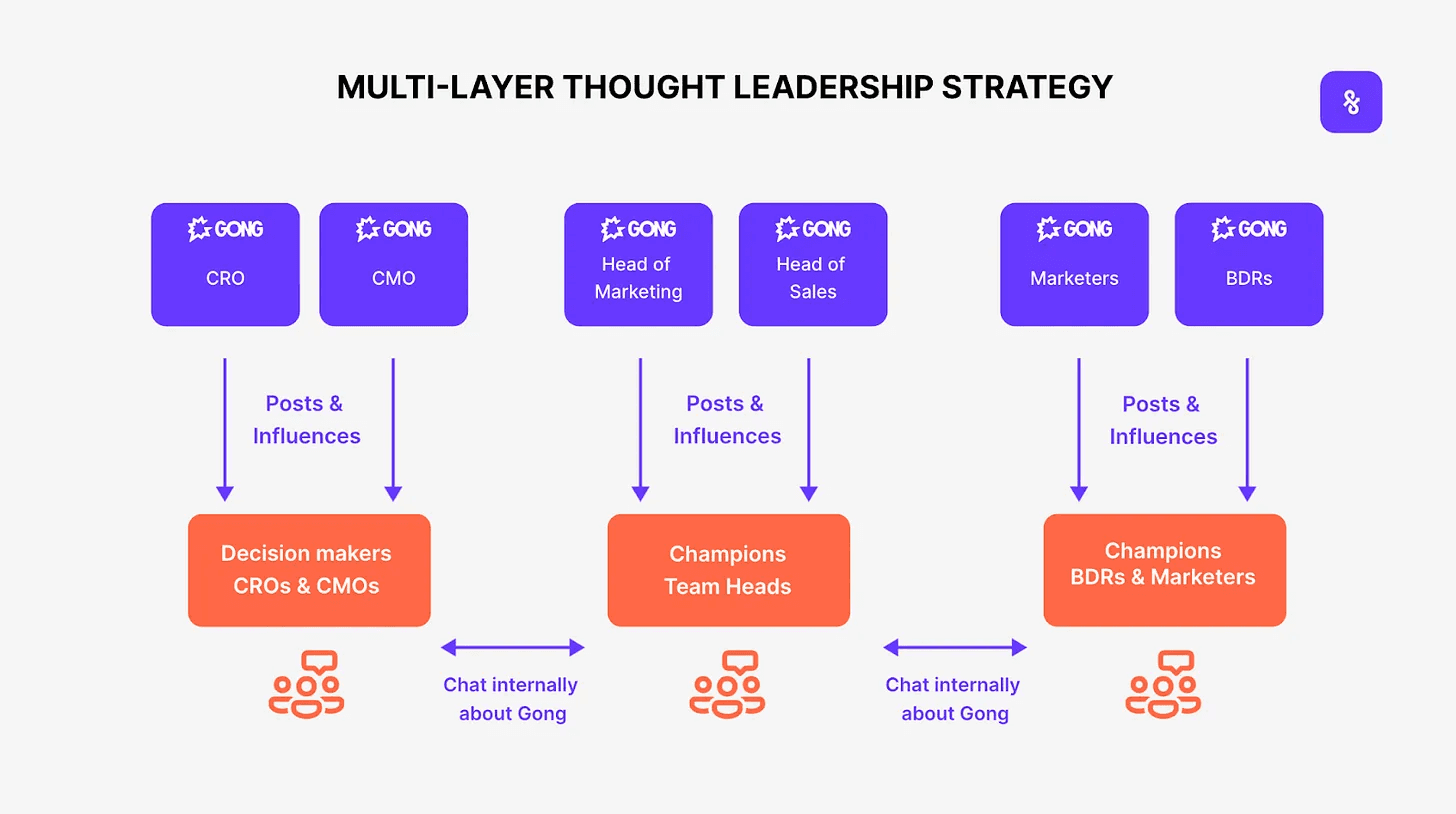
Gong used LinkedIn employee advocacy to grow 8x in less than two years through multi-layered thought leadership.
Jonathan Costet, ex-Growth Marketer at Gong, says employee advocacy shouldn't rest solely on the CEO's shoulders.
Each thought leader can reach and influence different layers of the target audience in their own unique ways, whether as a CEO, CMO, Head of Content, BDR, or Sales leader.
Every one of these perspectives helped expose Gong to a broader audience and showcase the value of different use cases/personas.
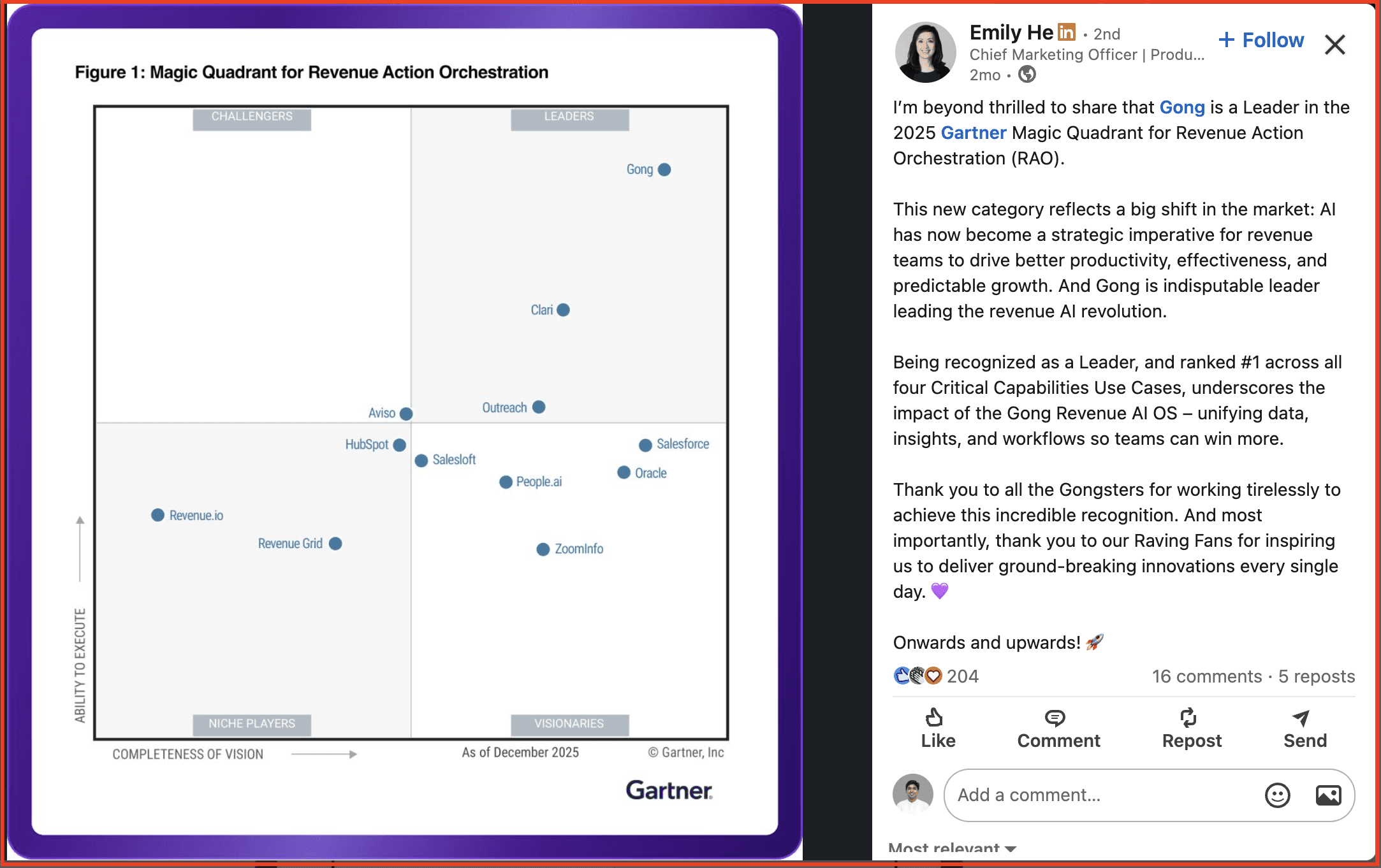
For instance, Emily He, CMO, shapes conversations across different seniority levels within the target function, including C-level, head of department, and ICs of your target buyers.
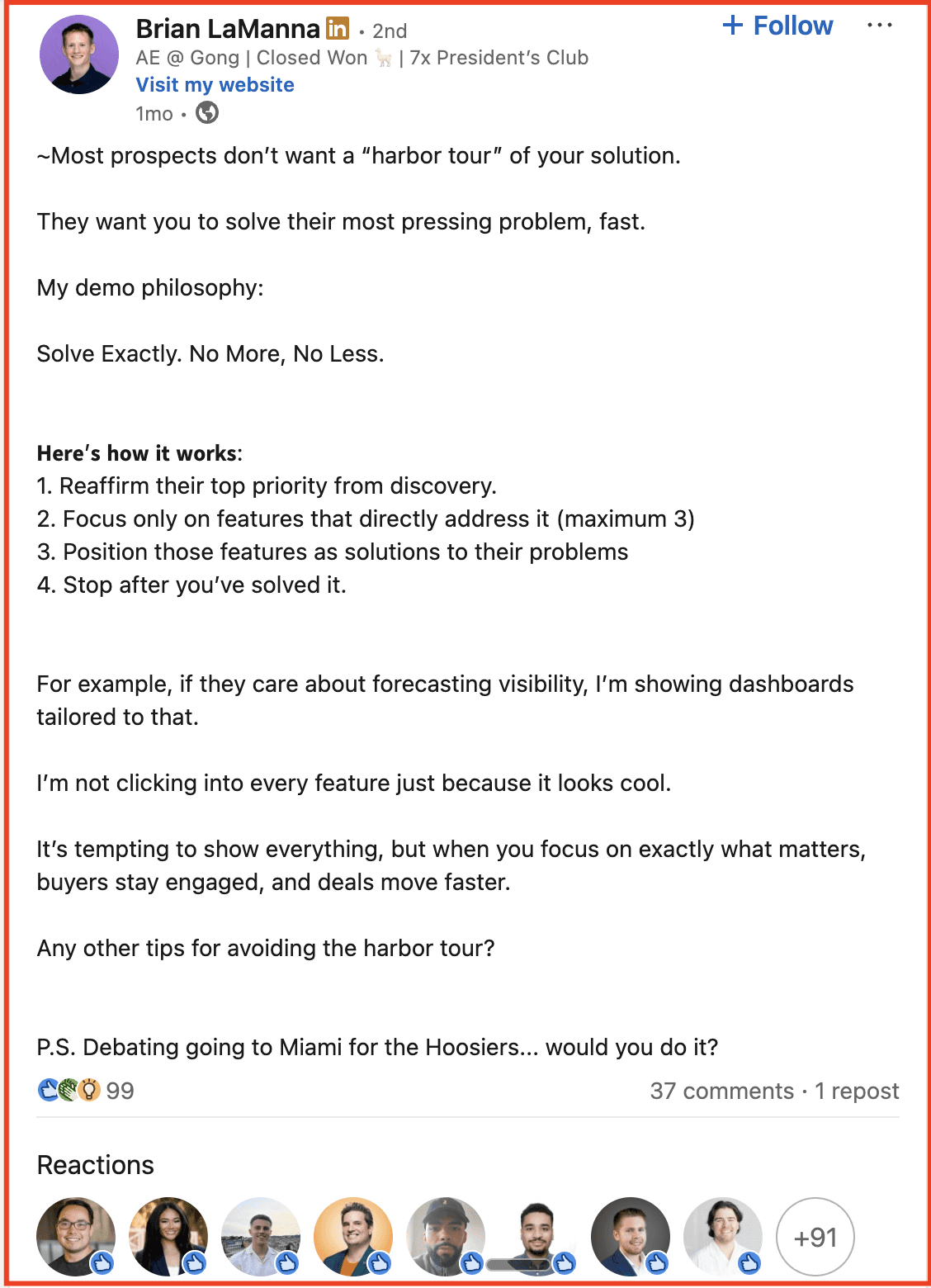
Similarly, Brian LaManna, Enterprise Account Executive, shapes a perspective that resonates with frontline sales leaders and managers who feel these problems daily and are often key champions in the buying process.
Together, when people are considering purchasing Gong and need to secure buy-in from champions and economic buyers, knowing who their Gong counterparts are builds affinity and trust, which influences purchasing decisions.
6. Distributed Advocacy in Remote-First Teams
Managing employee advocacy for remote teams is challenging because they are spread across time zones, with no in-person watercooler chats or conversations that promote employee-generated content.
Buffer is an excellent social media employee advocacy program example for remote teams.
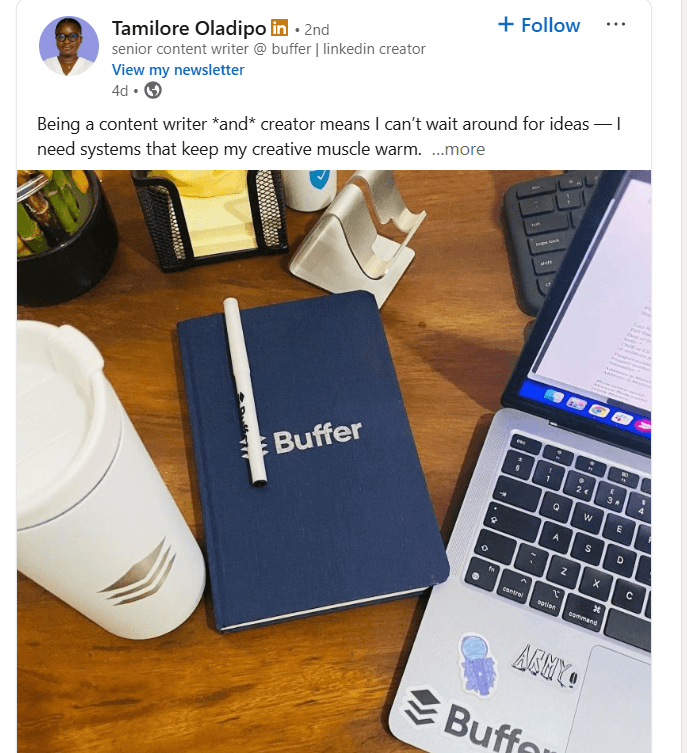
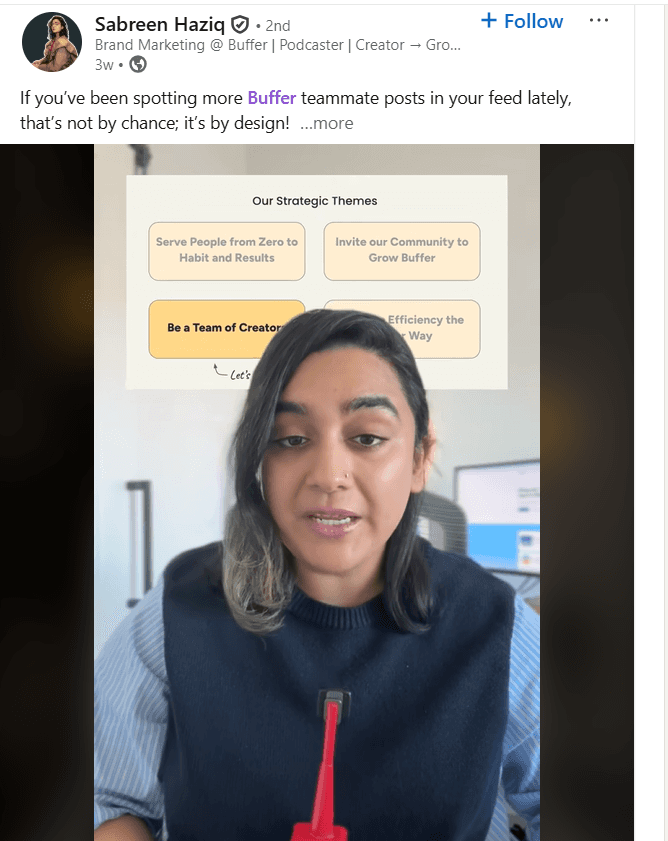
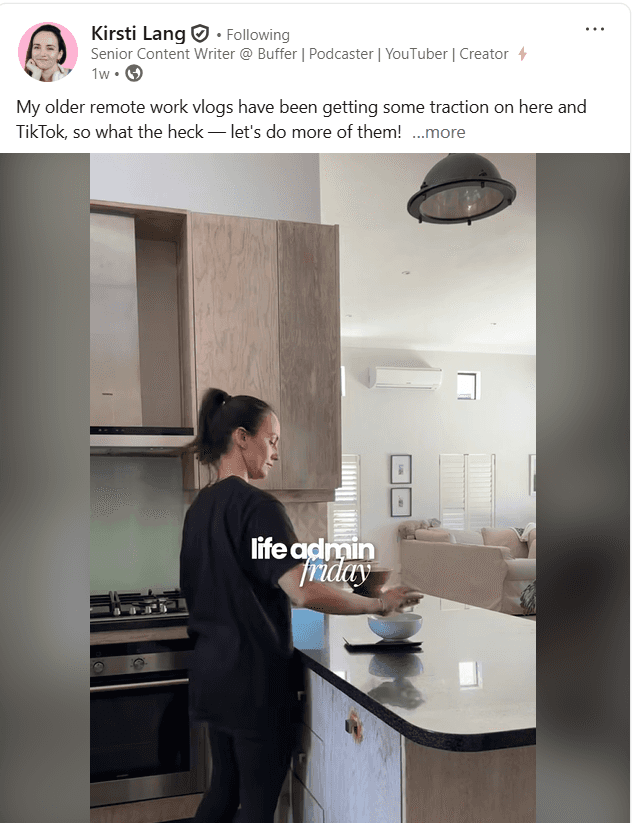
To bring this vision of employee advocacy to life, Joel Gascoigne, CEO of Buffer, founded Team of Creators, where everyone participates and starts their creator journey.
The foundation of remote employee advocacy came together in several interlocking parts, including:
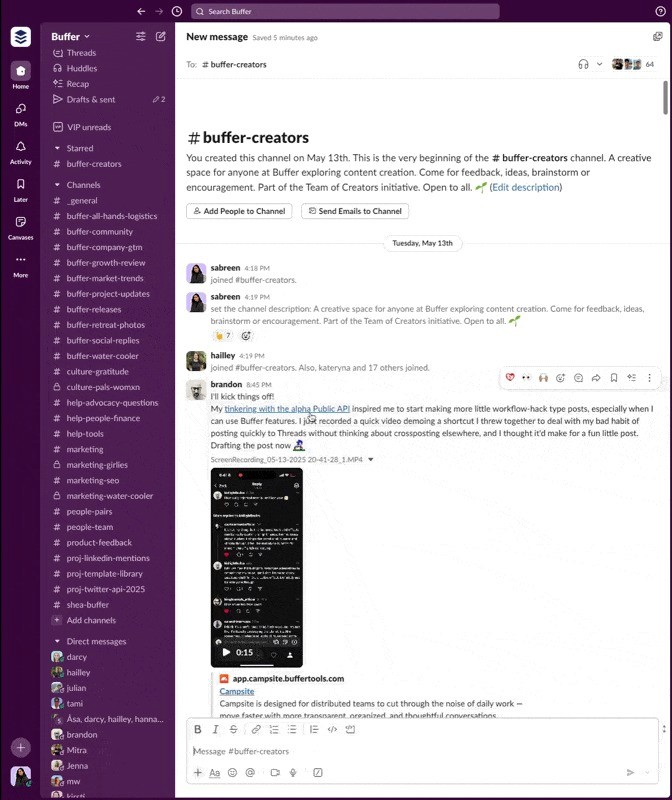
Dedicated Slack channel
An active Slack channel to swap ideas, share wins, ask for feedback, and cheer each other on. The aim was twofold: encouragement and visibility.
Established Buffer creators offering platform-specific tips, sharing AI workflows, or breaking down their viral post frameworks.
Team of Creators Resources HQ (Notion)
To make content creation effortless, Buffer offers the Team of Creators Resources HQ in Notion. Its working library for kickstarting or up-leveling a creator journey.
Inside, teammates could find:
-
Actionable guidance on picking an advocacy platform, picking up a niche, and setting achievable content goals.
-
Practical frameworks for batching content and scheduling consistently
-
Exercises and strategies to reframe common creator mindset challenges and build confidence.
-
Platform-specific best practices, including how different algorithms typically behave.
-
Creator Café workshops
Remote employee advocacy often fails due to limited interaction; that’s why Buffer launched virtual sessions to bring teammates together regularly and in real time. The motive of having these workshops is to:
-
Build creator habits, offer hands-on guidance, and overcome mindset barriers
-
Targeted workshops responding to specific challenges
-
Sessions focused on successful approaches, team-wide trends, and spotlight creative experiments
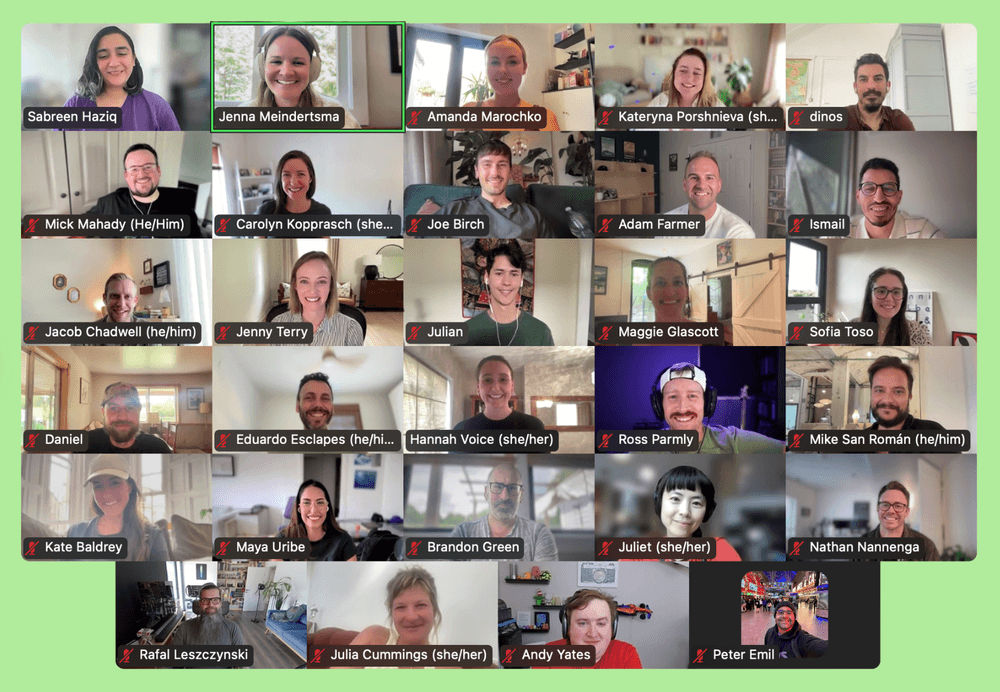
Result?
→ 90% of the team actively participating
→ 4132 total posts
→ 2,529,156 total reach
→ 3,705,897 impressions
→ 1,852,648 total views
→ 43, median posts per teammate
7. Thought Leadership Advocacy Bootstrapped SaaS
HeyReach has reached $10M in just 29 months as a B2B SaaS platform. A big part of that growth comes from something most software companies still overlook: employee advocacy.
They’ve built thought leadership in their field through content, not ads.
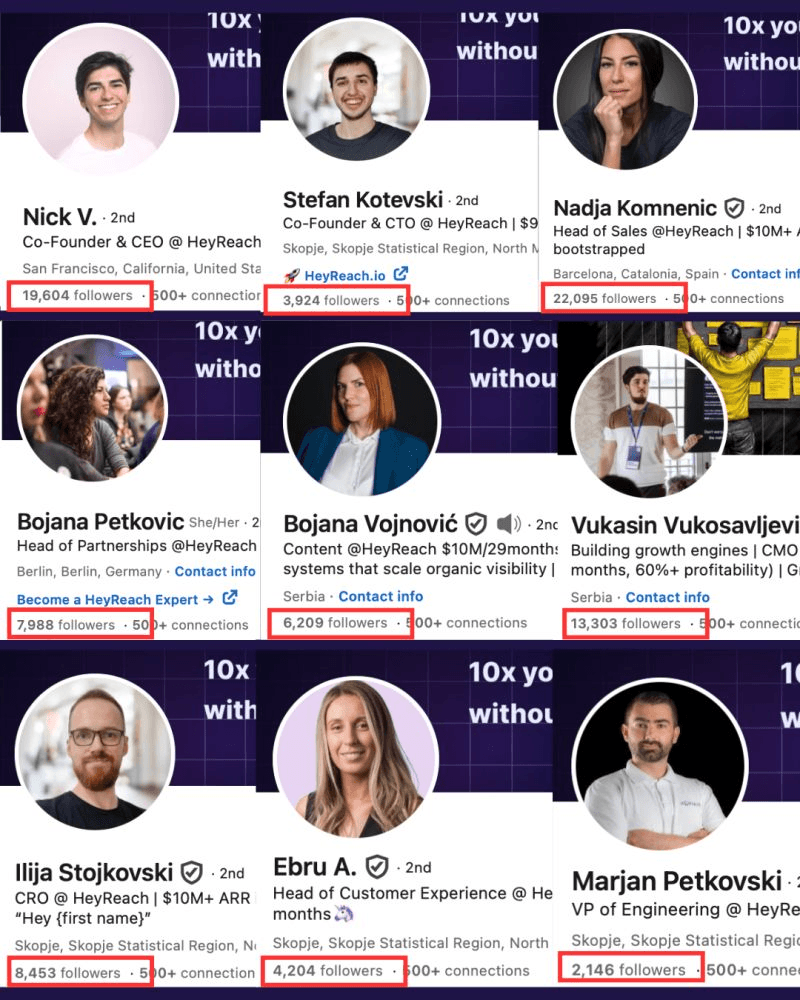
When you see HeyReach’s leadership on LinkedIn, you'll notice: they all publish like it's part of their job description.
Nick V, the founder, shares the realities of bootstrapping with his 19.6K followers: being three months from bankruptcy at $8K in MRR, or needing 597 sales meetings to cross $10K in monthly revenue.
Vukasin Vukosavljevic, CMO, breaks down content operations and distribution models publicly. He shares these playbooks with 13K followers and runs a 100K-subscriber newsletter.
Nadja Komnenic documents what actually works for her 22K followers. Email sequences hitting 39% reply rates, scaling two companies from $1M to $14M, and choosing to give burned-out reps time off instead of pushing harder.
Ilija Stojkovski, (CRO) completed 1,800 demos in 14 months, tracked every lost deal, and fed insights into the product. His 8.4K followers get tactical GTM systems that revenue teams actually implement.
Each executive owns a piece of the narrative. Together, they show up everywhere their buyers look.
The Outcome
-
2,000+ trial signups every month with zero paid acquisition
-
60M+ LinkedIn actions executed monthly
-
31.3% month-over-month user growth
-
$10M ARR with a 23-person team
-
$435K ARR per employee
Patterns You Can Apply From These Employee Advocacy Examples
It’s easy to look at high-performing brand LinkedIn employee advocacy examples and assume they worked because of exceptional people, strong personal brands, or perfect timing. In reality, those outcomes were the result of repeatable patterns, not the cause.
When you strip away the logos and personalities, the same principles reappear. These teams didn’t just encourage employees to post; they designed conditions that sustained advocacy.
Below are the patterns you can apply to turn employee advocacy from a few standout voices into a system your entire team can participate in.
Advocacy Works When Employees Own the Message
People don’t connect with overly corporate-sounding posts. Especially when they feel it's coming from a brand rather than a person. The benefits of employee advocacy are unparalleled for employees and companies when they own the message.
A more sustainable approach is to offer simple guidance while leaving room for individual voices.
You’ll find one commonly used content structure in the above examples:
-
Industry insights — opinions, trends, and POVs shaped by day-to-day work
-
Personal professional experiences — lessons, failures, and “here’s what surprised me” moments
-
Occasional company-related updates — naturally woven in, not forced
Systems Matter More Than Motivation
Motivation is a fragile fuel. It only works when things are light and collapses when work becomes complex, unclear, or endless.
If you want advocacy that actually works, here’s the reality check:
-
Simplify the system: If creating or sharing content feels hard, people won’t do it. Remove friction and make participation effortless.
-
Leadership sets the ceiling: If the C-suite isn’t visible and active, employees won’t be either. Advocacy starts at the top—walk the talk.
-
Kill the scripts: One brand voice doesn’t mean identical voices. Let employees share in their own words, authenticity scales credibility.
-
Momentum needs maintenance: Real advocacy is built through ongoing enablement, not one-off campaigns. Recognition, incentives, and even simple shoutouts keep participation alive.
Authentic employee voice requires trust, support, and a system that makes advocacy easier.
Measurement Changes Behavior
While cultural signals may be sufficient, you should also anchor your advocacy project in something more substantial.
For instance, Buffer has a creator dashboard, where they track a few signals:
-
Active team members: Tracks adoption by showing how many employees are participating in WoW–MoM
-
Total team posts: Measures overall content output and highlights spikes aligned with launches, events, or cultural moments.
-
Median posts per member: Reveals true posting behavior across the team, avoiding over-reliance on a few highly active contributors.
-
Total team distribution: Captures the collective visibility and impact of employee-driven content.
While tracking numbers is useful, Buffer also celebrates the people behind the advocacy without making it into a high-stakes competition.
That’s where the monthly leaderboard came in!
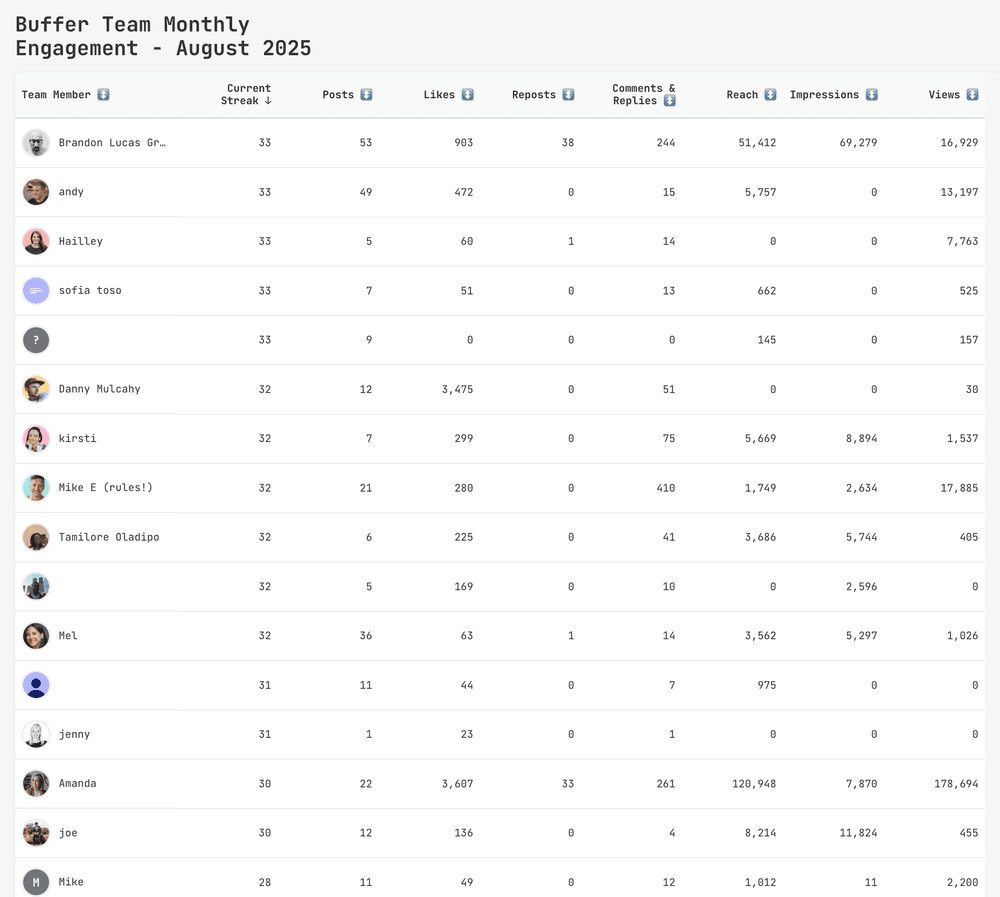
It’s designed to recognize participation and consistency, not just the biggest reach or the highest engagement.
Conclusion — From Inspiration to Execution
With the right systems and structure in place, you can build a successful employee advocacy program just like them. Employee advocacy is a long-term strategy, and you should be deliberate about keeping the stakes and participation steady.
Scaling your employee advocacy is straightforward with Supergrow. It equips you with the structure, tools, and inspiration you need to consistently publish high-performing content.
Want to build an employee advocacy program that scales and brings ROI? Sign up on Supergrow now!