
You have been posting for a year. Same cadence, same effort, and your reach keeps sliding.
The advice you followed was not wrong. It was unexplained. And unexplained advice breaks the moment the system underneath it moves.
That system moved twice in 2026. LinkedIn rebuilt how its feed decides who sees you in March, then opened a marketplace where brands find and pay creators in June.
I read the engineering post behind the first change the week it went up. Your posting history is no longer content. It is a portfolio.
Here are 9 LinkedIn content creator strategies for 2026, each with the mechanism behind it, so you know why it works and what it is now worth.
Why LinkedIn Just Became a Real Platform for B2B Creators
For years, building on LinkedIn meant hoping visibility turned into something. No path ran from audience to income through the platform itself.
That changed on June 10, 2026, when LinkedIn launched Creator Marketplace inside Campaign Manager. Brands search creators by topic, review audience breakdowns by industry and job title, and move to outreach without leaving the tool.
The demand was already there. In LinkedIn's 2026 Global B2B Marketing Outlook, a YouGov study of 1,299 B2B marketers, 82% said creators increase credibility with decision-makers. Finding the right ones was the bottleneck.
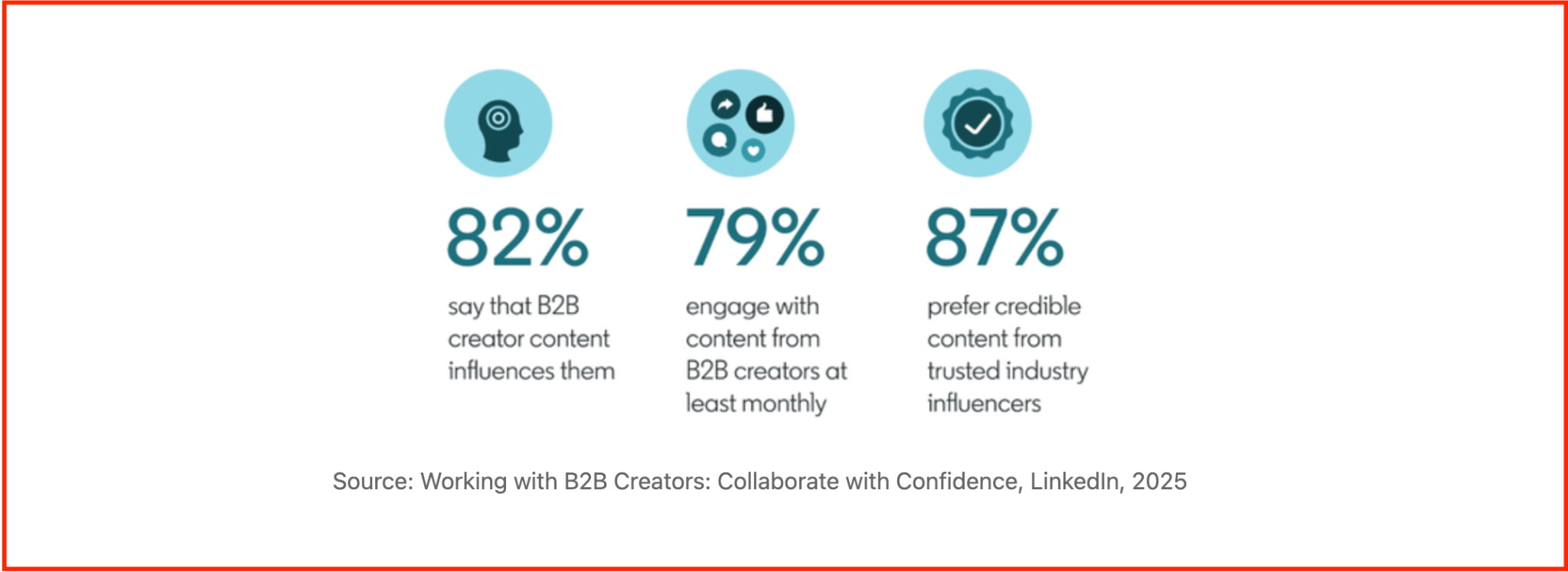
Marketplace is not an open directory. LinkedIn invites creators through a Monetization tab, selecting on expertise, content quality, and platform presence. Nobody applies. You get found based on what you already built.
It is alpha today. North America, English only, global expansion planned. That gap is the opportunity.
I have been watching this from inside the product. The creators who look ready were never the ones who started when the opportunity appeared. They were already three years into being consistently about one thing.
9 LinkedIn Content Creator Strategies That Build a Following Brands Pay For
Each LinkedIn content creator strategy below is tied to something LinkedIn published or a study you can check. The mechanism matters more than the tactic, because tactics stop working and mechanisms tell you why.
Work through them in order. The first three decide whether the rest compound.
1. Claim One Problem You Want to Be Known For
Your headline is not a label. It is a ranking input.
In March 2026, LinkedIn's engineering team published how the new feed works. For every post entering the system, it builds a prompt that includes the author's name, headline, company, and industry alongside the post text.
Your profile gets read with your post, every time. Which means the model forms a view of what you are about before it evaluates anything you wrote.
Most headlines waste that. "Founder at X" tells the system your job. It says nothing about the problem you solve or who you solve it for.
Wes Kao's does the opposite. Her headline names the audience and the change: helping tech operators improve their executive communication, leadership, and influence.
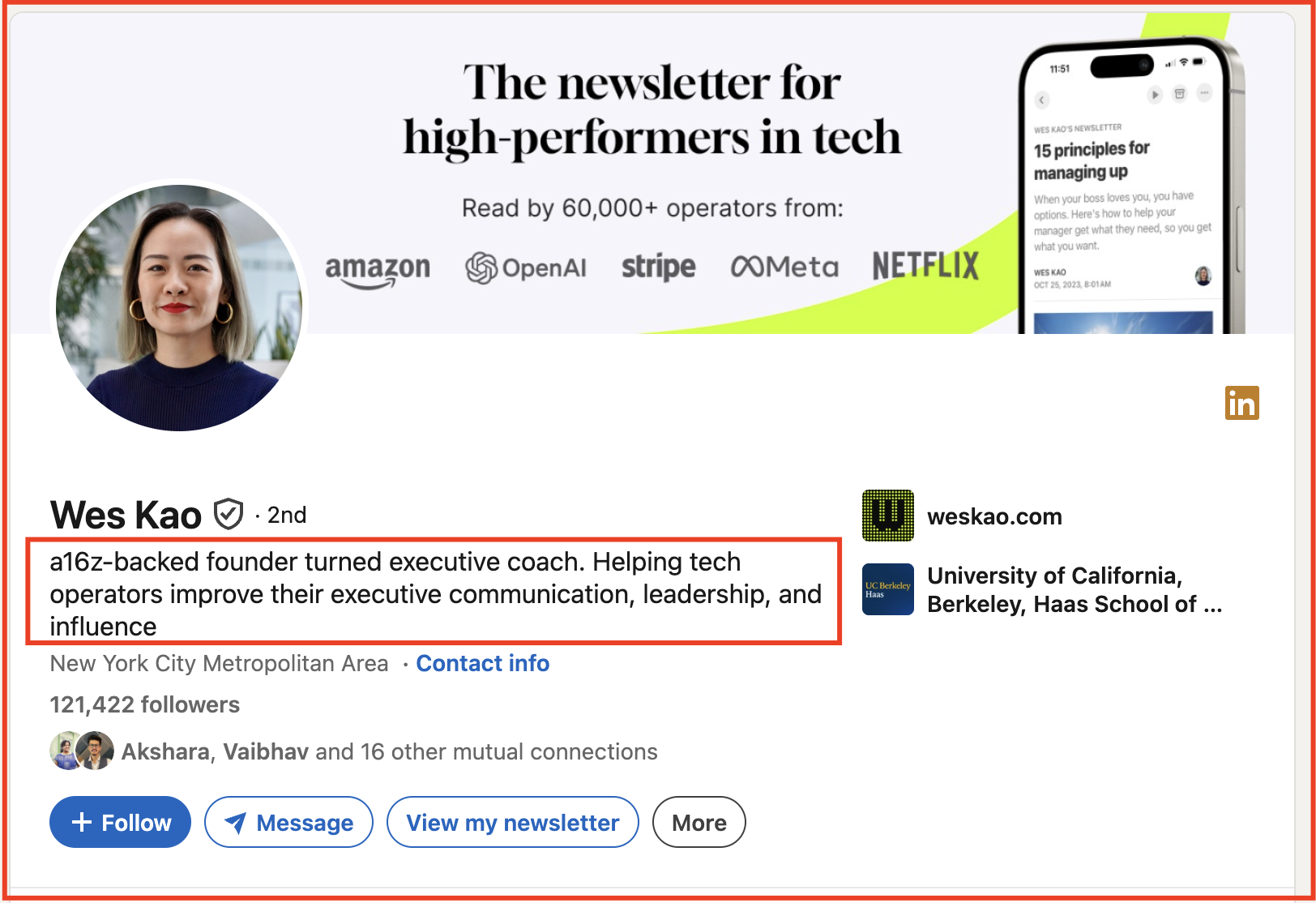
Write your headline as a claim. Who you help, and what gets better.
The harder part is seeing your own positioning from the inside, where everything you do feels equally central.
Supergrow's Content DNA reads your existing profile and posts back to you as a positioning profile, so you can see which claim you are already making before you decide whether it is the right one.
2. Narrow Your Content to Two or Three Themes
Strategy 1 was about what you declare. This one is about what you publish, and whether the two agree.
LinkedIn's ranking model reads more than a thousand of your past interactions as an ordered sequence, not as isolated events. It is tracking a trajectory. A feed that swings between hiring posts, product news, and industry commentary gives it nothing to track.
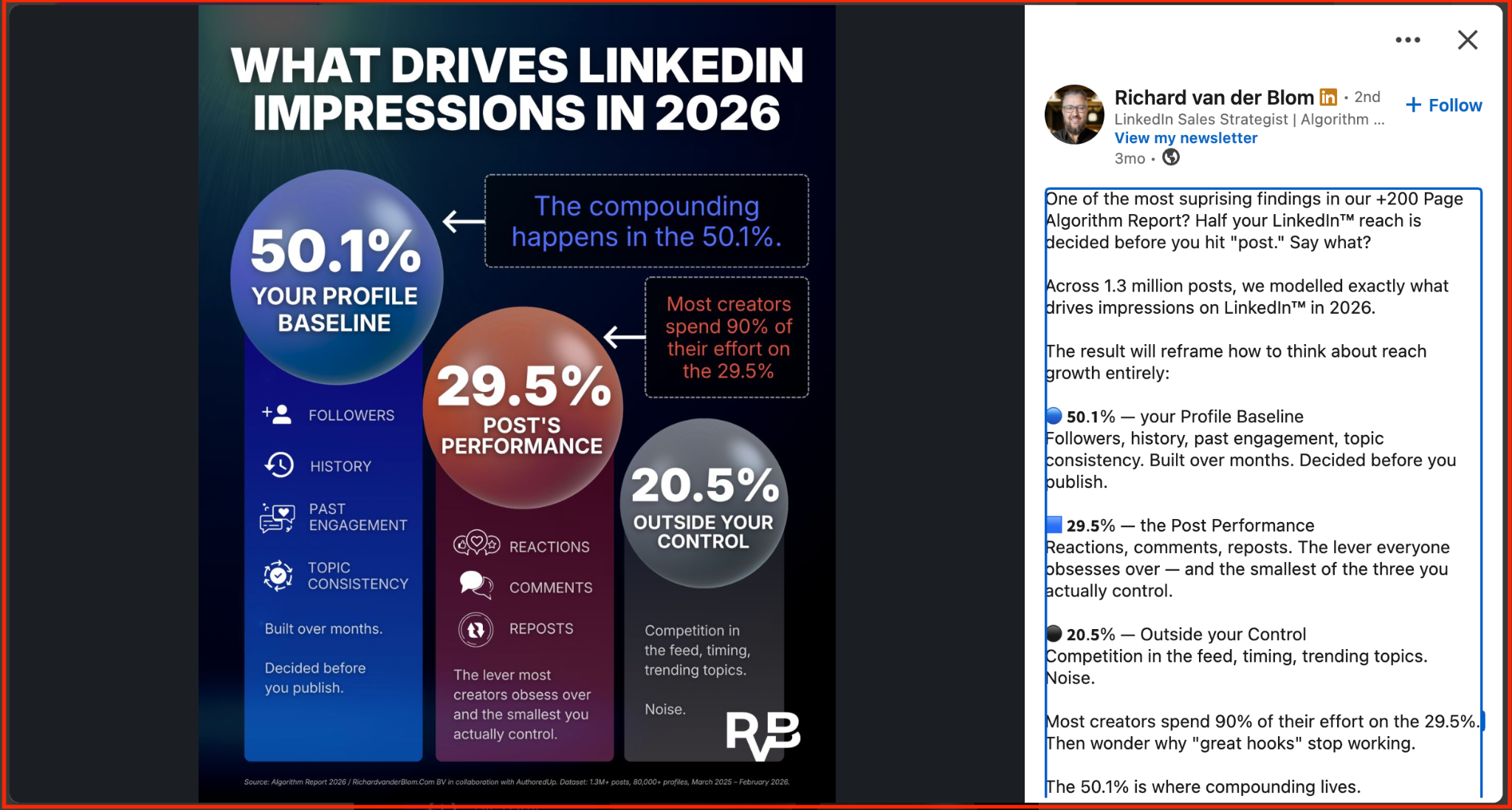
Richard van der Blom's 2026 Algorithm Insights report, built on 1.3 million posts published between September 2025 and February 2026, puts a number on it. Roughly half of your impressions come from profile-level factors including topic consistency, before any single post is judged.
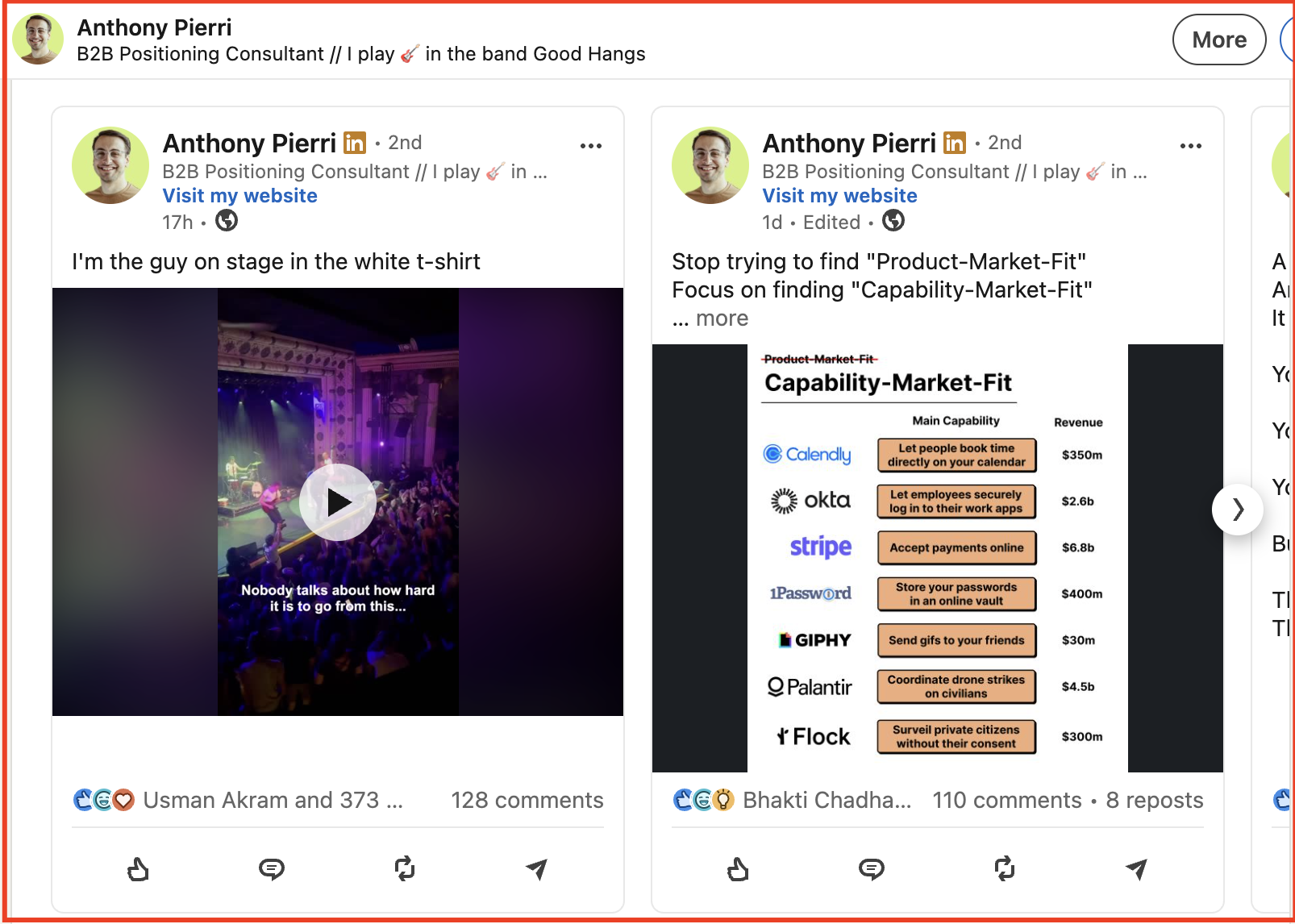
Anthony Pierri has posted about one thing for years: B2B homepage messaging and positioning
Three to four times a week, same subject, no drift. That consistency is why his name surfaces when founders look for positioning help.
Run the audit on yourself:
- Pull your last 30 posts
- Sort each into a theme, using the words a reader would use
- Count how many themes you ended up with
- Keep the two or three that connect to your headline, and stop publishing the rest
Two or three is the working range. One is fragile. Ten is noise.
Once you know your themes, you need a system for filling them week after week. That is what our LinkedIn content strategy guide covers in full.
3. Write for a Specific Audience, Not the Feed
Strategy 2 was about topic. This one is about who you are aiming at, and it is the part almost nobody gets right.
LinkedIn's ranking model trains on two kinds of negative examples. Random posts a member never saw, and posts they were shown and ignored.
The second kind is called a hard negative, and adding just two per member improved the model's accuracy by 3.6%.
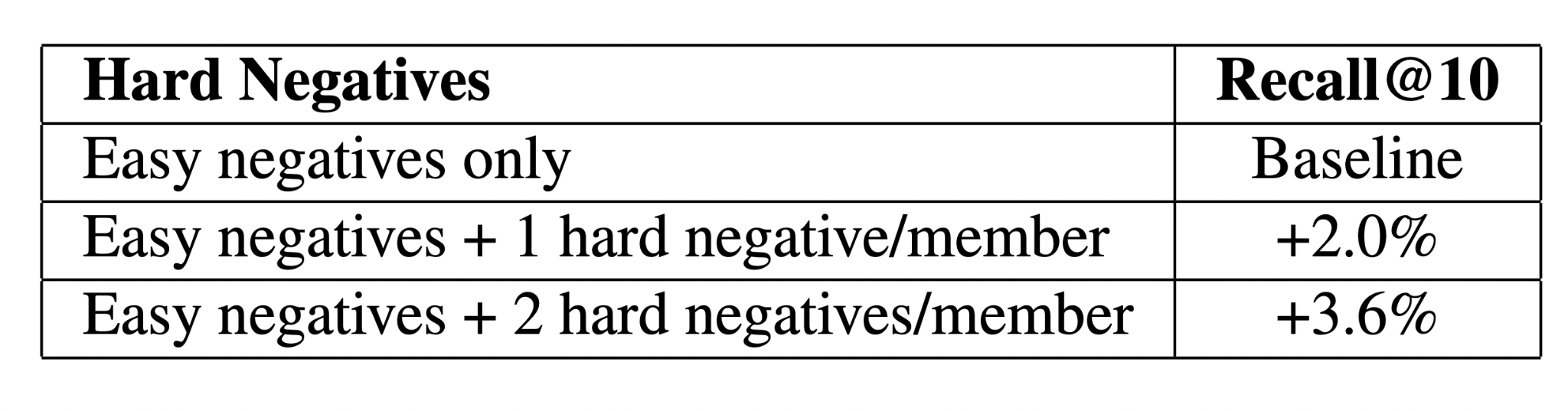
Sit with what that means. Being seen and scrolled past is not a neutral outcome. It is the exact signal the system learns from hardest.
Every post that reaches people who do not care teaches the model something about you. Broad reach with low relevance does not just fail. It costs you.
What this changes in practice:
- Name one reader before you write. A real person, a real job title, a real problem they had this week
- Cut the opening line that was built to stop any scroll. Write the one that stops the reader you named
- Skip the trending topic if it sits outside your themes, however well it would travel
- Read a flat post as a signal about audience fit before you blame the writing
I stopped chasing reach the week I understood this.
Now I write each post to one person I can name in my head, and I would rather 400 of the right people read it than 40,000 of the wrong ones.
4. Build a Publishing Practice, Not a Posting Sprint
Post daily is the most repeated advice in this category. It is also the least examined.
Ferdinand Goetzen tested it properly. He had been stuck around 8,000 followers for two years, so he posted every day for 100 days and published the numbers:
- 270,000 impressions,
- 3,136 engagements,
- 872 new followers,
- about 2.5 hours a week.
His own conclusion is the useful part. Forcing a post every day produced rushed ones, and he believes those hurt the reach of the posts that followed.
That tracks with Strategy 3. A weak post reaches people who ignore it, and the model learns from that.
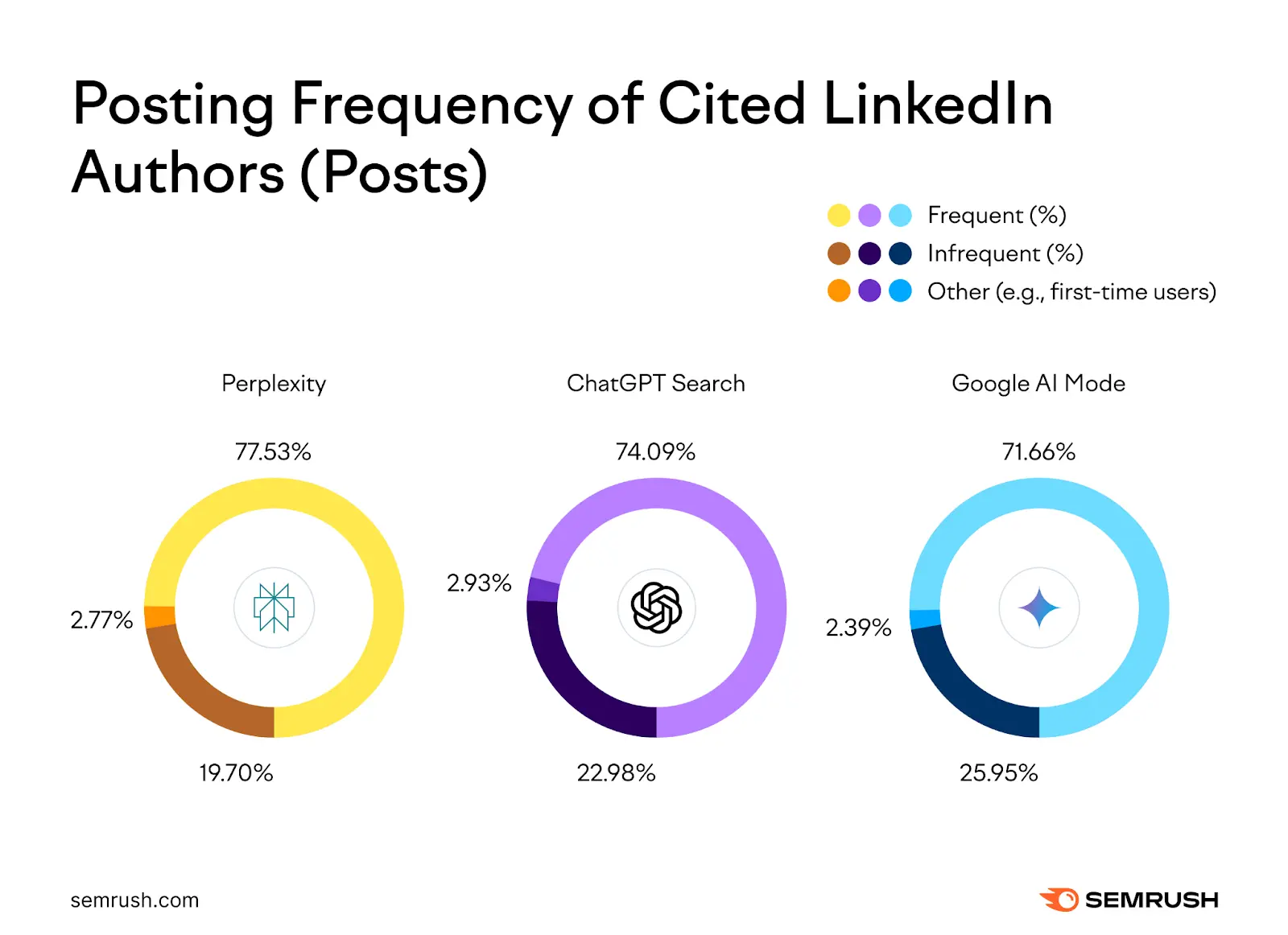
Cadence still matters. Across 89,000 LinkedIn URLs cited by AI search engines, roughly three-quarters of cited authors had published five or more times in the previous four weeks. The floor is real. The ceiling is where daily posting breaks.
What a practice looks like:
- Pick a cadence you can hold on your worst week, not your best
- Batch drafting, publish on schedule
- Skip a slot rather than ship filler
- Track weeks published, not posts published
Most creators do not stop because they run out of ideas. They stop because writing from scratch every time is exhausting.
Supergrow's PostCast turns a spoken answer into a draft, so a busy week costs you fifteen minutes instead of a slot.
5. Earn Attention, Not Reactions
The like has been the scoreboard for so long that most creators still write for it. LinkedIn stopped scoring that way.
Its ranking model now separates what you do from what you almost do. Reactions, comments, and shares sit in one group. Clicks, skips, and long dwells sit in another, and both feed the score.
Dwell has been measured since 2020, when LinkedIn's engineers found that likes and comments were sparse and noisy signals.
Time spent reading was always measurable. So they built a model that predicts whether you will skip a post, and lowered its ranking accordingly.
A post can collect 40 likes and still be classified as skippable. A post with 8 comments that people actually read through can outperform it.
I check average dwell before I check reactions now. Reactions tell me a post was seen. Dwell tells me it was worth someone's time, and only one of those compounds.
6. Comment Where Your Topic Lives, Not Where the Traffic Is
Commenting stopped being a growth hack. It is now a signal about what you are about.
The same model that reads your posting history reads your engagement history. Every post you comment on gets filed as evidence of your interests, which means commenting on whatever is trending blurs the picture you spent Strategy 2 sharpening.
Richard van der Blom's 2026 research makes the same point from the data side. Commenting on the wrong posts works against your reach.
He also reports that 80% of the comments his own posts receive in the first 5 minutes are written by AI. That is the pool most reach-chasing advice tells you to join.
Build a list of 15-20 people who publish inside your themes. Comment where you have something specific to add, and cap it at 20-30 mins a day.
Finding those posts means opening the feed, and the feed pulls you toward whatever is trending.
Supergrow's engagement lists group the people you want to show up for and pull their latest posts into one view, so you comment from there instead of scrolling.
The goal is not volume. It is making sure the account you are building and the conversations you show up in tell the same story.
7. Publish Original Research and Long-Form Content
Everything so far assumes you are competing for attention with posts. The creators who pull away publish something nobody else can republish.
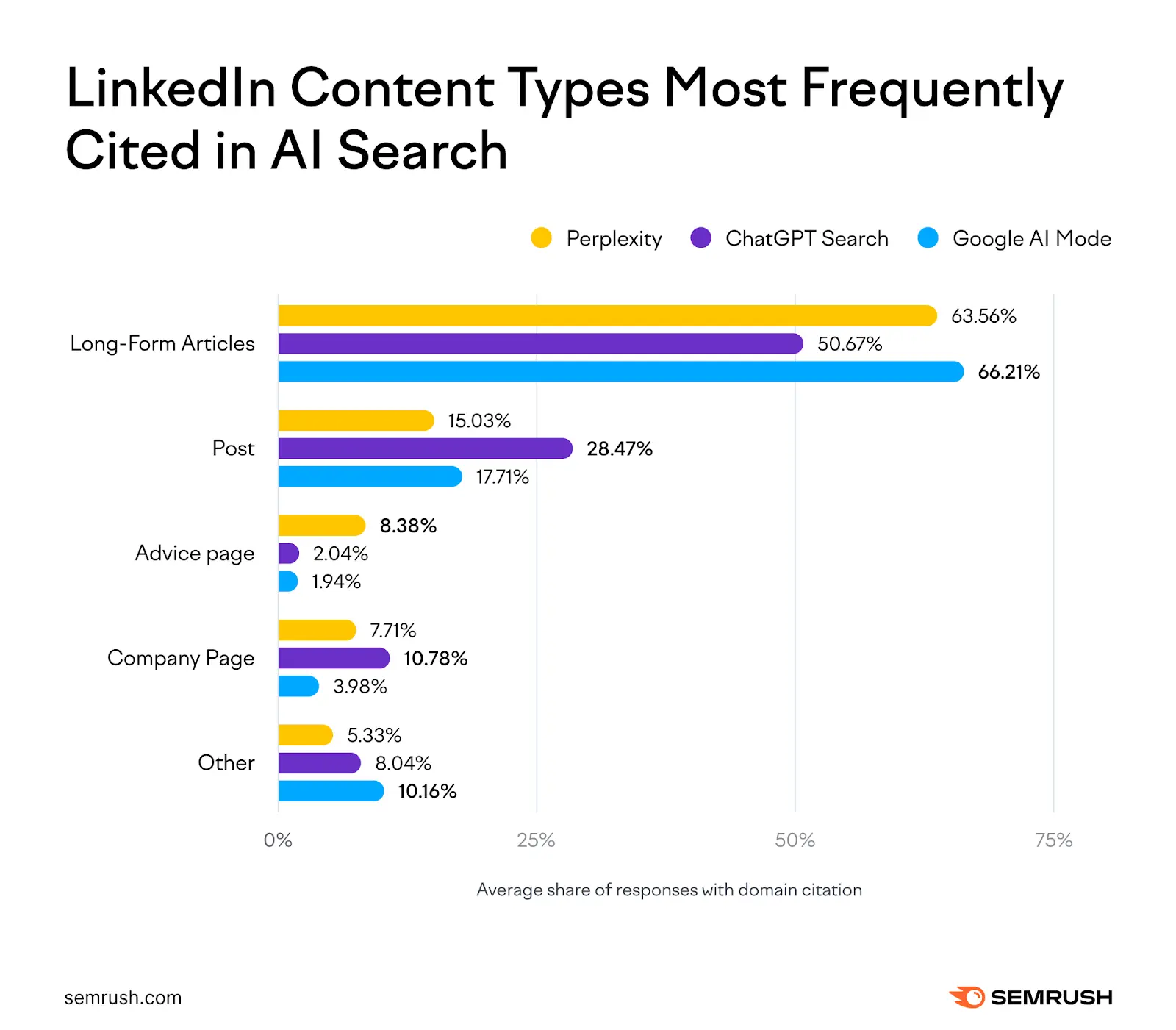
AI search engines already reward this. Across 89,000 LinkedIn URLs cited by ChatGPT Search, Google AI Mode, and Perplexity, articles account for 50 to 66% of citations, with 500 to 2,000 words the most commonly cited range. Roughly 95% of cited posts are original. Reshares barely register.
Richard van der Blom is the clearest example. He has published one annual LinkedIn algorithm report for years, built on 1.3 million posts in the latest edition. That single asset built a consultancy and an audience close to 200,000.
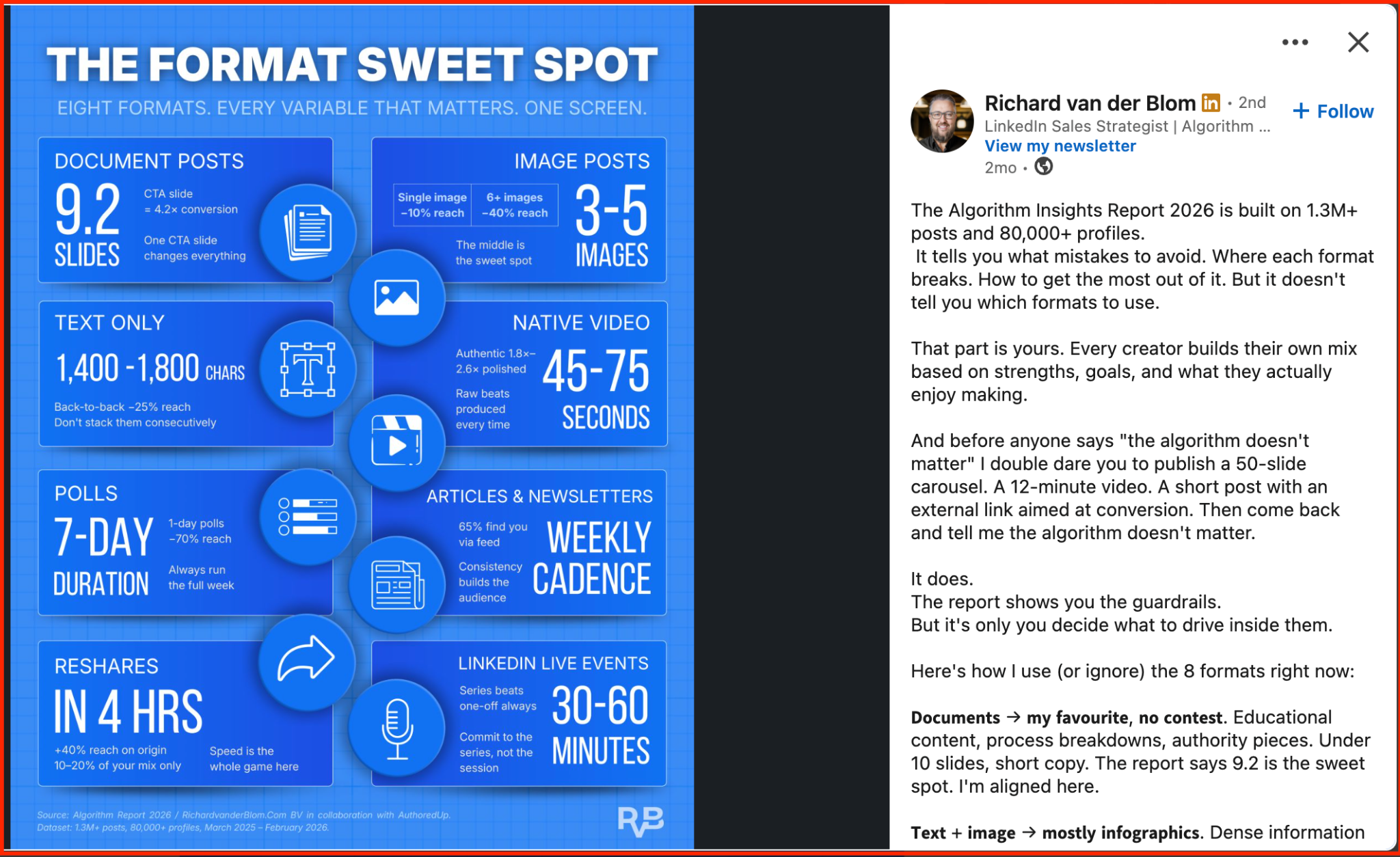
He is not a better writer than his competitors. He counted something nobody else counted.
Goetzen found a version of this in his own experiment. He noted that 28% of his new followers came from public speaking, not from the 100 posts.
Pick one thing in your work you can measure, and nobody has measured publicly. Your close rates, your pricing tests, your hiring funnel.
Publish it once a quarter as a long-form piece, and let the posts point back to it.
8. Track Non-Follower Reach Instead of Follower Count
Follower count measures accumulation. It stopped measuring whether your content works.
LinkedIn's retrieval system is semantic now. It matches content to interests, which means it can put you in front of people who never followed you and never will. Distribution comes from relevance, not from the size of your list.
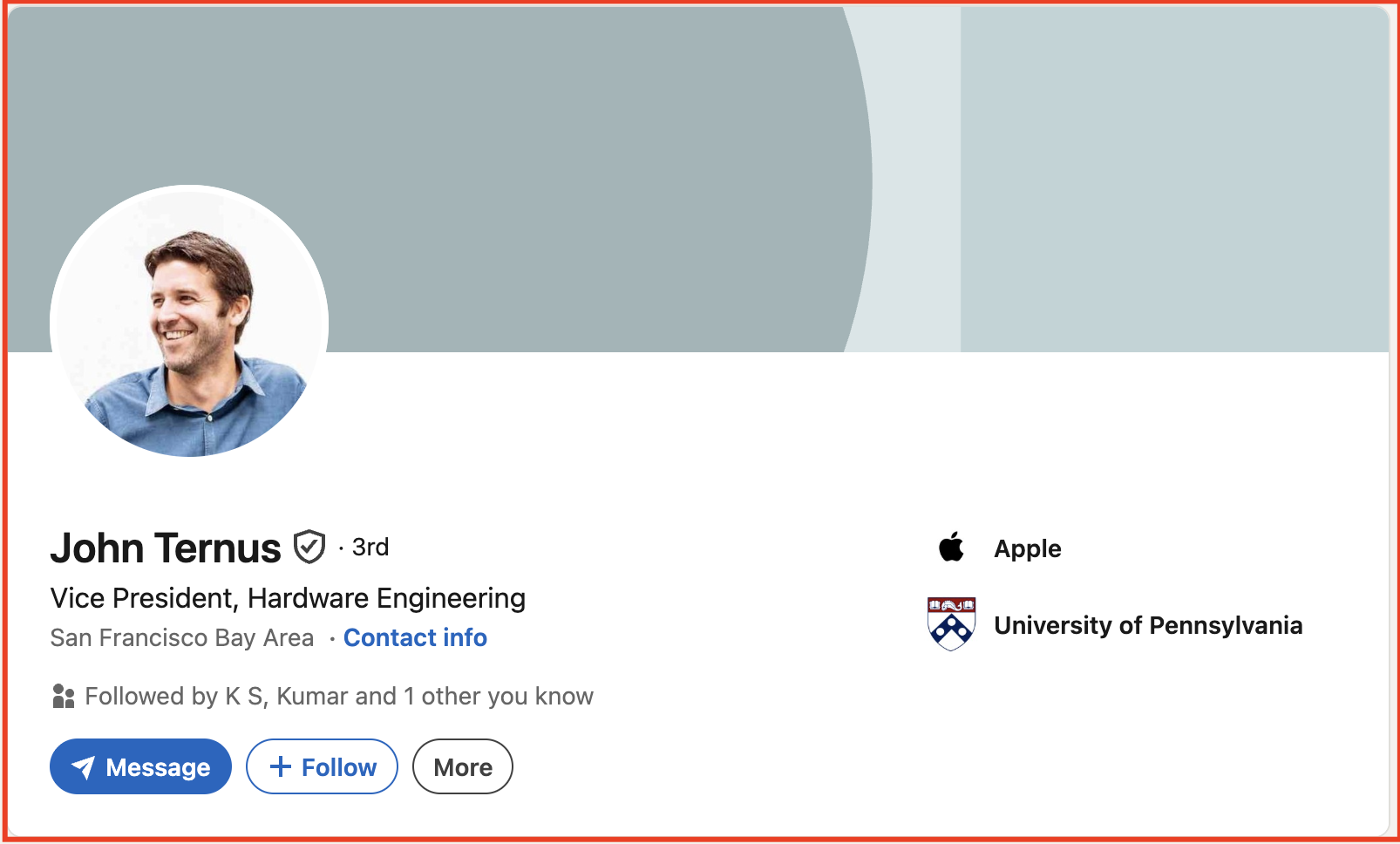
John Ternus is a great example. Apple named him as Tim Cook's successor, and his LinkedIn profile holds over 36,000 followers with no posts, no header image, and no activity. The audience exists. It reaches nobody.
Four numbers worth watching instead:
- Share of impressions from people who do not follow you
- Saves, which signal a post someone expects to need again
- Whether long-form posts hold attention or get skipped
- Inbound conversations that reference something specific you wrote
Native analytics will show you most of this, though pulling the trend across months is manual. Supergrow's analytics track it alongside your posting cadence, so you can see whether a narrowing strategy is actually widening your reach.
Watch these for a quarter. If non-follower share is climbing while follower growth stays flat, the strategy is working.
9. Build the Track Record Before the Marketplace Reaches You
Nobody tells you how long this takes.
Kyle Poyar started Growth Unhinged in March 2021. It took roughly 18 months to reach 11,000 subscribers, a pace he has called glacial. He kept publishing weekly inside the same narrow band: pricing, product-led growth, go-to-market.
That newsletter now reaches over 85,000 readers, and his first full year working on it alone is tracking toward $1.5 million in revenue.
The 18 months were not wasted time. They were the classification period, when the system and the audience were both working out what he was about.
This is why the marketplace timing matters. LinkedIn selects creators on expertise, content quality, and platform presence, and it is still in alpha in North America. Whenever it opens in your market, it will evaluate the track record you already have, not the one you intend to build.
You cannot compress that. What you can do is start the clock, hold two or three themes, and publish through the stretch where the numbers do not move yet.
That stretch is where almost everyone quits. It is also the only part of this that nobody can buy their way past.
Start Your LinkedIn Creator Journey
Your posting history is your portfolio. That is the whole shift.
The difference between creators who compound and creators who stall is rarely talent. It is whether they were still publishing in month eleven.
So start this week. Publish something only you could have written, then do the same next week, and keep the promise on the weeks it feels pointless.
Almost nobody fails for lack of ideas. They fail because writing from scratch every time is exhausting, and exhaustion is quiet.
Take that friction out and consistency stops being a willpower problem. Start with Supergrow free.