
Every program manager I talk to describes employee advocacy adoption the same way. 20 people accepted the invite. 3 of them post.
They tell me it's a motivation problem. So they add a prize, send a reminder, ask leadership to nudge the team.
It works for a week. Then the feed goes quiet again.
The pattern is hard to miss after enough of these conversations. Adoption isn't one number you raise. It's a sequence of stages, and your program is losing people at one specific point.
Find that point and the fix becomes obvious.
Adoption vs. Participation: They're Not the Same Thing
The 20 people who accepted the invite are your adoption number. The 3 who post are your participation number.
Almost every employee advocacy program reports the first and manages by it, which is why the problem stays hidden for two quarters.
Before I discuss anything else with a team, I ask them to run 2 counts:
-
Adoption — How many people have published at least once since launch. This tells you who got started.
-
Participation —How many published in the last 30 days. This tells you who is still going.
A 22-seat program might show 14 who published once and 3 who published this month. The 14 goes in the board deck. The 3 is the program.
That gap decides your next move. Someone who never published is stuck at the starting line. Someone who published twice and then stopped has already cleared that bar, and another activation nudge will be noise.
Your employee advocacy adoption rate indicates how many employees have signed up.
Your participation rate tells you whether anything you built holds.
Is It a People Problem or a Program Problem?
When participation is low, the diagnosis almost always lands on the employees. They're busy. They're private. They don't see the value in LinkedIn.
I understand why. It's the only explanation available when the only number you have is a headcount.
But run the 2 counts and the shape of the failure gives it away.
-
14 people published once.
-
3 published this month.
That is not a room full of unmotivated people. Those 14 already proved they were willing, and something in the program lost them after they started.
The distinction points at different work.
-
People problems get solved with conversations.
-
Program problems get solved with structure, and no amount of encouragement fixes them.
Employee advocacy adoption fails far more often for the second reason than the first.
Your drop-off has a shape. The shape tells you which problem you have.
Find Your Leak in 5 Questions
Take your own numbers to each of these. The first one where the answer is yes is where your program is leaking.
-
Did many invitees never accept? Your leak is at Join.
-
Did they accept but never publish a first post? Your leak is at Activate.
-
Did they post once, then go quiet? Your leak is at Build the Habit.
-
Were they consistent for a quarter, then faded? Your leak is at Sustain.
-
Is your reach carried by two or three voices? Your leak is at Advocate.
Most programs have one dominant leak. Fix that stage before you touch the others.
The 5 Stages of Employee Advocacy Adoption and How to Fix Each One
You know which question you answered yes to. What follows is that stage in full: the number that measures it, why people fall out there, and what closes the gap.
Read your own stage first, then the one after it. The stage you fix next is always the one your fixed stage feeds into.
Stage 1: Join (Who Signs Up)
The metric is your join rate. Accepted invites divided by seats offered, measured in the first two weeks.
Most of your adoption is decided before the program launches, in how you introduce it. By the time the invite goes out, the ceiling is already set.
Here is what I see over and over. The program launches as a pilot. The email says we're testing something new; we'd love a few people to try it. It's written to sound low-pressure, and it is. That's the problem.
Employees read organizational signals fluently. A pilot is a thing that gets quietly shelved by the next quarter. The invite asks them to attach their name and reputation to something the company itself is hedging on. The people who accept anyway are the ones already posting. That's the group you didn't need to solve.
Stanford's Behavior Design Lab makes the mechanism plain. A behavior requires motivation, ability, and a prompt to converge; when it doesn't, at least one of the three is missing. Join is the motivation stage, and pilot framing removes motivation before anyone touches the tool.
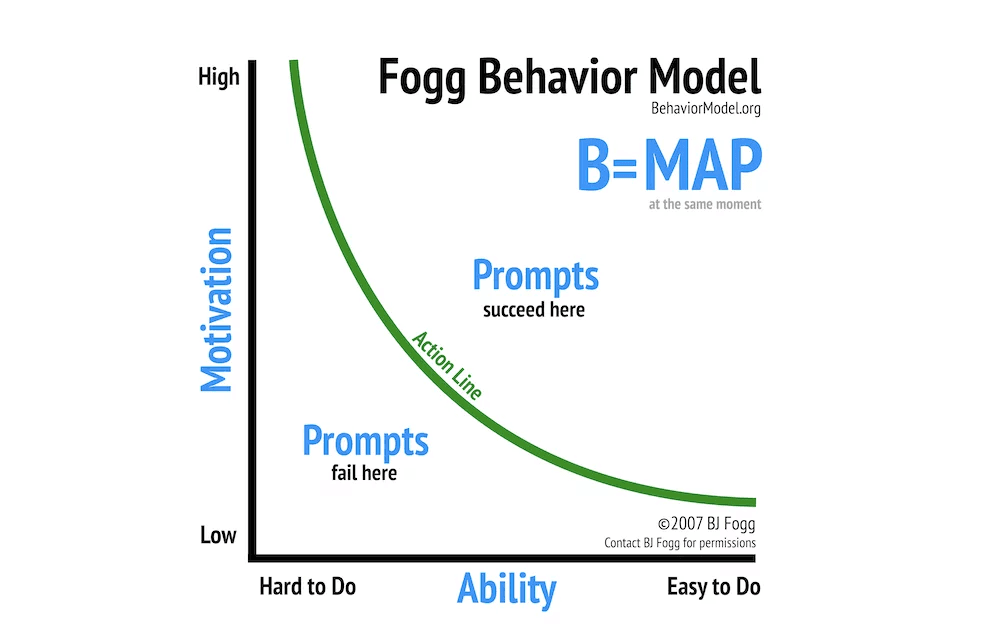
Teams with healthy join rates announce a program, not an experiment. They say what it is, that it's staying, and what the invitee gets out of it. Not what marketing gets. What they get, in their own career terms.
Your join rate is a referendum on the invite, not on your people.
Stage 2: Activate (Who Publishes a First Post)
The metric is your activation rate. First posts published, divided by people who joined, inside a set window. 30 days works.
Someone who accepted the invite already gave you their motivation. That's what accepting was. So when they go quiet before the first post, want is not what's missing.
Of Fogg's three, that leaves ability, which he defines as simplicity. What you're asking for is not simple.
Not technically. Publicly. You want someone to write in their own name, so their manager, peers, and next employer can read it.
The blank page is not laziness. It's the pause of someone who has never had to sound like an expert in public.
Most programs answer this with a content calendar or a topic list. That's a better prompt, not better ability. They still have to sit down and write.
So remove the writing instead of organizing it. Talking about your work is something people already know how to do. Writing about it in public is not.
That's what PostCast, an AI interview host, does in Supergrow. Alex is an AI interview host.
The employee talks for 15 minutes, and the conversation comes back as insights, content ideas, and LinkedIn posts in their own voice.
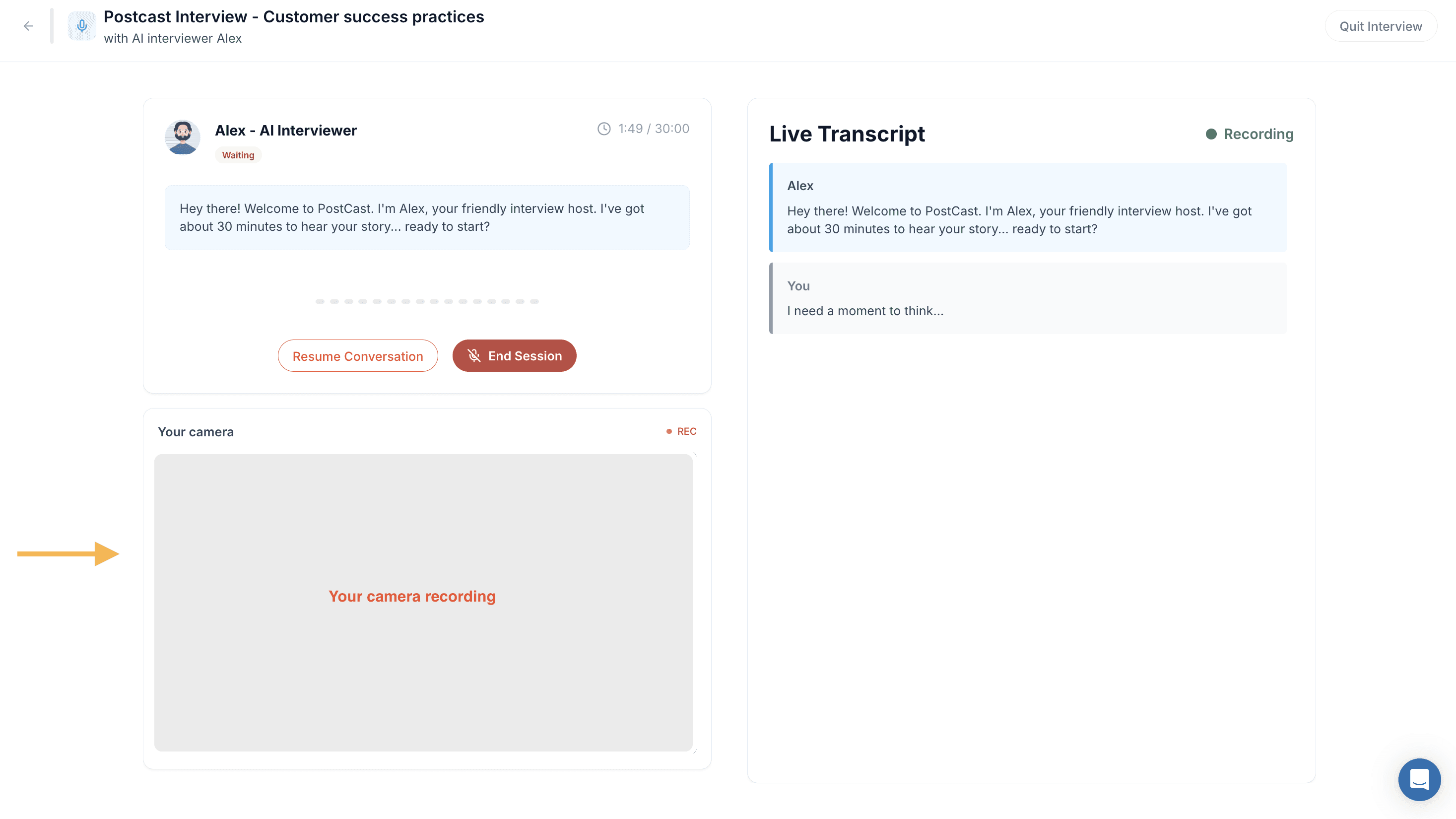
Employee advocacy adoption turns here more than anywhere else, because every stage after this one needs a first post to exist.
Nobody needs more encouragement to do something they already agreed to do. They need it to be easier.
Stage 3: Build the Habit (Who Posts More Than Once)
The metric is movement. How many people went from a single post to a steady few, over their first 2 months.
This is where programs lose the people they worked hardest to activate. The first post gets celebrated. The second one has nothing behind it.
Motivation was there. Ability got solved at Activate. What's missing is Fogg's third element, the prompt. Nothing tells them when, so posting becomes a thing they'll get to. There is always something more urgent than getting to it.
Habits form through repetition in a consistent context, not through intensity. Same cue, same slot, often enough that the decision stops being a decision.
So give the behavior somewhere to live. A standing slot beats a content calendar. A calendar tells them what. A slot tells them when. Challenges and streaks manufacture the same prompt with more scaffolding around it.
Rhythm only holds if the writing doesn't hurt. The teams that get this right stop asking everyone to cover the same themes. Each person takes the lane they already live in:
-
The founder takes where the market is going.
-
The product lead takes what users actually do.
-
The engineer takes the thing that broke last Tuesday.
Supergrow’s Content DNA maintains a voice profile for each person, so drafts arrive sounding like them rather than like marketing copy. Nobody reaches for a topic. They describe their job, and repetition gets cheap.
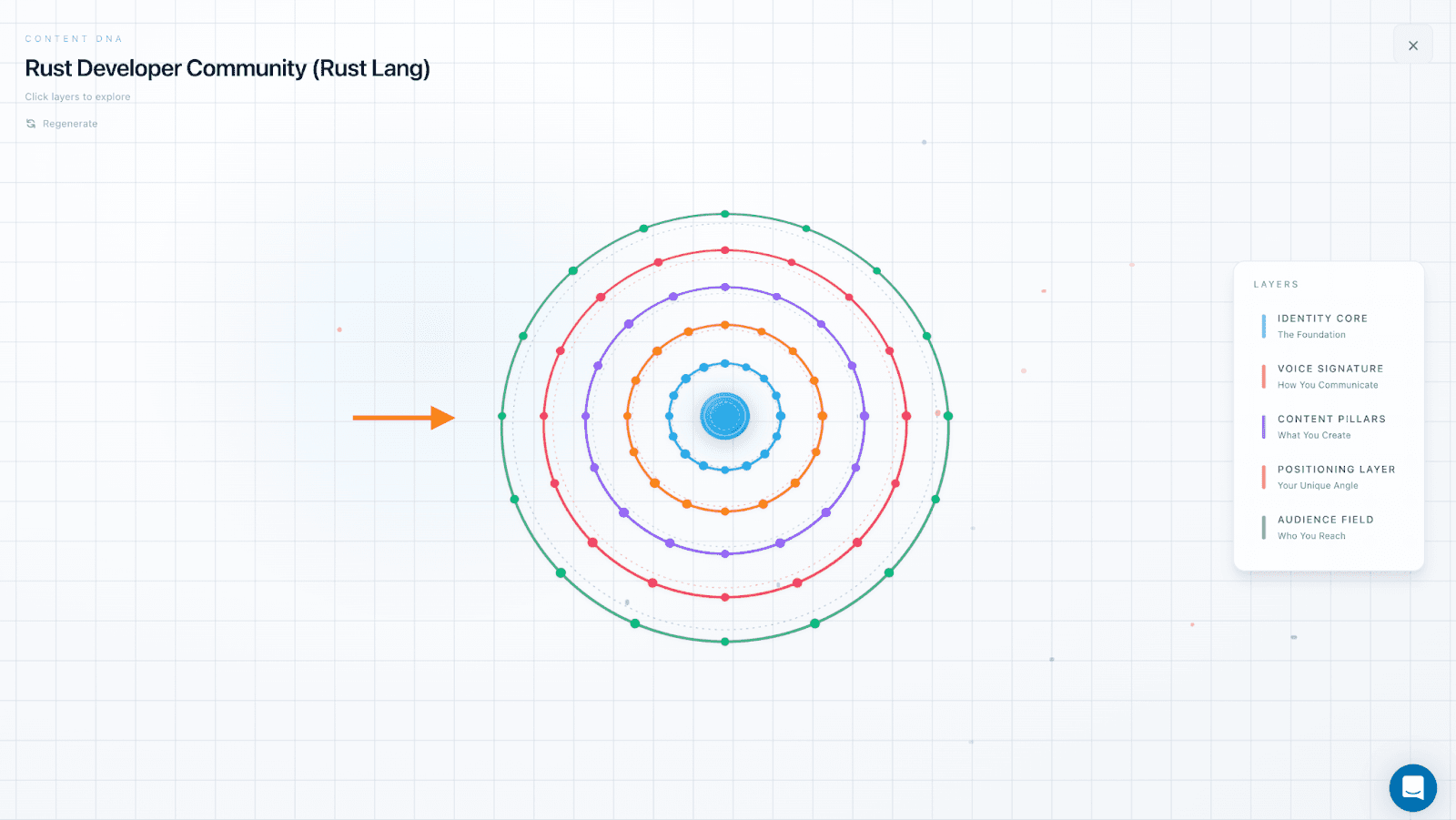
A habit is not someone trying harder. It's a smaller ask, at the same time, every week.
Stage 4: Sustain (Who's Still Active Past the First Quarter)
The metric is your active-workspace ratio. How many seats published this month, tracked month over month rather than as a launch-day snapshot.
Nobody quits an advocacy program. They get busy in March and never come back. There's no exit interview, so the drop-off is silent, and silence doesn't show up in a dashboard until the quarterly review. By then the number is already down and nobody can say when it started.
Here's what makes this stage expensive. Habits take an average of 66 days of consistent repetition to become automatic. Someone who reached Sustain has already paid that cost. When they fade, you haven't lost a participant. You've lost 2 months of habit-building that will take another 2 months to rebuild.
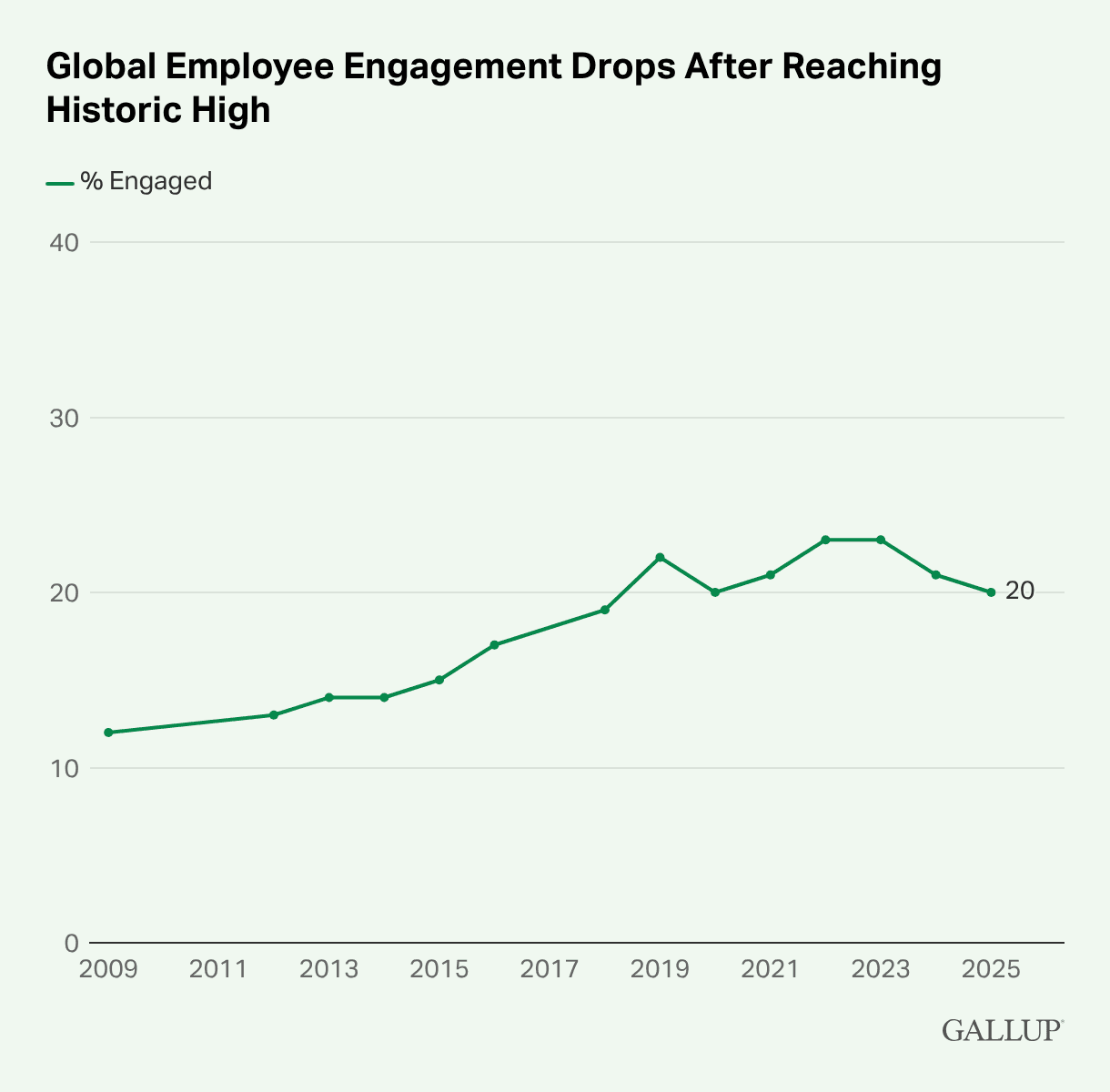
Gallup puts global employee engagement at 20%. You're asking for discretionary effort inside that reality. Participation doesn't decay because your program is bad. It decays because everything decays without something holding it up.
So build the thing that notices. Supergrow's team analytics reports 2 numbers that most programs never see:
-
Program Adoption — Active workspaces against total seats. Your participation rate, month over month, without anyone counting by hand.
-
Participation Health— Every member sorted into Champions, Regular, Occasional, At Risk, or Dormant. The fade has a label before it has a silence.
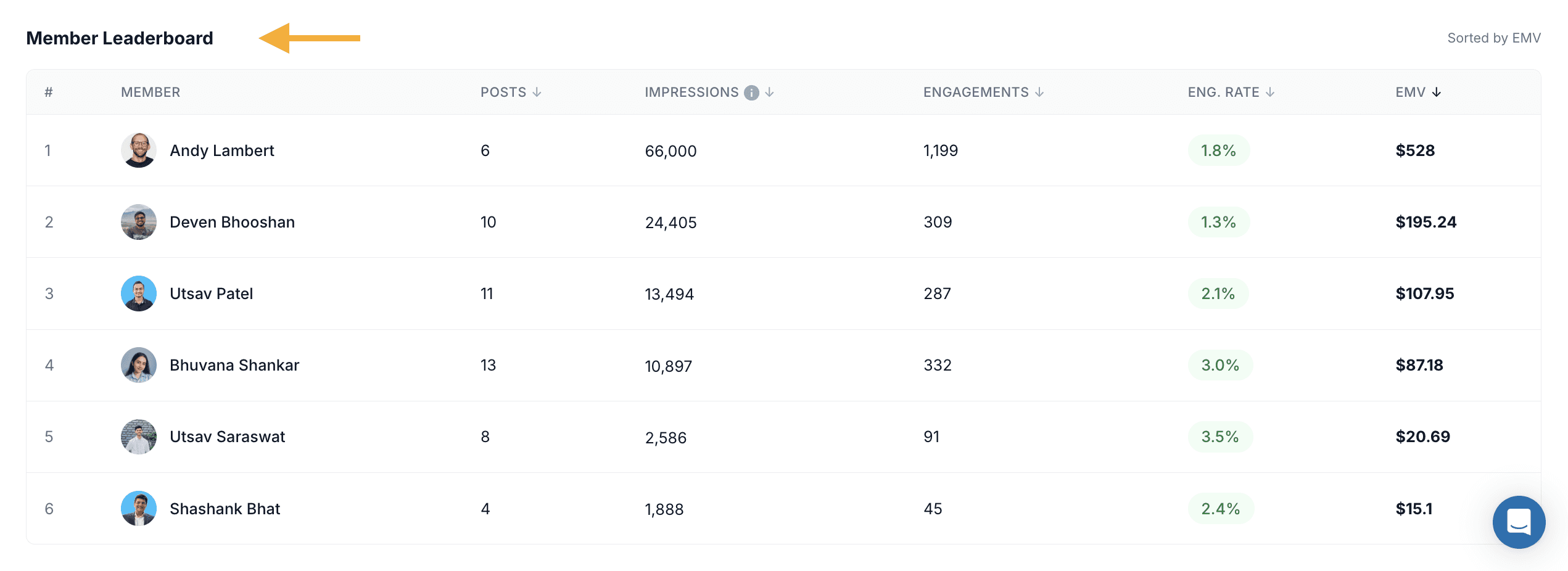
You catch a fade in week two of the fade, not in the quarterly review.
The programs that hold aren't the ones with the most motivated people. They're the ones that see the fade while it's still a fade.
Stage 5: Advocate (Who Pulls Others In)
The metric is concentration. What share of your program's reach comes from your top two or three voices?
This stage looks like success from the outside. People are posting. The numbers are up. Nobody is complaining.
Then the founder takes three weeks off to fundraise, and demand drops inside a month.
Ishan Manchanda, founder of GrowthSpree, puts a threshold on this:
-
Above 70%. If founder content still drives 70% or more of LinkedIn-attributed pipeline past $10M ARR, the company is stuck.
-
30 to 50%. A mature multi-voice program. The founder still carries real weight, but nothing collapses when they stop.
It's a practitioner's rule of thumb rather than industry data, and it names the failure precisely. The founder doesn't post less. Enough other people post that the founder stops being load-bearing.
Fogg runs out here. Behavior design explains how to get one person to act. It doesn't explain how one person acting produces the next person's motivation. That's architecture, not psychology.
It's also the part most programs never build. Champions get treated as an outcome, the proof the thing works. They're the mechanism. When someone watches a peer at their own level post something honest and not get punished for it, that settles the question no launch email can reach. It has to be a peer. The CEO posting proves the CEO is safe.
So use your champions as the answer to Stage 1, not as a trophy. The funnel isn't a line. Advocate feeds Join, and a program that closes that loop no longer needs you to push it.
How Supergrow Helps Close the Adoption Gap
Fixing one stage in isolation doesn't hold. Solve Activate and the leak moves to Build the Habit. Solve that, and it surfaces at Sustain.
A funnel is one system, not 5 projects, which is the argument for running adoption on infrastructure rather than on effort.
Stage 1 is not a software problem. No tool fixes a launch email that calls the program a pilot. That one is yours.
The other four are what Supergrow is built to hold:
-
Activate. The blank page — PostCast runs a guided AI interview instead of asking anyone to write. The employee talks through what they already know, answers follow-ups, and the session comes back as insights, content ideas, and LinkedIn post drafts in their own voice.
-
Build the Habit. No prompt, no rhythm — Content DNA holds each person's voice profile, so drafts arrive sounding like them rather than like marketing. Scheduling and the team calendar give the cadence somewhere to live. Challenges supply the prompt Fogg says is missing: a live leaderboard, streaks, and automated reminders that fire when someone gets overtaken, without a program manager chasing anyone.
-
Sustain. The silent fade — Program Adoption shows active workspaces against total seats. Participation Health sorts every member into Champions, Regular, Occasional, At Risk, or Dormant, so a fade surfaces in week two rather than at the quarterly review.
-
Advocate. Concentration — Push a champion's work straight into the workspaces of people who haven't started. Weekly reports put the team's best post in front of everyone. Proof travels sideways, which is the only direction it travels.
Teams see posting frequency double within 30 days of launching a challenge.
A Supergrow user, Harriet Bunting, Senior Marketing Manager, Sage, says — "Once we launched challenges with leaderboards, everything changed. Now over 40 team members are posting regularly and actually competing for streaks."
None of it raises motivation. It lowers what you're asking for at each point where people quit.
Start a 7-day free trial. No credit card.
Build an Employee Advocacy Program That Holds
What gets advocacy programs defunded isn't low participation. It's a program manager who can't explain it.
You can explain it now. Take one stage to your next leadership review with a number attached, and the conversation stops being about whether advocacy works and starts being about which stage you're fixing next.
That's a program. The rest is reminders.
Start your employee advocacy program with Supergrow. Sign up for free.