
Building a successful employee advocacy gamification strategy starts with one honest question: what are you actually rewarding your team to do?
Most B2B teams get this wrong. They build leaderboards around resharing pre-approved posts, hand employees templated content, and call it advocacy. The result is predictable. A strong launch week, a leaderboard dominated by the same two people, and program participation that drops off before the month ends.
Here is the problem nobody names directly. Rewarding sharing is not the same as rewarding creation. One measures distribution. The other builds credibility, thought leadership, and a pipeline.
Gamification works. But only when it drives original content, consistent posting cadence, and authentic employee voice on LinkedIn.
The 7 strategies in this article are built around that outcome. This is what makes an employee advocacy program stick.
Why Most Employee Advocacy Gamification Programs Lose Momentum
Gamification should strengthen program adoption. In most cases, it accelerates the decline instead. The reason is not the leaderboard structure or the reward budget.
There are 3 foundational problems that most program managers never stop to diagnose.
The Launch Spike Is Predictable
Every program launches with energy. Leadership announces it. Early adopters post on day one. Week one looks like traction. By week three, the Slack channel is quiet. By week six, the program runs on reminders that nobody responds to.
This is the classic campaign trap. A campaign has a launch date. A program has a system. Despite growing awareness of employee advocacy as a channel, CMI's 2026 B2B Content Marketing report found that advocacy programs remain among the least systematized tactics in most B2B organizations. The teams that sustain participation are the ones that designed gamification as the foundation — not a fix applied after momentum dropped.
Leaderboard Dominance Kills Program Participation
The same pattern plays out across organizations of every size. A handful of employees top the leaderboard every cycle. They have larger LinkedIn networks, longer posting histories, and more bandwidth. They win by default.
For the rest of the team, the gap is not motivating. It is a signal to disengage. A leaderboard that consistently surfaces the same winners does not build a posting cadence across the team. It builds a two-person show and a disengaged audience.
Rewarding Sharing Instead of Creating
Most employee advocacy gamification programs are built around content distribution. Employees receive pre-written posts to share, branded updates to amplify, and points for each click. What this produces is activity data. What it does not produce is original thought leadership, authentic employee voice, or the kind of LinkedIn content that B2B buyers actually engage with.
Personal profiles generate 5x more engagement than company pages on LinkedIn, according to LinkedIn Marketing Solutions. Gamifying content sharing entirely skips the behavior that drives that outcome.
7 Employee Advocacy Gamification Strategies for B2B Teams
Most programs treat gamification as an afterthought. These seven approaches treat it as the architecture. Each one is built around a specific behavior, a specific outcome, and a specific reason it works when most programs don't.
1. Build Leaderboards Around Posting Frequency
Most employee advocacy leaderboards track impressions, reach, or engagement. The problem is that those are outcome metrics. They favor employees who already have established LinkedIn audiences.
A newer team member posting twice a week with genuine insight will never beat a senior leader with 10,000 connections — even if their content is stronger.
Rank by behavior instead. Specifically, posts are published per week.
When the leaderboard rewards show up consistently, the entire psychology of the program shifts. Employees stop chasing virality and start building a posting rhythm. That rhythm is what eventually compounds into thought leadership and pipeline.
Set a weekly posting minimum — 2 original LinkedIn posts per week is a proven starting point.
Track participation rate across the team, not just who sits at the top. Reward every employee who hits the threshold, not only the winner. Consistency becomes the win condition, and that changes who feels capable of competing.
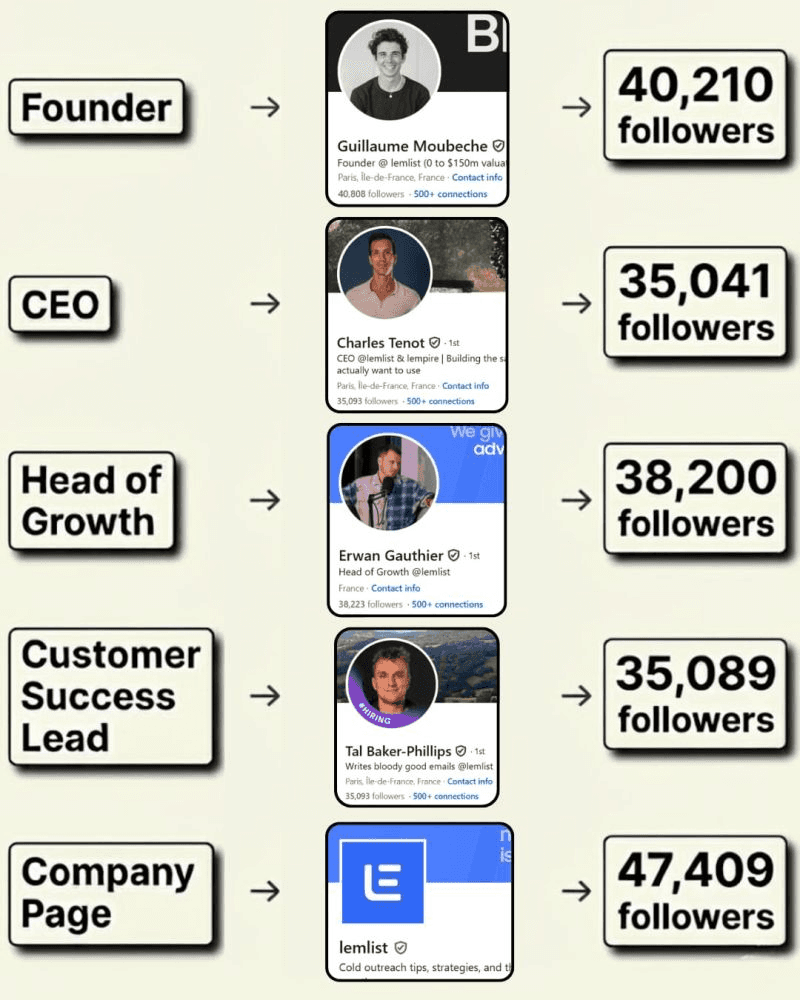
lemlist runs one of the most consistent small-team advocacy programs active today.
Their content machine is powered by a team with a combined 300,000+ LinkedIn followers, built through distributed, frequent posting across functions — not a single star performer carrying the program.
Supergrow's Challenges and Leaderboard feature tracks posting frequency automatically across your team, so the game rewards the right behavior from day one.
2. Segment Leaderboards to Level the Playing Field
A single leaderboard where a principal with 8,000 LinkedIn connections competes against a first-year analyst with 300 is not a competition. It is a foregone conclusion.
Most employees see the participation gap and decide they cannot win before the challenge even starts. Program adoption quietly collapses while the same handful of people collect every prize.
Deloitte solved this at a scale most B2B teams will never face. Their Ambassador Program grew to 7,200 enrolled employees across a firm of hundreds of thousands.
To sustain participation across that range of seniority, tenure, and network size, they built a sweepstakes model with monthly random prize draws — gift cards, intranet recognition, shoutouts on their Ambassador Central Hub. Winners were not determined by network size. They were drawn from everyone who participated.
The result: a 71% increase in reactions and 31% more ambassadors sharing content within a single campaign cycle. The program doubled in size every twelve months.
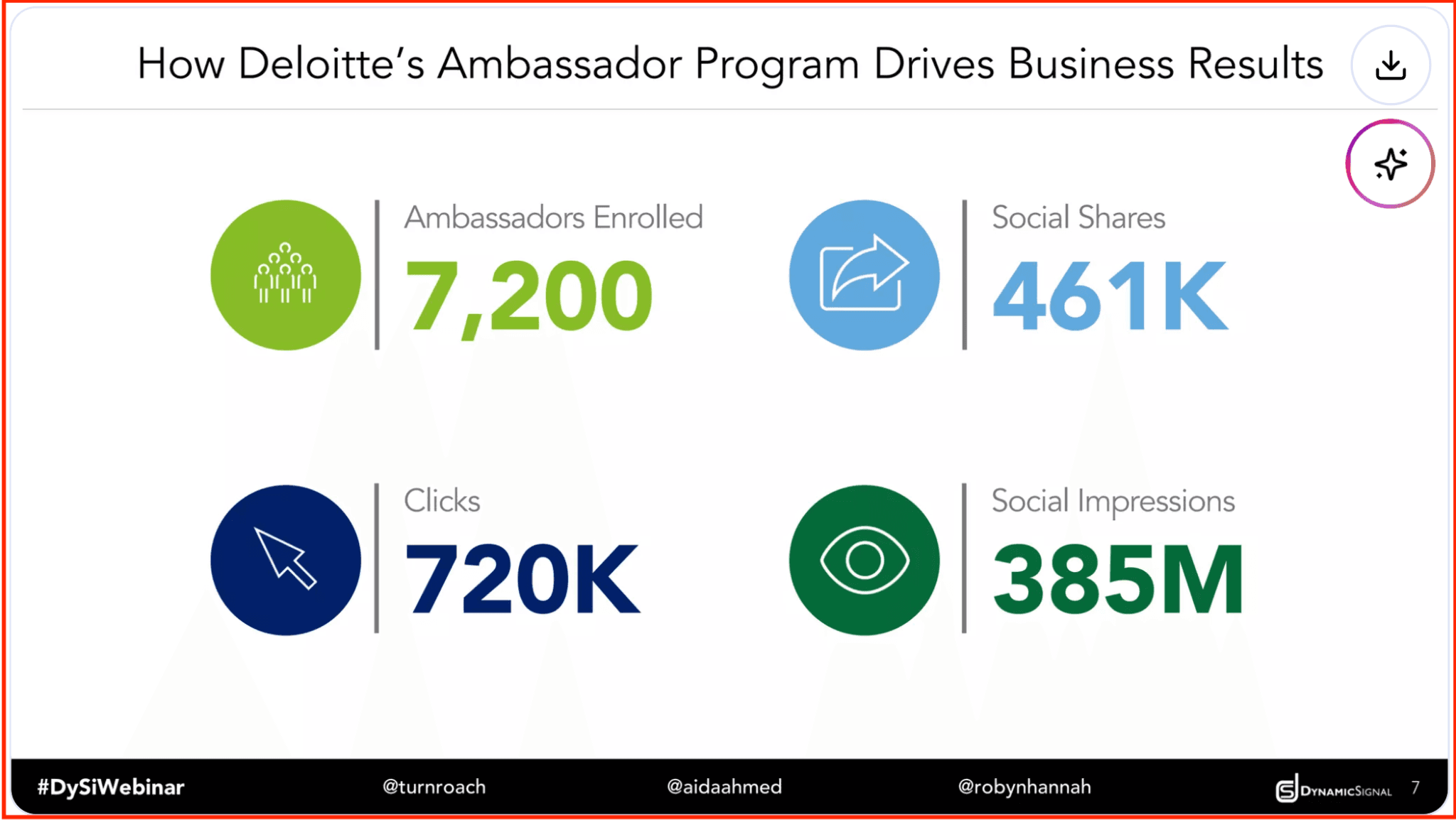
That mechanic — decoupling winning from network size — is what segmentation does at any scale. Divide participants by seniority, department, or LinkedIn audience size. Track performance within each group. Announce winners per segment publicly in Slack or at the all-hands. Run the prize draw from the full participation pool, not the top performers list.
Every employee who shows up has a shot. That is what keeps advocacy program participation active beyond the first cycle.
3. Remove the Blank Page Before the Challenge
The most common reason employees stop posting on LinkedIn is not a lack of motivation. It is the blank page. They open a draft, stare at the cursor, and close the tab. A leaderboard with a cash prize does not fix that. If a challenge launches before employees know what to write, participation collapses within days.
Enablement has to come before the competition. Not alongside it. Before it.
Gong built one of the most studied employee advocacy programs in B2B. Before mobilizing employees across departments, the CMO trained the entire executive team to gather opinions and develop content aligned with their areas of expertise.
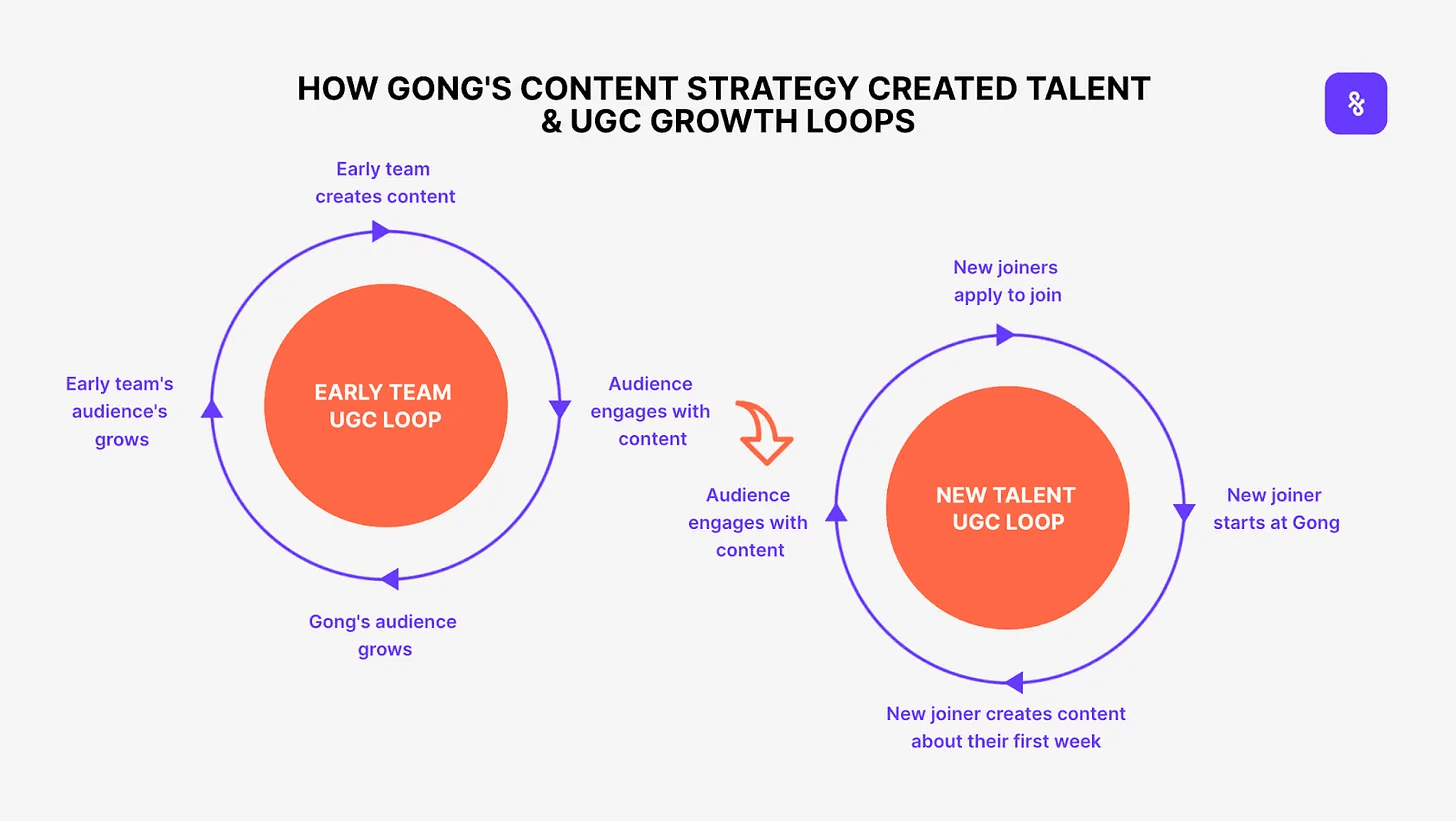
New hires were coached to write about their first week. Employees were given a starting point before they were ever expected to show up on a leaderboard.
The result was one of the most recognized LinkedIn brand presences in the revenue intelligence category.
Most B2B teams skip this step entirely. That is why their challenges plateau in week one.
Give employees a content starting point before the program activates. A topic brief. A guided session. A voice note turned into a draft.
Supergrow's PostCast and AI interview feature does exactly this. Employees talk through their expertise for 15 minutes. They walk away with 3-5 draft posts written in their own voice. Ready to publish. Ready to compete.
Get started with Supergrow. Start removing the blank page for your team.
4. Use Tiered Badges to Make Progress Visible
Early-stage advocacy programs share a common activation problem. Employees post 2-3 times. No follower spike. No viral post. No visible proof that the program is working. So they disengage.
This is not a motivation failure. It is a feedback gap. When employees cannot see progress inside the program, they assume there is none.
Tiered badges close that gap. They give employees something to earn before LinkedIn results arrive. Each badge marks a behavior milestone — not an outcome milestone.
Posting consistently for two weeks earns one. Completing a content session earns another. Staying active for a full month earns a third.
The badge label matters as much as the mechanic.
-
Rising Voice.
-
Consistent Creator.
-
Brand Champion.
Each title builds program identity. Employees stop feeling like they are completing a task. They start to feel like they are part of something, with a progression system worth staying in.
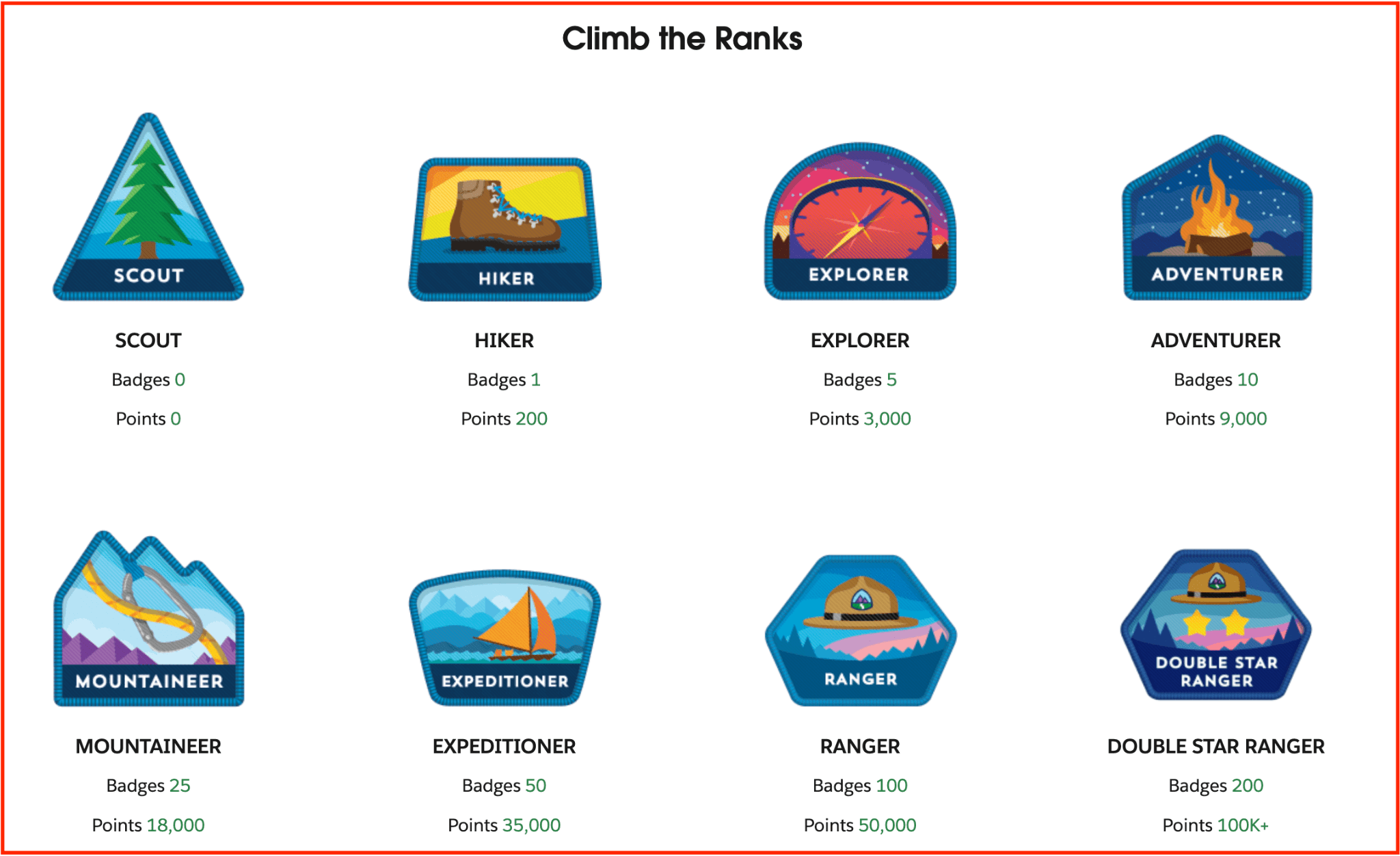
Salesforce built its entire Trailblazer community on this principle. Every module completed earns a badge and points toward a higher rank.
The program has recognized over 500 MVPs across 30 countries over 15 years. Participation was sustained not because of prize budgets. It sustained because progress was always visible, always public, and always celebrated.
Apply the same logic to your LinkedIn posting challenge. Define 3-4 badge tiers tied to posting behavior — not reach or impressions. Announce badge earners publicly every week alongside the leaderboard. That weekly recognition cadence is what activates hesitant employees and keeps consistent ones in the program.
5. Make Leadership Participation Part of the Game
Most employee advocacy programs ask employees to maintain a consistent posting cadence. Then leadership quietly opts out.
Employees notice. The signal is immediate. This program matters for you, not for us. Program participation drops within weeks.
Making leadership visible, tracked, and part of the same challenge as the rest of the team is one of the highest-leverage decisions a program manager can make.
Companies where the C-suite actively participates in employee advocacy programs see higher participation rates across the wider team. Employees model what they see leadership do. Not what they are told to do.
Kimberlee Meier, Senior B2B Marketer at KlientBoost, built a consistent personal brand on LinkedIn around real client work, honest takes, and behind-the-scenes agency thinking. Leadership across the team posted in the same voice, on the same cadence. The results were not incremental.
Kimberlee mentions, KlientBoost 20x'd their social-influenced pipeline. Social-influenced deals carried $11,000 to $15,000 more in LTV than deals sourced through email or organic search. The program generated nearly 2 million impressions and over $100,000 in earned media value in a single year. Leadership showing up consistently on the leaderboard made that possible.
Build a separate leaderboard segment for executives. Share their posts alongside team results every week in Slack or at the all-hands. Make their posting cadence visible — not optional background noise.
For leaders short on time, Supergrow's Content DNA and AI interview feature captures their voice and expertise in a single session. They post in their own words. The team sees them in the program. Participation follows.
6. Run Department vs. Department Posting Contests
Individual leaderboards create competition between people.
Department vs. Department challenges create program culture.
When sales competes against growth on a LinkedIn posting challenge, both teams post more.
Internal momentum builds. Employees who never planned to participate start showing up because their department is losing. Peer accountability at the team level operates differently from individual competition. Nobody wants to be the function that went quiet.
ColdIQ ran exactly this model. In 2024, Michel Lieben launched an internal LinkedIn content challenge across the team. The goal was 500+ posts. Each person owned a distinct content lane tied to their function.
GTM engineers posted about systems. Co-founders posted about growth and lessons. The challenge came with a prize, making the stakes clear and the competition real.
The program results were documented in ColdIQ's own case study. In 2024 alone, the team booked 1,100+ sales meetings through consistent team-wide LinkedIn content. Roughly 80% of the inbound pipeline was influenced by organic employee-created content.
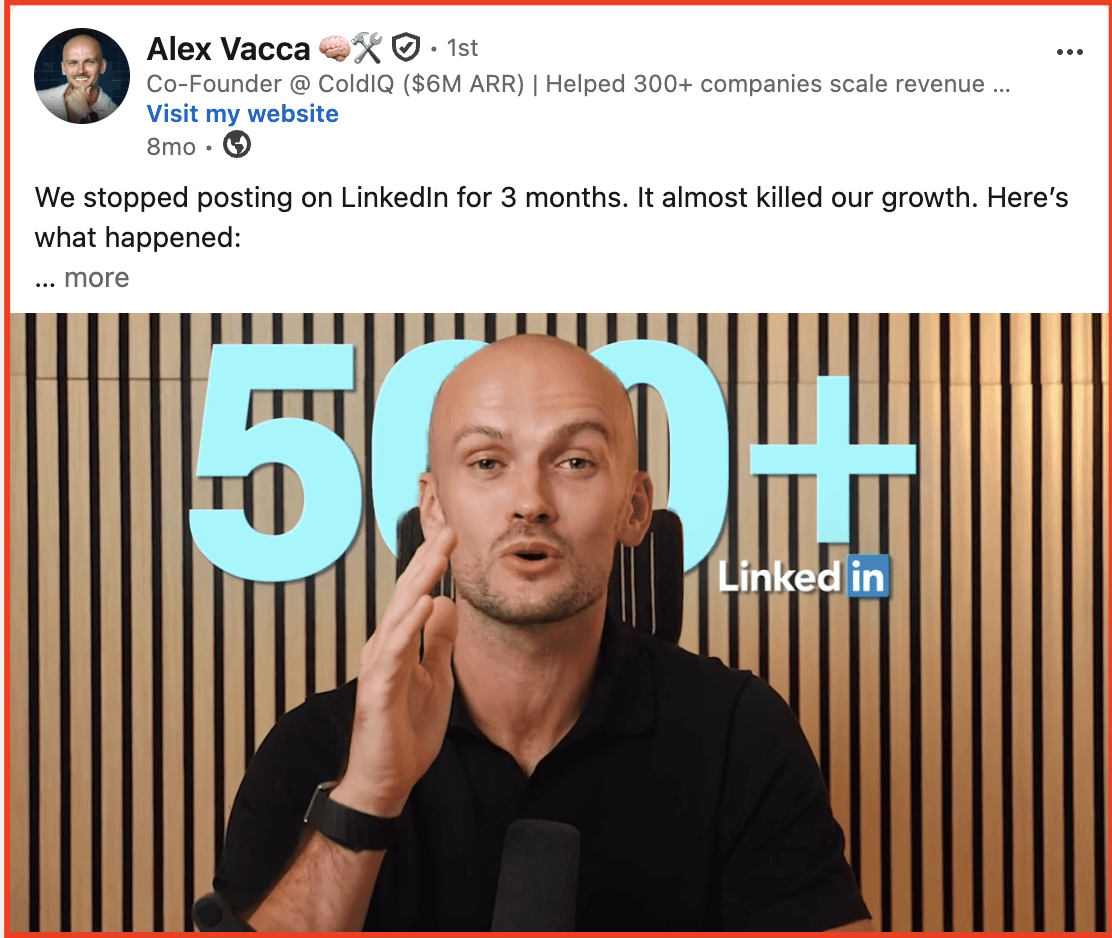
What happens when you stop?
Co-founder Alex Vacca posted exactly that — the pipeline dried up. The channel only works when the team keeps showing up.
Structure your challenge by department before it launches. Assign each function a clear content lane — what they post about, how often, and what winning looks like for their segment.
Set a team prize worth competing for. A dinner. A shared experience. A half-day off. Announce results publicly every week.
Track total posts published per department, not total impressions. The department that stops posting first already knows why it lost.
7. Close Every Challenge With a Coaching Report
Most program managers share a leaderboard at the end of each cycle. Top five names. Total impressions. Done.
That is a ranking. Not a coaching report.
Rankings tell employees where they stand. Coaching reports tell them what to do differently next week. That difference is what separates a challenge that builds posting habits from one that flatlines after week two.
A coaching report has four components.
The top post of the week with a specific breakdown of why it performed — hook format, topic angle, early engagement signal.
One content angle the team can test the following week.
A public shoutout to whoever improved the most, not just whoever topped the leaderboard.
A quiet flag on anyone who drops their posting cadence so a program manager can reach them before they disengage.
Storyarb built this into their 10-week #OTI LinkedIn challenge from day one.
Leaderboard results are shared in the all-hands meeting every week. L&D sessions on hook writing, content pillars, and draft feedback throughout. Mini-competitions rewarding specific weekly behaviors — not total impressions.
The program recognized consistent improvement, not just top performers.
7M impressions. A 55% lift in website sessions. Sales prospects citing the challenge in demos months later.
The challenge is closed. The posting habits did not.
Supergrow's weekly reports automate this coaching layer. Top post, winning pattern, inactive member flags, next-week content angles — generated automatically after every challenge cycle.
See how Supergrow's weekly reports work.
Build Your Employee Advocacy Program Today
Gamification does not fix a broken advocacy program. It amplifies a working one.
The strategies in this article are a sequence. Start with one. Build the leaderboard around posting frequency. Remove the blank page before the challenge activates. Make leadership participation visible. Run the coaching report every cycle, without skipping.
B2B marketing teams that get this right build more than impressions. They build a LinkedIn presence that compounds into pipeline, trust, and sustained program participation — consistently, across the whole team.
The infrastructure to run all of it — challenges, leaderboards, weekly reports, Content DNA — is already built.
Build your employee advocacy program with Supergrow – get started today.