
You tried to get your team to post, but most of them went quiet after week two.
That is the real reason you are comparing employer branding platforms, not because you lack tools, but because the ones you tried did not stick.
I build products for teams exactly like yours, so I hear this same frustration every week. I know where each platform holds up and where it quietly falls apart.
I updated this on August 19, 2026, after testing these employer branding tools myself. What follows is a straight breakdown of seven platforms and who each one is for.
TL;DR: Best Employer Branding Platforms at a Glance
Each of these employer branding platforms builds visibility in a different way. Some create employee content, some distribute it, some measure reputation. The quick view below shows what each is best for so you can jump to the ones that fit.
| Platform | Best For | Employee Voice | Pricing |
|---|---|---|---|
| Supergrow | Driving employee-led visibility through content | Core strength, voice modeled per person | From $19/mo individual; Teams $139/mo for 4 accounts |
| Cliquify | Scalable employer brand content distribution | Limited, mostly pre-made content | Custom pricing |
| Haiilo | Internal comms plus advocacy at enterprise scale | Amplification, not creation | Custom pricing, no free trial |
| Puck | Story-driven employer branding | Strong on narrative, not on frequency | Custom pricing |
| Unstop | Campaign-led employer brand engagement | Not content-based | Custom pricing |
| Built In | Employer reputation and AI-search visibility | Editorial, not employee-generated | Free basic profile; packages by quote |
| Comparably | Employer brand through employee insights | Passive, review-based | Custom pricing |
7 Best Employer Branding Platforms: Which One Fits Your Team
Every tool here wins at one thing, and buying the wrong fit is how programs stall. This table maps each platform to the results it actually drives, so your decision starts with outcomes rather than feature lists.
1. Supergrow
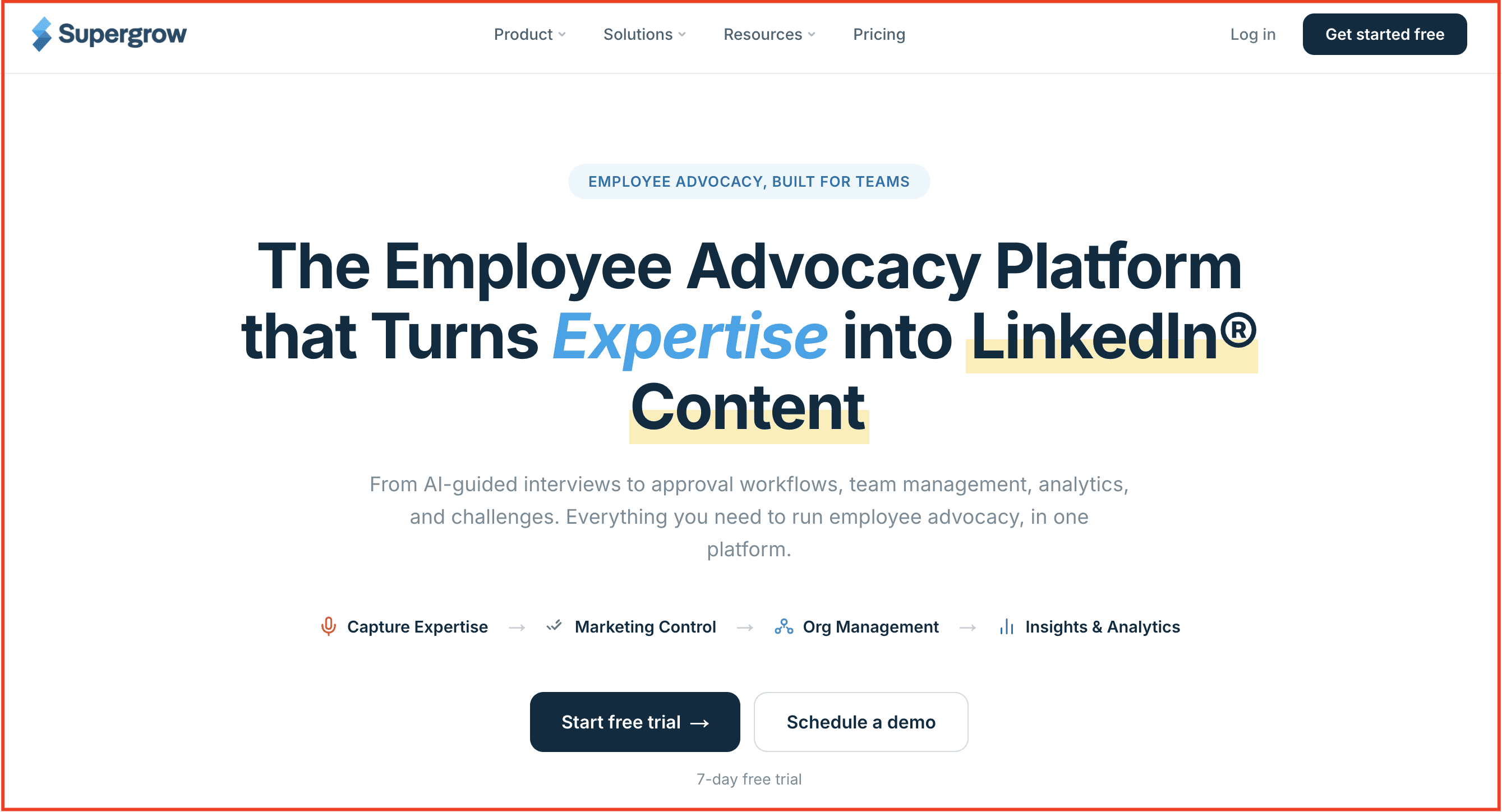
Supergrow is a LinkedIn-first employee advocacy platform built for employer branding teams who want their people to show up consistently on LinkedIn, in their own voice, rather than through a company page. It is built around one insight: employer brand is most credible when it comes from employees, not communications teams.
The platform removes the two things that quietly end most programs. PostCast lets employees talk through what they know for a few minutes and returns finished post drafts. Content DNA ensures those drafts carry each person's actual voice rather than a generic AI template. Marketing runs the program from a centralized Content Board with approval workflows, a shared content calendar, and a Content Library that adapts one idea to every team member before it lands in their drafts.
The trade-off is focus. Supergrow focuses deeply on LinkedIn and does not cover career sites, review platforms, or multi-channel campaigns.
Best for: B2B teams that have decided LinkedIn is where their talent audience pays attention and want their employees to post consistently.
Key Features:
- PostCast AI interviews: Employees talk through a topic for 10 to 15 minutes and receive 3 to 5 LinkedIn posts, no writing required.
- Content DNA: A voice profile built per person, so every post matches how that individual actually thinks and sounds, not a generic AI template.
- Content Board and approval workflow: A Kanban view of every draft, review, and scheduled post, with feedback attached to the content instead of buried in Slack.
- Content Library with Personalize and Distribute: Push one idea to the whole team, and it adapts to each person's voice before it lands in their drafts.
- Challenges and leaderboards: Turn posting into a habit with gamified streaks and automated nudges so participation doesn't decay after week three.
- Team Analytics and weekly reports: Track reach, engagement, and adoption per member and across the team, with weekly insight into what worked and who needs support.
Pros
- Solves the blank page problem without losing employee voice
- Marketing retains full oversight without becoming a bottleneck
- Participation sustains itself through habit mechanics, not admin reminders
- LinkedIn-safe by design — official API partner, no account risk
Cons
- LinkedIn-only — not suited for multi-channel employer branding programs
- Does not cover career sites, review platforms, or paid employer brand channels
Pricing:
- Teams Plan: $111/month billed yearly for up to 4 LinkedIn workspaces
- Enterprise: Custom pricing for 10+ executives
The easiest way to see if it fits is to start free. Turn your team into consistent LinkedIn visibility with Supergrow; start your 7-day trial today.
2. Cliquify
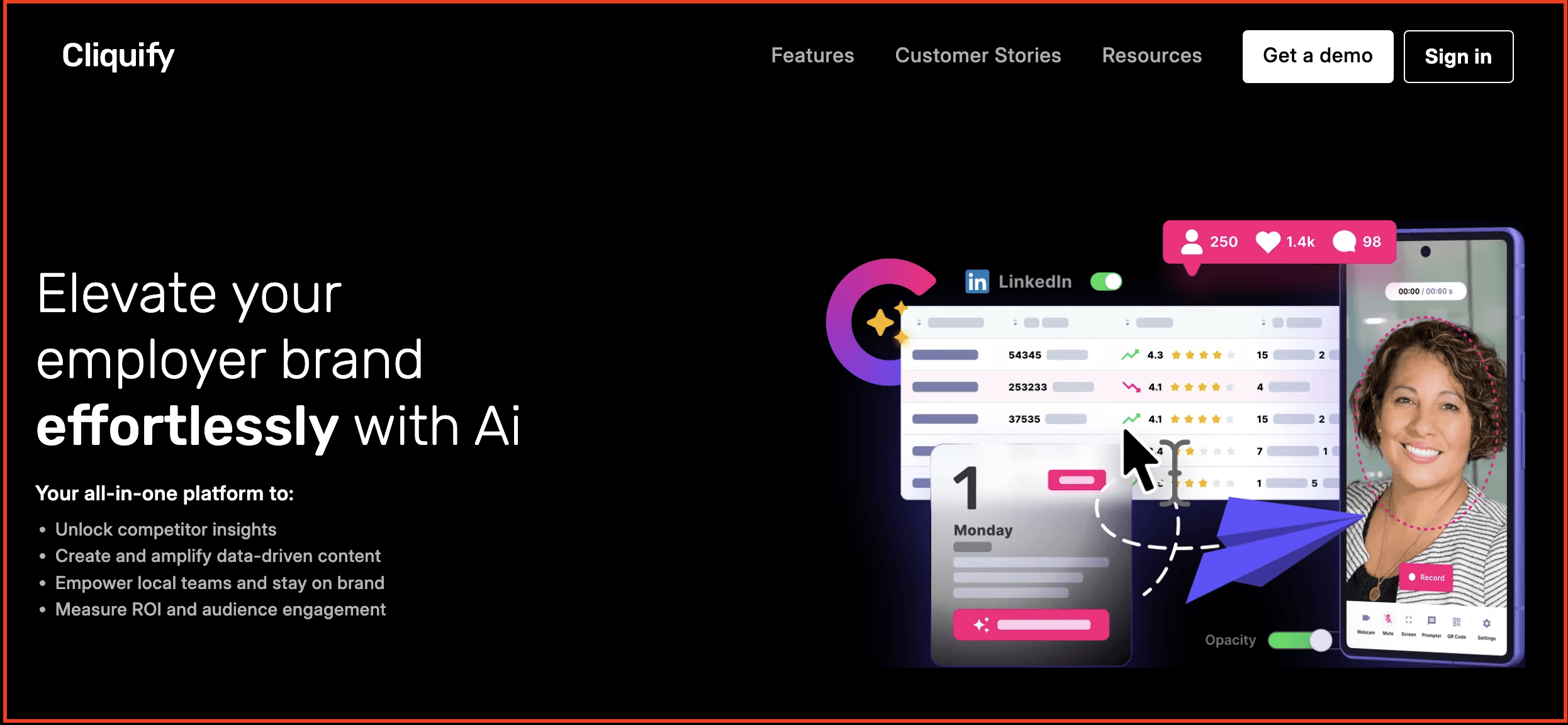
Cliquify is built for teams that want to turn employer branding into a repeatable distribution system. Instead of relying on ad hoc sharing or inconsistent employee participation, it gives marketing and employer branding teams a structured way to push content through employees and extend reach across LinkedIn and other channels.
The platform works by centralizing content and making it easy for employees to share it at scale. Teams can create branded posts, organize them into campaigns, and distribute them across the organization with minimal effort required from employees. This reduces friction and helps maintain a steady flow of visibility, especially for companies trying to scale their employer brand quickly.
However, Cliquify is primarily focused on distribution efficiency. While it solves the reach problem, it doesn't address content creation or individual voice in depth—meaning visibility is still largely driven by centrally created content rather than employee-led storytelling.
Best for: Teams that need a scalable employer branding platform focused on content distribution and reach.
Key Features:
- Centralized content hub for employer branding posts
- One-click sharing workflows for employees
- Campaign-based content distribution across teams
- Analytics to track reach and engagement
- Integrations with LinkedIn and other social platforms
Pros:
- Simplifies content distribution across large teams
- Helps maintain consistent employer brand messaging
- Easy for employees to participate with minimal effort
- Strong focus on scaling visibility quickly
Cons:
- Limited support for employee-generated content
- Content can feel repetitive or centrally controlled
- Doesn't fully solve consistency through employee behavior
Pricing: Custom pricing based on team size and usage.
3. Haiilo
Haiilo is an employee communications and advocacy platform built for large, distributed organizations. Its advocacy product sits alongside an intranet and internal comms suite, so it treats employee sharing as one channel inside a broader employee experience rather than a standalone content system.
The platform works by making it easy for employees to share company content across their own social networks. Comms or marketing teams prepare on-brand posts, feed them into the platform, and employees push them out with one tap across LinkedIn, Facebook, X, and other channels. AI-assisted copy and built-in approvals keep the effort low, which is how Haiilo drives participation across teams, roles, and locations.
Because Haiilo is distribution-led and enterprise-focused, its strength is reach and measurement at scale, not individual voice. Content is largely prepared centrally and amplified by employees, so it fits organizations that want consistent, compliant sharing better than those that want each employee to create original content.
Best for: Large enterprises that want to run employee advocacy alongside internal communications from one platform.
Key Features:
- One-tap sharing across LinkedIn, Facebook, X, and other social channels
- AI assistant (AVA) for drafting and approving posts faster in the company's tone of voice
- Earned media value, reach, and impression dashboards built for leadership reporting
- Targeted publishing by role, location, or group, with SSO and compliance controls
- Mobile advocacy app plus delivery through email, Slack, and MS Teams
Pros:
- Strong reach and earned-media measurement at enterprise scale
- Combines advocacy with intranet and internal comms in one system
- Enterprise-ready security, permissions, and multi-language support
Cons:
- Distribution-led, so it does less to help employees create original content in their own voice
- Built for large organizations, which can make it heavy for smaller teams
Pricing: Custom pricing; contact sales.
4. Puck
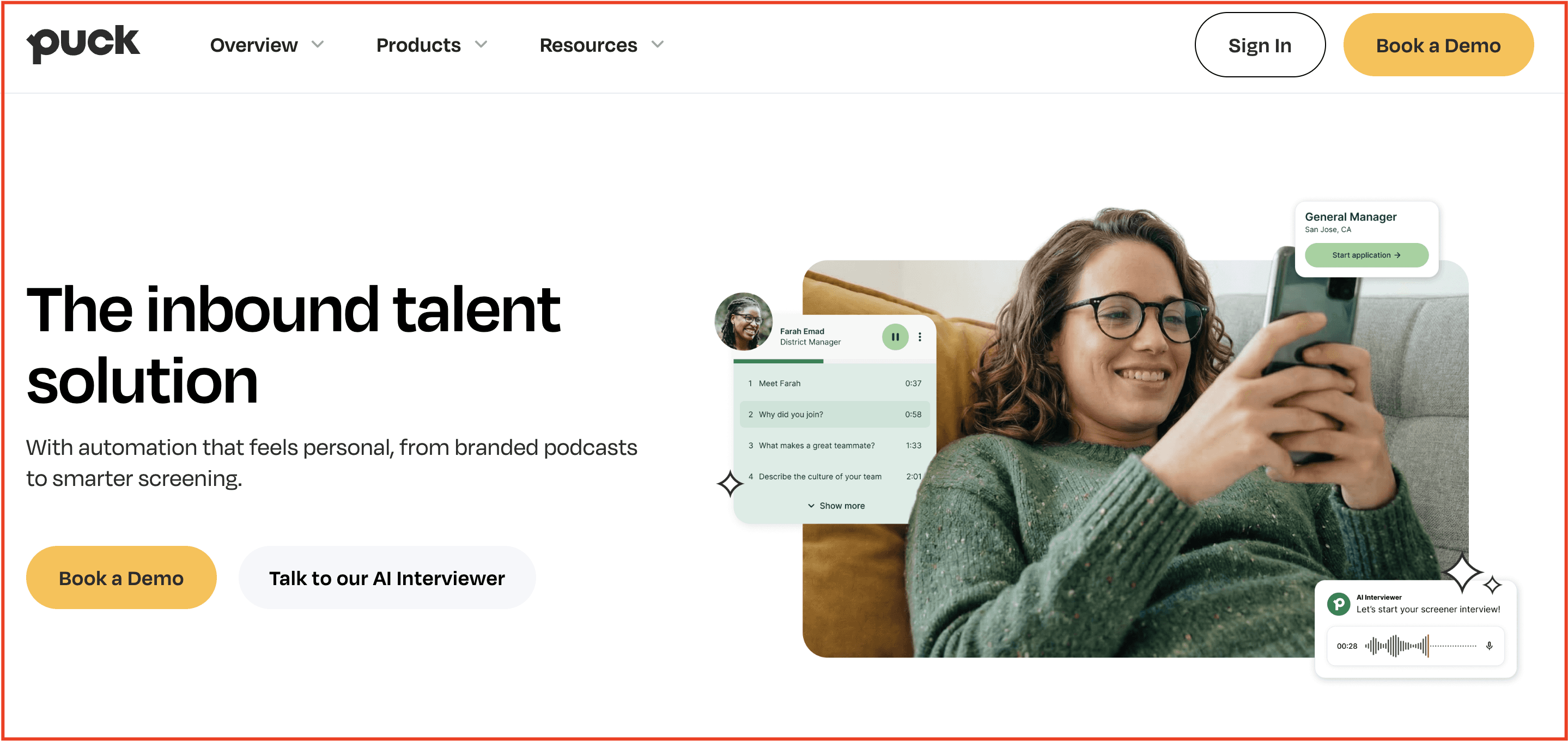
Puck takes a different approach to employer branding by focusing on storytelling over systems. Instead of building structured distribution workflows, it helps companies craft and amplify authentic employee stories—turning real experiences into content that builds trust and visibility over time.
The platform is designed for teams that believe employer branding is more about narrative than volume. It supports the creation and sharing of employee-led stories, often through curated campaigns or storytelling initiatives. This makes it particularly useful for brands that want to stand out through voice, culture, and perspective rather than just frequency of posts.
However, because Puck leans heavily into storytelling, it lacks the systems needed to drive consistent, repeatable visibility. It's strong at creating moments of impact, but not necessarily at building a steady stream of employee-led content.
Best for: Teams that want to build employer branding through authentic, story-driven content.
Key Features:
- Tools to capture and share employee stories
- Campaign-based storytelling initiatives
- Content curation and publishing workflows
- Collaboration between employees and brand teams
- Analytics to measure engagement and reach
Pros:
- Strong focus on authentic employee voice
- Helps brands differentiate through storytelling
- Encourages deeper employee involvement
- Builds trust through real experiences
Cons:
- Lacks structured systems for consistent content output
- Not optimized for LinkedIn-first workflows
- Requires ongoing effort to sustain storytelling momentum
Pricing: Custom pricing based on organization size and program scope.
5. Unstop
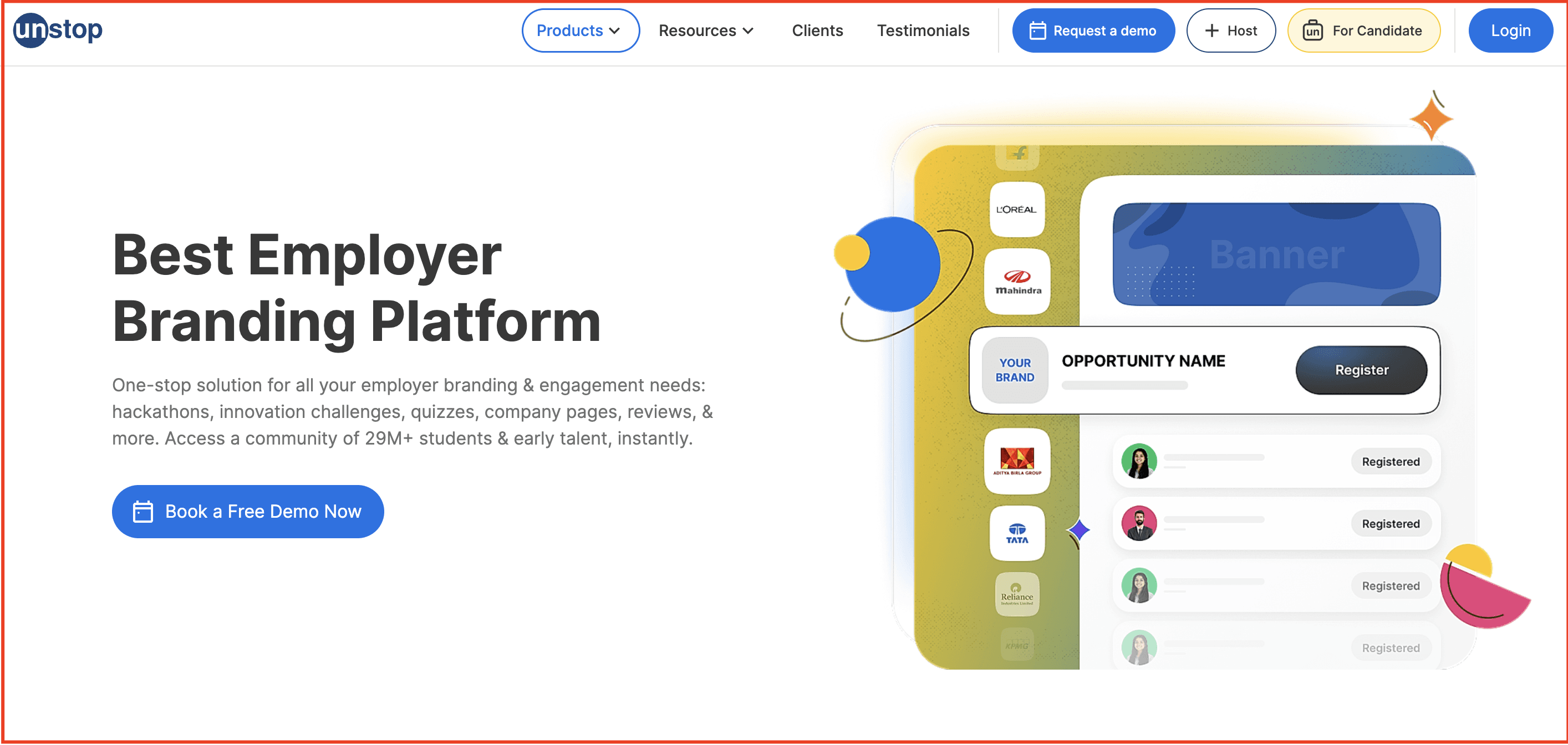
Unstop approaches employer branding through campaigns, competitions, and events rather than continuous content. It's widely used by companies looking to drive awareness among students, early talent, and professional communities through hackathons, challenges, and branded initiatives that attract participation at scale.
The platform is designed to create high-impact visibility spikes. Brands launch campaigns, attract thousands of participants, and build recognition through engagement-heavy formats. This makes Unstop effective for employer branding moments—product launches, hiring drives, or campus outreach—where reach and attention matter more than ongoing presence.
However, this model is not built for continuous, employee-led visibility. It generates bursts of attention but doesn't create a system in which employees consistently show up and build brand presence over time.
Best for: Teams looking to drive campaign-led employer branding through events and high-engagement initiatives.
Key Features:
- Platform for hosting hackathons, challenges, and competitions
- Branded campaign pages to attract participants
- Talent discovery and engagement tools
- Analytics to track participation and reach
- Community access to students and professionals
Pros:
- Strong for driving large-scale awareness quickly
- High engagement through interactive campaign formats
- Effective for campus hiring and early talent branding
- Access to a built-in community of participants
Cons:
- Visibility is campaign-driven, not continuous
- Not designed for employee-generated content
- Limited role in LinkedIn-first advocacy strategies
Pricing: Custom pricing based on campaign type and scale.
6. Built In
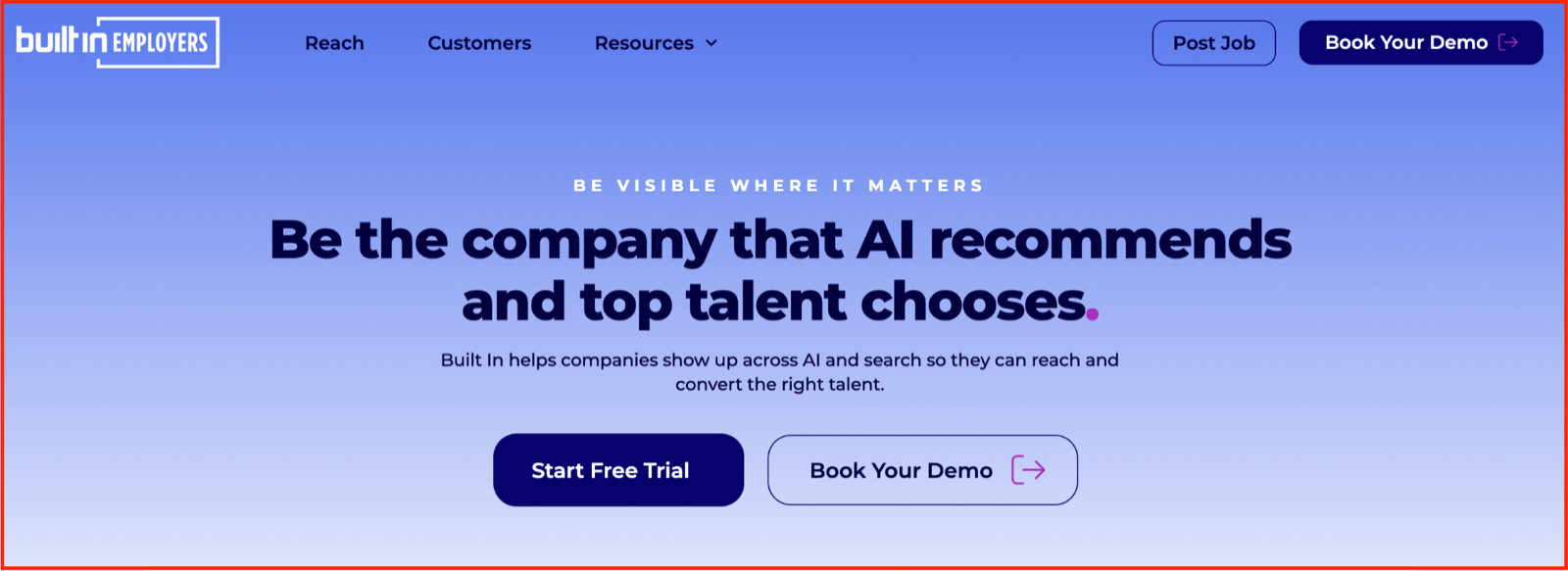
Built In is an employer brand intelligence and recruiting platform focused on how companies are perceived across digital and AI-powered hiring channels. It is less about publishing employee content and more about measuring and shaping reputation in the places where candidates now research employers.
The platform centers on its Employer Brand Reputation (EBR) Score, which benchmarks how AI models such as ChatGPT and Google describe a company across seven employer-brand pillars. From there, Built In helps teams act on those insights through branded employer profiles and content optimized to improve how both AI systems and human candidates understand the company's story.
Built In is purpose-built for enterprise hiring, particularly in tech, and pairs consulting with technology. Its trade-off is scope. It measures and strengthens reputation across search and AI, but it does not turn employees into consistent creators the way a LinkedIn-first advocacy tool does.
Best for: Enterprise teams that want to measure and improve employer brand reputation across AI search and candidate research.
Key Features:
- Employer Brand Reputation (EBR) Score benchmarking perception across seven pillars
- Reputation and competitive intelligence showing how you compare in AI outputs
- Branded employer profiles that showcase culture, benefits, and open roles
- AI-optimized content to strengthen visibility across search and AI answer engines
- Analytics and job distribution tied to hiring performance
Pros:
- Measures employer reputation across AI search, a gap most tools ignore
- Reaches a pre-qualified audience, strong for tech-sector hiring
- Combines insight, content, and distribution in one platform
Cons:
- Content is editorial and profile-based, not employee-generated
- Enterprise and tech-focused, less suited to smaller or non-tech teams
Pricing: Custom pricing; contact sales.
7. Comparably
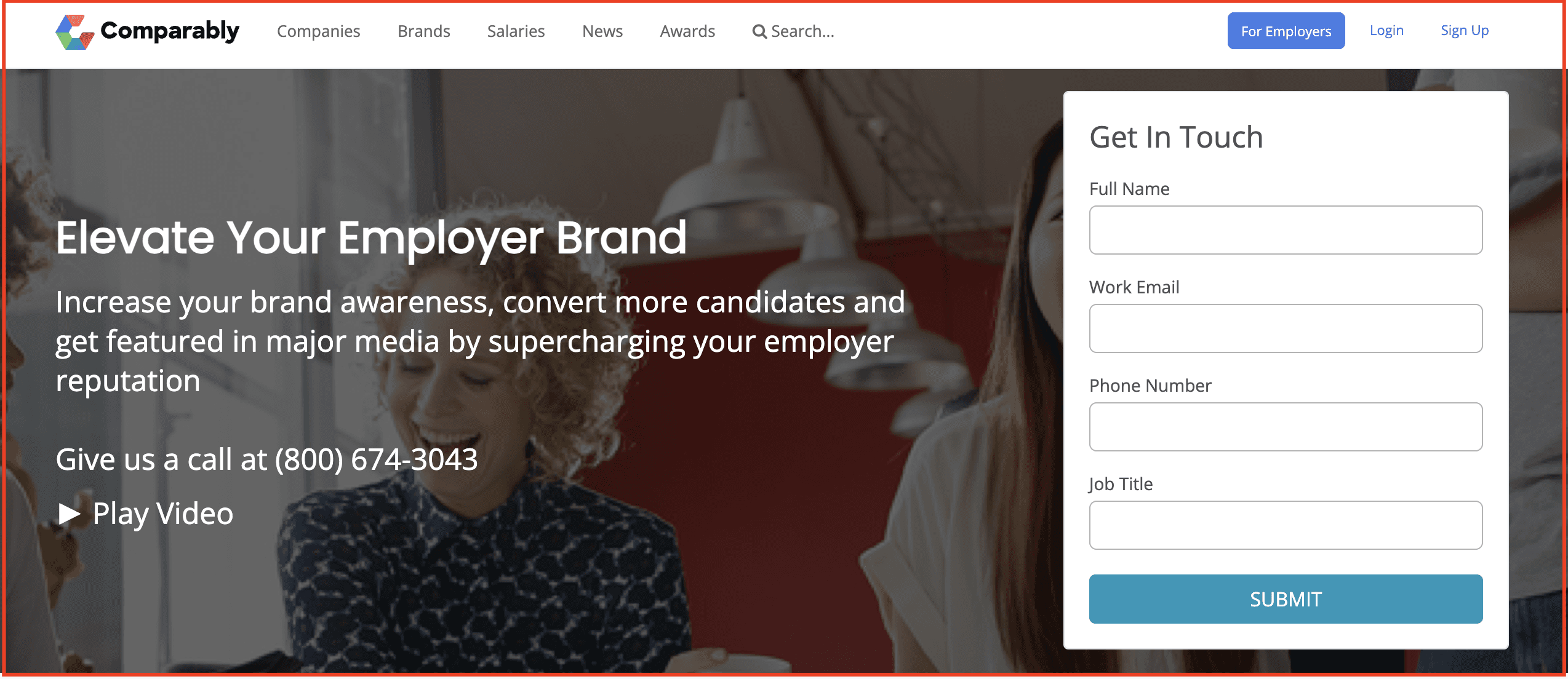
Comparably is an employer branding platform that builds visibility through employee reviews, ratings, and workplace insights rather than content creation. Instead of pushing posts or running campaigns, it helps companies surface real employee feedback—covering culture, leadership, compensation, and diversity—thereby becoming a public signal of brand credibility.
The platform works passively but powerfully. Employees contribute insights, which are aggregated into rankings, awards, and company profiles that gain visibility across search and social channels. This makes it a strong fit for teams that want to strengthen trust and reputation without relying heavily on active content participation.
However, Comparably doesn't drive ongoing, employee-led visibility. It supports employer branding through social proof, not through consistent content creation or LinkedIn presence—so it works best as a complement to active advocacy tools, not a replacement.
Best for: Teams looking to strengthen employer branding through employee insights and social proof.
Key Features:
- Employee reviews and ratings across culture, leadership, and benefits
- Benchmarking against competitors and industry peers
- Employer branding profiles and public rankings
- Awards and recognition programs to boost credibility
- Integration with employer branding and recruitment channels
Pros:
- Builds trust through real employee feedback
- Strong visibility via rankings and external recognition
- Requires minimal ongoing effort from internal teams
- Complements recruitment and employer brand positioning
Cons:
- Does not enable employee content creation
- Visibility is passive, not driven by consistent posting
- Limited control over narrative compared to content-led tools
Pricing: Custom pricing based on company size and branding needs.
Conclusion
Here is the distinction that should drive your decision. Most platforms on this list move content around. They distribute, measure, and amplify. Very few help your employees create something worth sharing in the first place.
That gap is why advocacy programs stall. When content is handed down, employees share it a few times, then go quiet, because it never felt like theirs.
Supergrow works the other way around. It starts with the employee, turns what they know into posts that sound like them, and gives marketing the workflow to keep everyone consistent.
If your last program died from silence, a different model is what fixes it. Start a 7-day free Supergrow trial, no card required.
Start your free Supergrow trial