
Most teams don’t start looking for EveryoneSocial alternatives because something is broken. It usually happens as the program grows. What worked in the beginning starts to feel limiting—teams need more flexibility, and consistent employee participation becomes harder to sustain.
In our experience, getting employees to share content occasionally isn’t the challenge. Building a system where they contribute regularly, in their own voice, is where most programs struggle.
Employee advocacy has evolved beyond content distribution. It’s now about enabling creation, consistency, and real visibility.
That’s what this guide focuses on—helping you evaluate EveryoneSocial alternatives based on what you actually need to scale your program effectively.
TL;DR: Best EveryoneSocial Alternatives at a Glance
-
Supergrow — Best for Turning Employee Advocacy Into a Consistent LinkedIn Growth Engine
-
GaggleAMP — Best for Running Structured, Admin-Led Advocacy Programs at Scale
-
DSMN8 — Best for Maintaining Brand-Controlled, Campaign-Driven Advocacy
-
PostBeyond — Best for Scaling Content Distribution Across Employee Networks
-
Ambassify — Best for Building Community-Led Employee Advocacy Programs
-
Sociabble — Best for Managing Multi-Channel Employee Advocacy at Scale
-
Haiilo — Best for Combining Internal Communications with Employee Advocacy
EveryoneSocial Alternatives: 7 Tools for B2B Teams
1. Supergrow
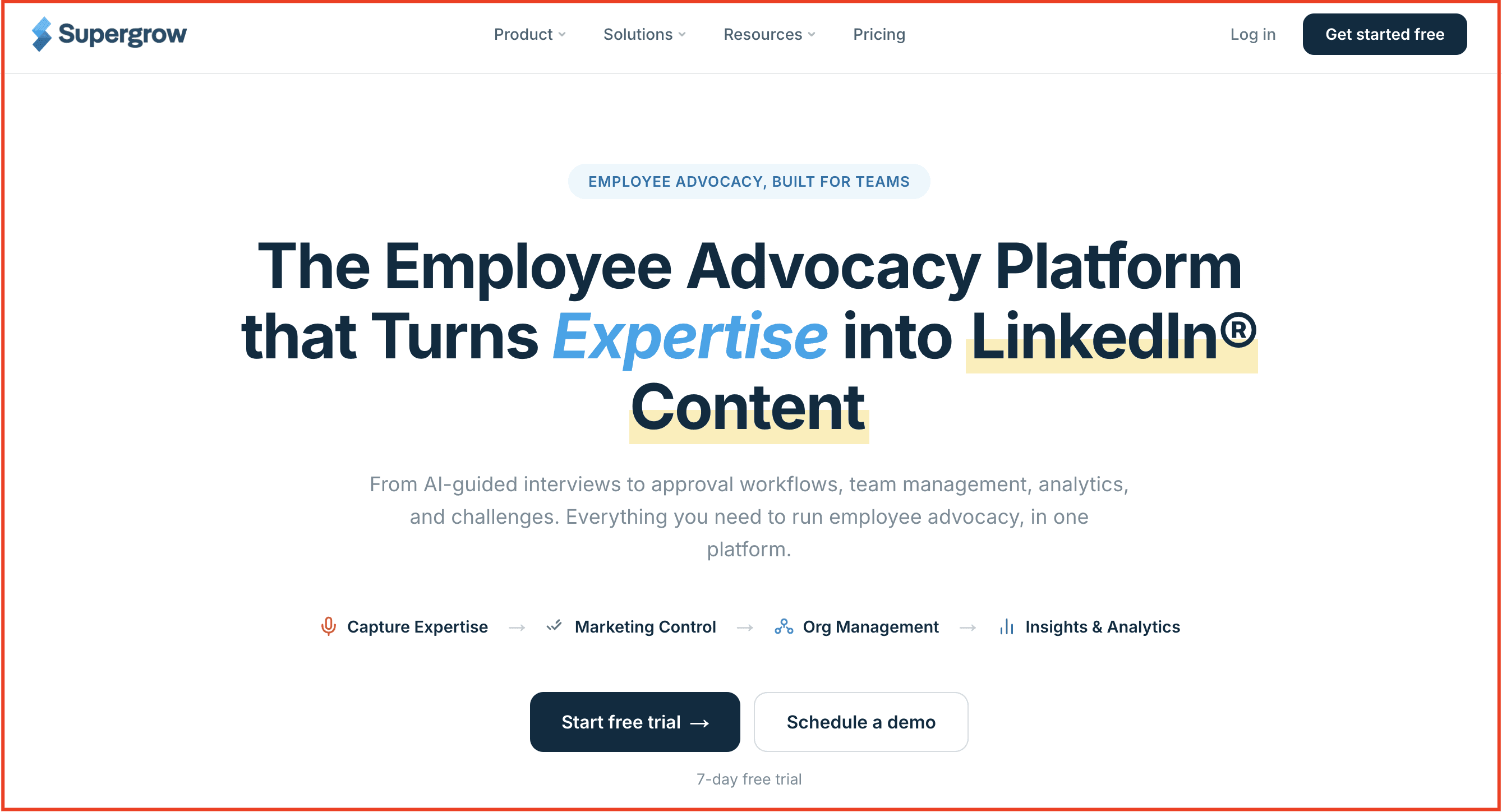
Supergrow is a LinkedIn-first employee advocacy platform designed to solve the biggest failure point in traditional advocacy tools: lack of consistent employee participation.
While tools like EveryoneSocial focus on distributing content for employees to share, Supergrow flips the model. It turns employee advocacy into a behavior-driven system — where employees create content in their own voice, marketing maintains control through structured workflows, and the entire program is designed to drive consistent visibility and measurable impact.
By combining AI-guided content capture, Content DNA (voice modeling), Kanban-based workflows, and built-in challenges, Supergrow transforms advocacy from a one-time initiative into a repeatable growth engine powered by your team’s expertise.
Best for: B2B teams that want to replace low-adoption advocacy programs with a system that drives consistent employee participation and LinkedIn visibility at scale.
Why Supergrow Is the Better EveryoneSocial Alternative
Most teams switch from EveryoneSocial not because it’s broken, but because it stops working after launch.
Here’s where Supergrow is fundamentally different:
-
From distribution → activation: EveryoneSocial pushes content to employees. Supergrow helps employees create and own content, making participation natural and sustainable.
-
From one-time engagement → consistent behavior: EveryoneSocial relies on sharing. Supergrow builds habits through challenges, nudges, and feedback loops.
-
From generic content → authentic voice: EveryoneSocial content often feels templated. Supergrow uses Content DNA to ensure every post sounds like the actual person.
-
From rigid workflows → flexible team systems: EveryoneSocial struggles with personalization across roles. Supergrow enables workspace-based collaboration and tailored content flows.
-
From unclear ROI → measurable impact: EveryoneSocial often lacks clear attribution. Supergrow provides visibility into activity, consistency, and content performance.
👉 In short: EveryoneSocial helps you launch advocacy. Supergrow helps you make it work consistently
Supergrow’s Employee Advocacy Focused Features:
-
AI Interview Engine: Turn 15–20 minute conversations into 3–5 LinkedIn posts — no writing required from employees.
-
Content DNA: Build a unique voice profile for each team member, ensuring every post matches their tone, opinions, and communication style.
-
Content Board + Approval Workflow: Manage drafts, approvals, and publishing through a Kanban-based system with clear visibility and control.
-
Workspace-Based Collaboration: One workspace per LinkedIn profile keeps content organized while enabling collaboration between marketing and team members.
-
Org-Level Idea Library: Centralize content ideas and distribute them to employees, reducing friction in content creation.
-
Post Generator & PostCast: Remove blank-page paralysis with AI-powered creation tools tailored to each employee’s Content DNA.
-
Scheduling & First-Comment Publishing: Plan posts in advance and optimize distribution with built-in scheduling and engagement features.
-
Challenges & Leaderboards: Drive consistency with gamified posting challenges, streaks, and automated nudges.
-
Weekly Reports & Insights: Track performance, identify winning content patterns, and coach teams using data-backed recommendations.
-
Knowledge Base & Brand Guardrails: Ensure brand consistency across employees with centralized messaging, tone, and positioning guidelines.
Pros:
-
Built to drive real adoption and consistency, not just content sharing
-
Eliminates the blank page problem with AI-led content capture
-
Maintains authentic employee voice with Content DNA
-
Provides full visibility and control for marketing teams
-
Replaces scattered workflows with a centralized system
-
Gamified challenges create long-term behavioral engagement
-
Designed specifically for LinkedIn, aligning with modern B2B distribution
Cons:
-
Limited to LinkedIn (not suitable for multi-platform advocacy strategies)
-
Less suited for agencies managing multiple external clients.
Pricing:
-
Starts at $139/month for up to 4 LinkedIn accounts (workspaces), with custom pricing for larger teams and advanced features.
-
Enterprise: Custom pricing for 10+ executives
All plans include a 7-day free trial and a 20% annual discount.
👉 Switch to Supergrow and turn employee advocacy into a consistent LinkedIn growth engine.
2. GaggleAMP
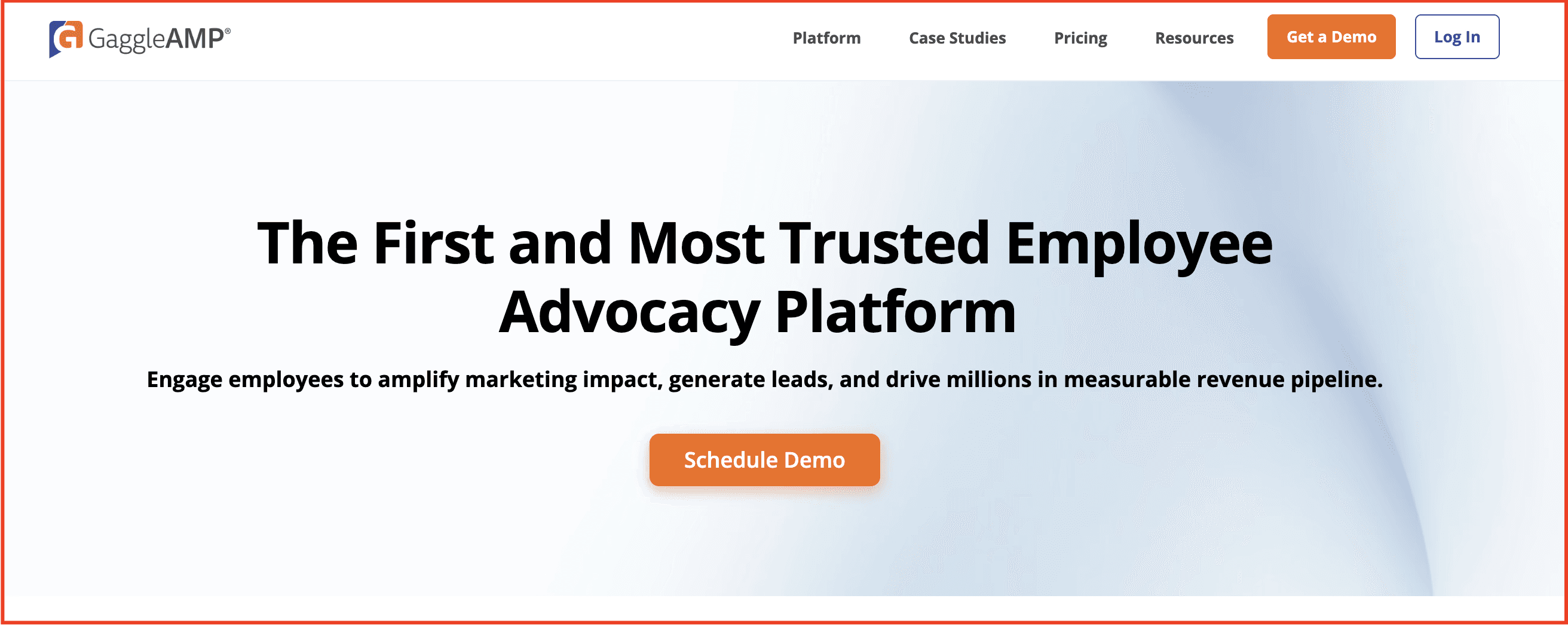
GaggleAMP is an employee advocacy platform built for organizations that want to run advocacy as a structured, admin-led program. It’s designed for marketing and communications teams that need control over what gets shared, when it gets shared, and how participation is measured across the company. The platform leans heavily into governance, making it easier to maintain brand consistency across large employee bases.
At its core, GaggleAMP works through a system of “activities” that employees complete—such as sharing posts, engaging with content, or amplifying campaigns. Admins create and distribute these activities, while employees participate through a guided workflow. This makes it easier to scale advocacy across teams, but the experience is largely driven by assigned tasks rather than individual content creation.
For enterprises, this structure provides predictability and clarity in reporting. But it also means advocacy tends to feel programmatic. Participation is often tied to prompts, nudges, or incentives, rather than intrinsic motivation or personal branding.
Best for: Enterprises running structured, admin-controlled advocacy programs at scale.
Key Features:
-
Activity-based advocacy system for assigning and tracking employee actions
-
Centralized content distribution with admin control
-
Participation tracking and leaderboard-style engagement metrics
-
Integrations with CRM, marketing automation, and social platforms
-
Compliance and governance controls for brand-safe sharing
Pros:
-
Strong administrative control over content and participation
-
Scales well across large teams and departments
-
Clear visibility into employee activity and engagement
-
Integrates with existing enterprise marketing stacks
Cons:
-
Feels task-driven rather than creator-driven for employees
-
Limited flexibility for original content creation
-
Adoption often depends on incentives or internal push
Pricing: Custom pricing based on organization size and usage.
3. DSMN8
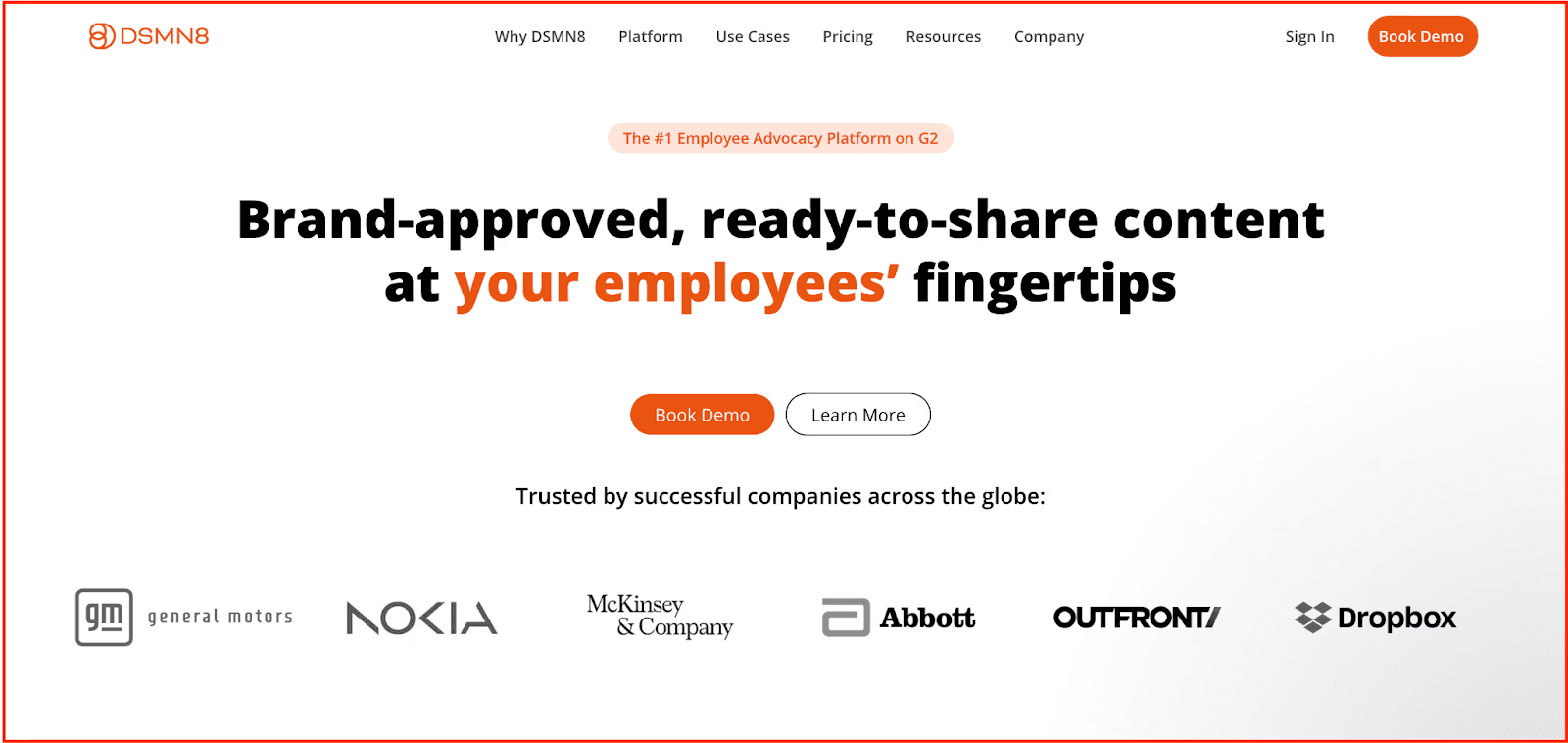
DSMN8 is an employee advocacy platform designed for organizations that want tighter control over messaging while still activating employees at scale. It’s often considered alongside tools like EveryoneSocial because it follows a similar model—central teams create and distribute content, and employees participate by sharing approved posts. The focus here is consistency, compliance, and campaign alignment rather than individual expression.
The platform is built around structured content flows. Marketing or internal comms teams curate posts, package them into campaigns, and make them available to employees through a guided interface. This makes it easier to maintain brand voice across industries where messaging matters, but it also means advocacy is driven more by distribution than by employee creativity.
For teams trying to fix low adoption or generic content issues, DSMN8 improves control and reporting, but doesn’t fundamentally change how employees participate. It works best when advocacy is treated as a managed program, not a creator-led motion.
Best for: Teams that need brand-controlled, campaign-driven advocacy with strong compliance.
Key Features:
-
Centralized content hub for distributing approved posts
-
Campaign-based advocacy workflows for structured rollouts
-
Employee engagement tracking and participation analytics
-
Brand governance and compliance controls
-
Integrations with CRM, social platforms, and internal tools
Pros:
-
Strong focus on brand safety and message consistency
-
Well suited for regulated industries and enterprise teams
-
Clear campaign structure for predictable execution
-
Reliable analytics for internal reporting and performance tracking
Cons:
-
Limited flexibility for employees to create original content
-
Advocacy remains distribution-led rather than creator-led
-
Participation can feel repetitive over time
Pricing: Custom pricing based on organization size and requirements.
4. PostBeyond
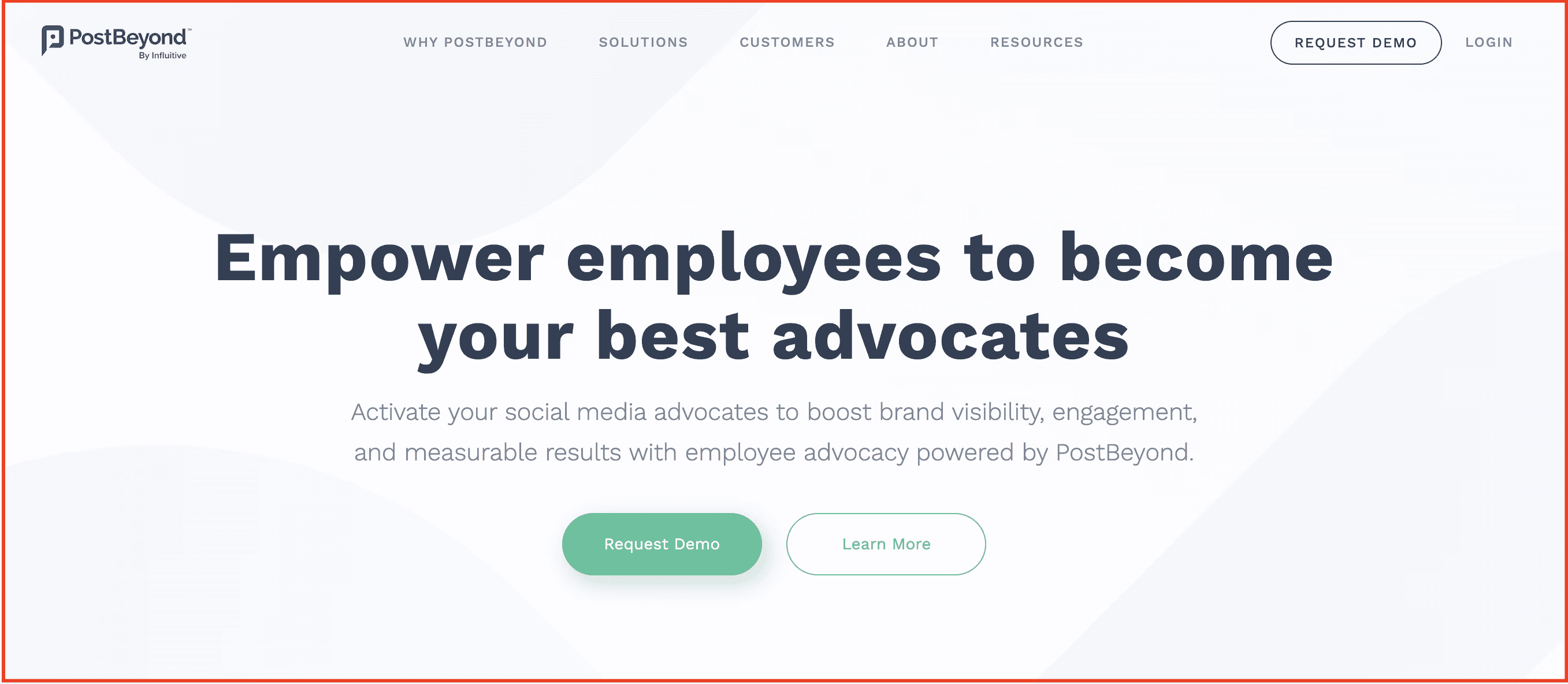
PostBeyond is an employee advocacy platform built around one core goal: making it easy for companies to distribute content at scale through employees. Now part of Influitive, it’s designed for marketing and communications teams that want to turn employees into a consistent distribution channel for branded content—similar to how EveryoneSocial operates, but with a stronger emphasis on structured sharing workflows and analytics.
The platform works by centralizing content creation and pushing it out to employees in a ready-to-share format. Employees can quickly browse, select, and publish posts across their networks, while admins track performance, reach, and participation. This makes it effective for campaigns where consistency and amplification matter more than individual voice.
However, like many distribution-first tools, PostBeyond doesn’t deeply address the core issue of modern advocacy—getting employees to create and engage in their own voice. It improves efficiency in sharing, but not necessarily authenticity or long-term participation.
Best for: Teams focused on scaling content distribution through employees with minimal friction.
Key Features:
-
Centralized content library for easy employee sharing
-
One-click sharing across LinkedIn, Twitter, and Facebook
-
Campaign tracking with engagement and reach analytics
-
Employee leaderboard and gamification features
-
Integration with marketing automation and CRM systems
Pros:
-
Simple and intuitive sharing experience for employees
-
Strong analytics for measuring reach and engagement
-
Easy to roll out across teams with minimal training
-
Works well for campaign-based amplification
Cons:
-
Limited support for employee-generated content
-
Advocacy remains largely top-down and distribution-driven
-
Engagement can plateau without ongoing incentives
Pricing: Custom pricing (enterprise-focused)
5. Ambassify
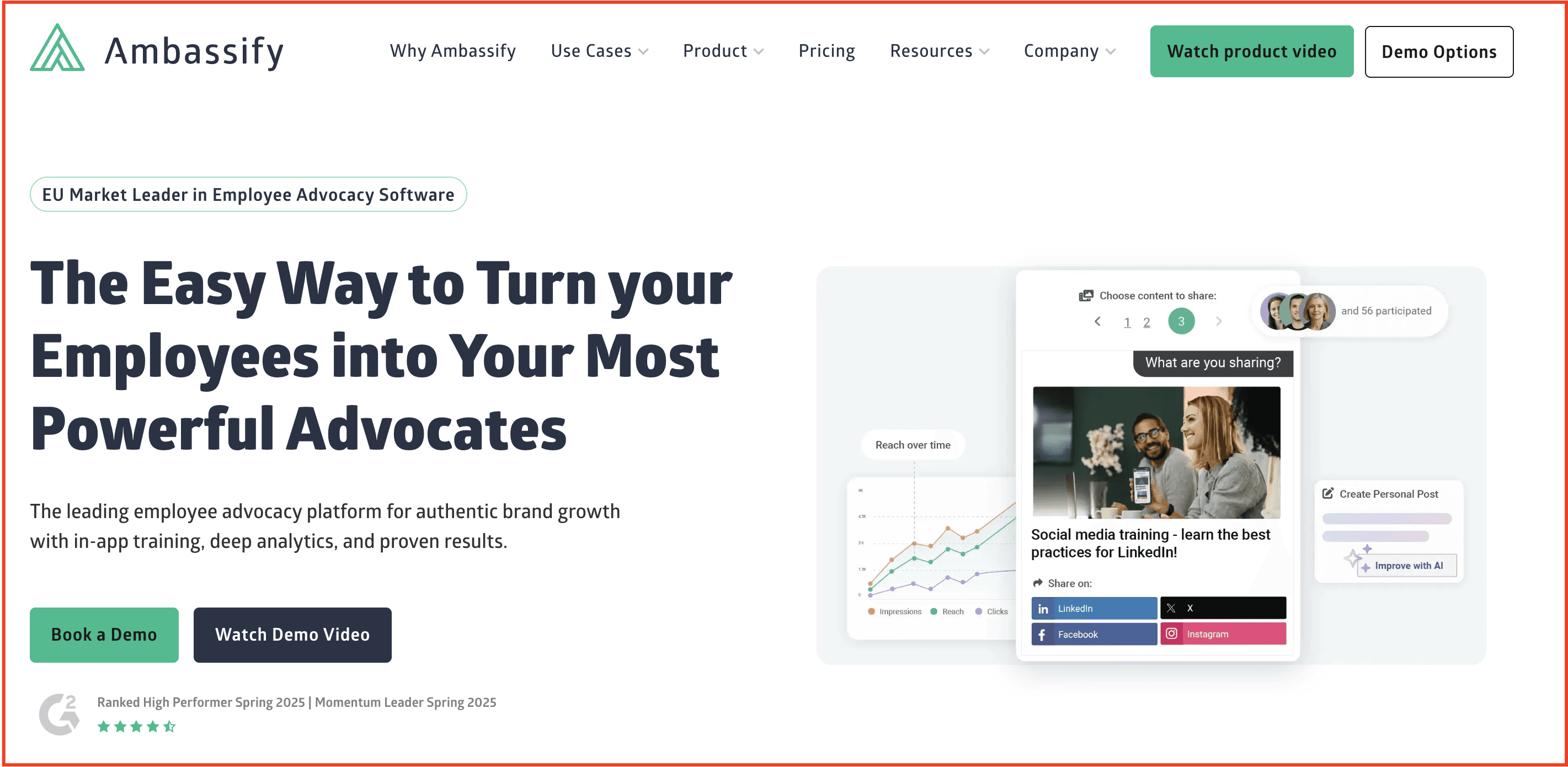
Ambassify is an employee advocacy platform designed to build participation through community, not just content distribution. Unlike tools that rely heavily on pushing posts from the top down, Ambassify creates a branded internal space where employees can engage, contribute, and gradually become advocates. It’s positioned closer to a community platform with advocacy layered in—making it a different alternative to EveryoneSocial’s distribution-first approach.
The platform works by combining campaigns, challenges, and content into a central hub where employees can participate in different ways—not just by sharing posts, but by engaging with initiatives. This helps shift advocacy from a task to an activity. Employees can still share curated content, but the system is designed to build involvement over time rather than drive immediate amplification.
For teams struggling with low participation, Ambassify addresses the engagement problem better than most. However, because advocacy is embedded in a broader community experience, it can take longer to ramp up compared to tools focused purely on content sharing.
Best for: Teams looking to build engagement-first, community-driven advocacy programs rather than purely content-distribution programs.
Key Features:
-
Branded advocacy hub combining content, campaigns, and engagement
-
Gamified challenges and activities to drive participation
-
Content sharing tools for LinkedIn and other platforms
-
Community features to encourage interaction and collaboration
-
Analytics to track engagement and advocacy impact
Pros:
-
Strong focus on participation and long-term engagement
-
Encourages employees to be involved beyond just sharing posts
-
Flexible campaign formats for different advocacy goals
-
Good balance between content and community building
Cons:
-
Slower initial adoption compared to plug-and-play tools
-
Less optimized for LinkedIn-first creator workflows
-
Requires ongoing program management to sustain engagement
Pricing: Custom pricing based on organization size and program scope.
6. Sociabble
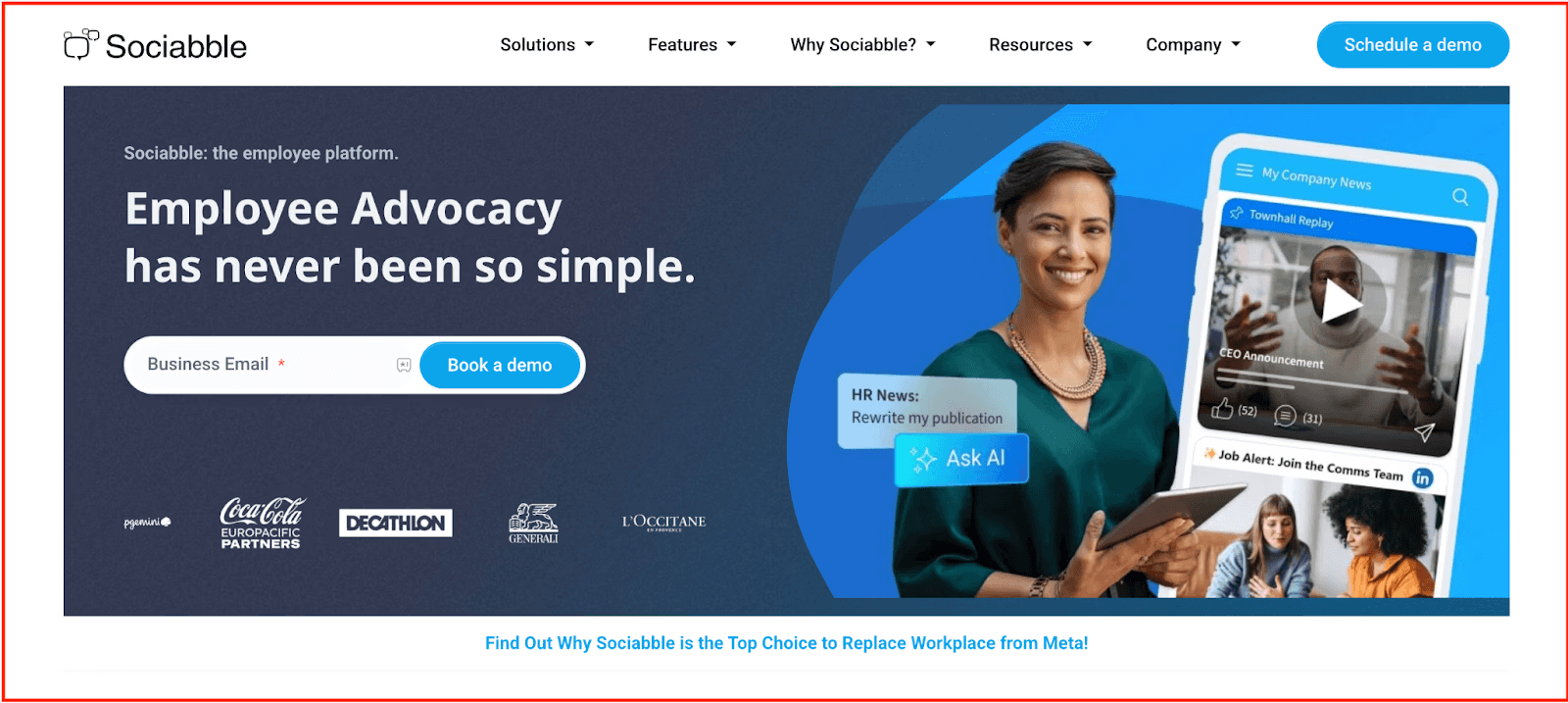
Sociabble is an employee advocacy platform built for organizations that want to scale advocacy across multiple channels, regions, and teams—while keeping everything centrally managed. It’s often used by global enterprises that need to combine internal communication, content distribution, and advocacy into a single system, making it a natural alternative to EveryoneSocial for structured programs.
The platform focuses on aggregating company content, third-party insights, and campaign-driven messaging into a single hub where employees can discover and share it. Advocacy here is designed as part of a broader communication strategy, not a standalone creator workflow. This makes it effective for organizations prioritizing reach and consistency across channels rather than individual voice on platforms like LinkedIn.
For teams evaluating alternatives, Sociabble solves the scale and integration problem well. But like most multi-channel advocacy tools, it leans toward distribution efficiency over employee-led content creation—so participation depends more on program structure than intrinsic motivation.
Best for: Global teams that need multi-channel advocacy, strong integrations, and centralized control.
Key Features:
-
Unified content hub combining internal and external content sources
-
Multi-channel sharing across LinkedIn, Twitter, Facebook, and more
-
Campaign management with scheduling and targeting capabilities
-
Gamification and rewards to drive participation
-
Integrations with tools like Microsoft Teams, SharePoint, and CRM systems
Pros:
-
Strong multi-channel support beyond LinkedIn
-
Integrates well into existing enterprise tech stacks
-
Built for global rollouts with localization support
-
Gamification features help drive initial participation
Cons:
-
Less optimized for LinkedIn-first, creator-led advocacy
-
Content tends to remain centrally driven
-
Participation may rely on incentives rather than organic behavior
Pricing: Starts at approximately $4.00 per employee per month, with custom pricing based on scale and modules.
7. Haiilo
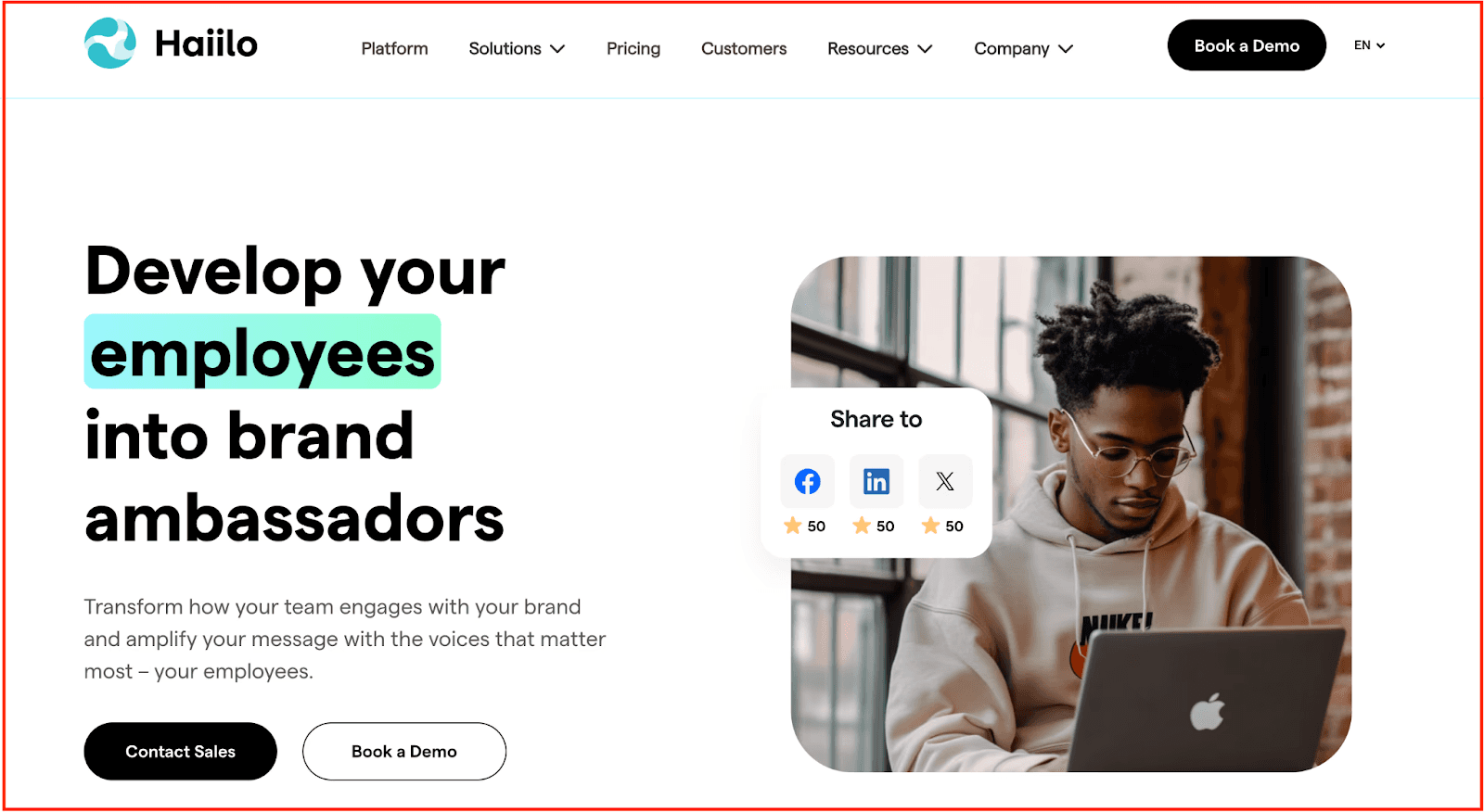
Haiilo is an employee advocacy platform that sits within a broader internal communications ecosystem, combining intranet, messaging, and engagement tools in one place. It’s designed for organizations where advocacy is closely tied to internal alignment—helping teams distribute company updates, campaigns, and leadership messaging while enabling employees to amplify them externally.
The platform works by embedding advocacy into everyday internal communication flows. Content is typically created and managed by comms or HR teams, then surfaced to employees through a centralized hub. From there, employees can share approved posts, engage with company initiatives, and stay aligned with internal messaging. This makes Haiilo a strong fit for organizations where advocacy is part of a wider culture and communication strategy.
For teams moving away from EveryoneSocial, Haiilo offers deeper capabilities for internal engagement. However, advocacy remains secondary to internal comms, which means it’s less focused on enabling employees to create or build their own voice—especially on LinkedIn.
Best for: Organizations where advocacy is driven by internal communications and employee engagement initiatives.
Key Features:
-
Integrated intranet, internal comms, and advocacy platform
-
Centralized content hub for distributing approved posts
-
Campaign management and employee engagement tools
-
Mobile app for reaching distributed and frontline teams
-
Analytics for tracking engagement and advocacy performance
Pros:
-
Combines internal communication and advocacy in one platform
-
Strong fit for HR, Comms, and culture-driven initiatives
-
Helps align employees around company messaging
-
Good mobile experience for distributed teams
Cons:
-
Advocacy is not the primary focus of the platform
-
Limited support for employee-generated content
-
Less optimized for LinkedIn-first advocacy strategies
Pricing: Starts at approximately $29 per user per month for core modules, with additional features priced based on configuration and scale.
Choose the Tool That Helps You Scale
The right employee advocacy platform depends on what you need next. If you’re only looking to distribute content, most tools will work. But if your goal is to drive consistent participation and help employees create in their own voice, you need a system built for that.
As programs mature, the focus shifts from launching advocacy to sustaining it. That means reducing friction, supporting content creation, and building habits that compound over time.
Start building a scalable employee advocacy system with Supergrow today.