
Most professionals on LinkedIn have it backward.
They think personal branding is about getting more followers. More likes. More reach. So they post occasionally, get inconsistent results, and quietly conclude that LinkedIn just does not work for them.
That is not a LinkedIn problem. It is a strategy problem.
The benefits of personal branding on LinkedIn go well beyond visibility. A strong personal brand changes how buyers evaluate you before a sales call, how investors assess you before a meeting, and how recruiters position you before a job is even posted.
In 2026, it also determines whether AI tools describe you accurately or fill the gap with whatever they can find.
This article covers all 12 benefits, backed by current research, with real examples of what each one looks like when it works.
What Is Personal Branding on LinkedIn?
Personal branding on LinkedIn is the deliberate, consistent act of making your expertise, perspective, and professional voice visible to the people who need to find you.
It is not about crafting a persona. It is not about posting for the sake of presence. It is about making sure that when a buyer, recruiter, investor, or potential partner looks you up — or asks an AI tool about someone in your space — what they find reflects who you actually are and what you actually know.
A personal brand on LinkedIn has three components. Your expertise: what you are known for and can be trusted on. Your voice: the specific way you think and communicate about your field. Your consistency: how regularly you show up so that recognition compounds over time.
All three matter. Most professionals have the expertise. Few invest in the other two. That gap is where opportunity lives on LinkedIn in 2026.
12 Benefits of Personal Branding on LinkedIn in 2026
Each benefit below maps to a specific outcome. For your career, your business, your network, or your long-term professional position. You can identify exactly where a stronger LinkedIn presence would move the needle for you.
1. Own the First Impression Before Someone Meets You
Before you walk into a room, someone has already looked you up.
Recruiters do it before interviews. Buyers do it before sales calls. Investors do it before pitch meetings. Partners do it before they reply to your email. Your LinkedIn profile is not a professional formality — it is the first meeting, and it happens without you.
Foundational research from CareerBuilder found that 70% of employers use social media to research candidates before making hiring decisions, and of those, 57% found content that caused them not to move forward.
That dynamic has not softened — if anything, the bar has moved higher. According to G2, 28% of hiring managers now say a candidate's online profile is one of their most effective sources for finding and evaluating talent.
The absence of a presence carries its own cost. The same CareerBuilder research found that 47% of employers are less likely to call someone in for an interview if they cannot find them online at all.
A personal brand does not just improve how people perceive you. It removes the uncertainty that keeps people from acting.
2. Control Your Brand Narrative Before AI Writes It For You
There is a version of you that already exists online. The question is whether you wrote it.
When a buyer researches a vendor, when an investor vets a founder, or when a recruiter evaluates a shortlist — the first answer they see increasingly does not come from a search result. It comes from an AI tool. And AI tools do not leave gaps.
If your LinkedIn presence is thin, outdated, or absent, they fill it with whatever they can find. Your job title. Your employer. A summary assembled from fragments that may have nothing to do with how you actually think or what you actually do.
This is no longer a theoretical risk. Between November 2025 and February 2026, Profound tracked 1.4 million AI citations and found LinkedIn had risen from outside the top 20 to the number one most-cited domain for professional queries across every major AI platform — ChatGPT, Gemini, Google AI Mode, Copilot, and Perplexity.
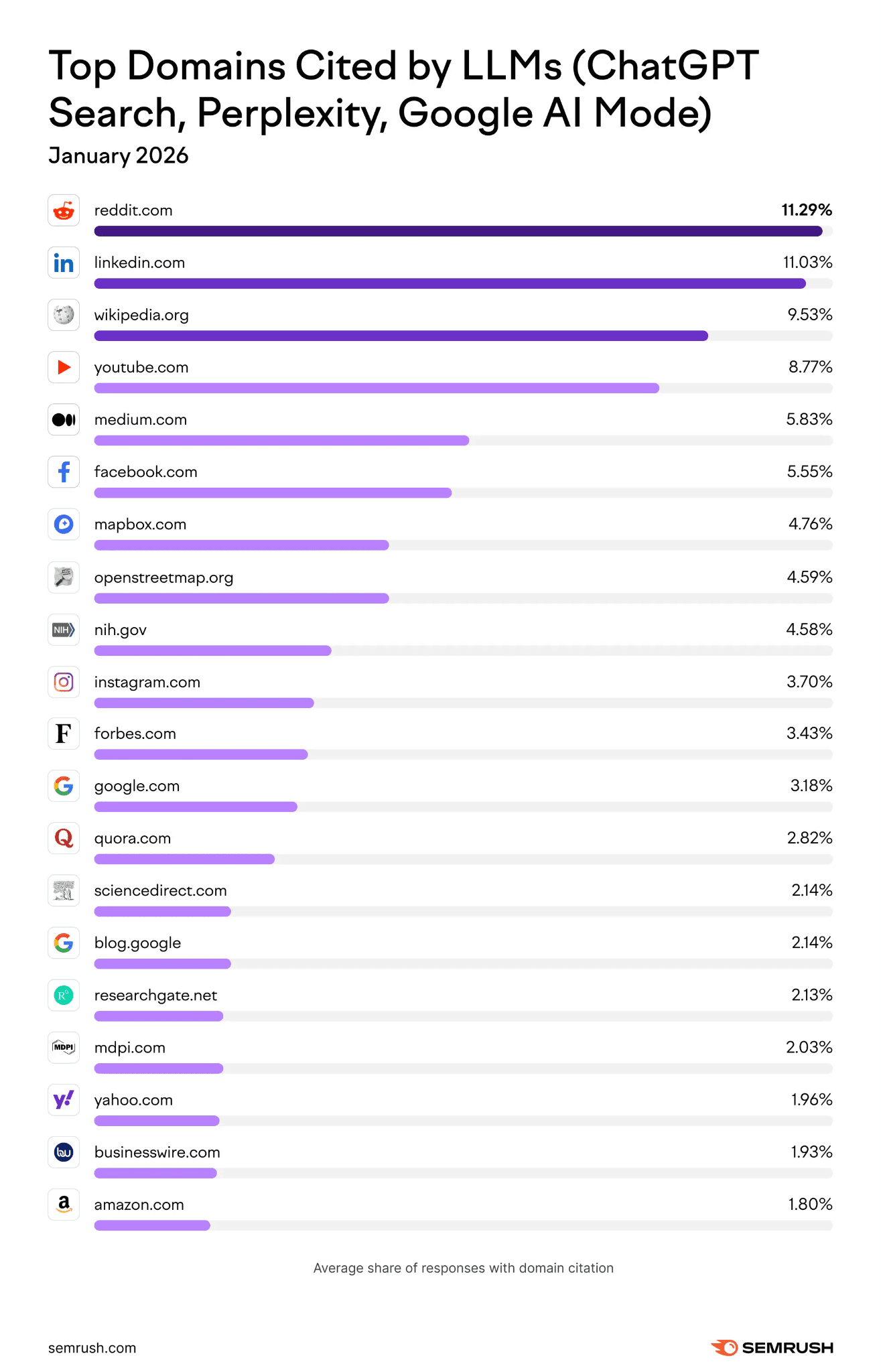
Semrush's separate analysis of 325,000 prompts confirmed LinkedIn appeared in over 11% of AI-generated answers, ahead of Wikipedia, YouTube, and every major news publisher.
That means the professionals who consistently show up on LinkedIn are not just building a following. They are building the source material that AI uses to describe them to the next person who asks.
The ones who are not showing up are being described anyway — just not by themselves.
3. Stand Out When 99% of LinkedIn Is Passive
Most professionals treat LinkedIn like a directory. They create a profile, connect with colleagues, and scroll occasionally. Very few actually publish.
Only 1% of monthly active LinkedIn users post content weekly. Yet that 1% generates 9 billion impressions every week. The audience is there. The competition for their attention, by contrast, is remarkably thin.
This is not a creativity problem. It is a consistency problem.
Research by Refine Labs confirms that personal profiles generate 2.75x more impressions and 5x more engagement than company pages publishing identical content. The structural advantage already exists for anyone willing to show up. Most do not.
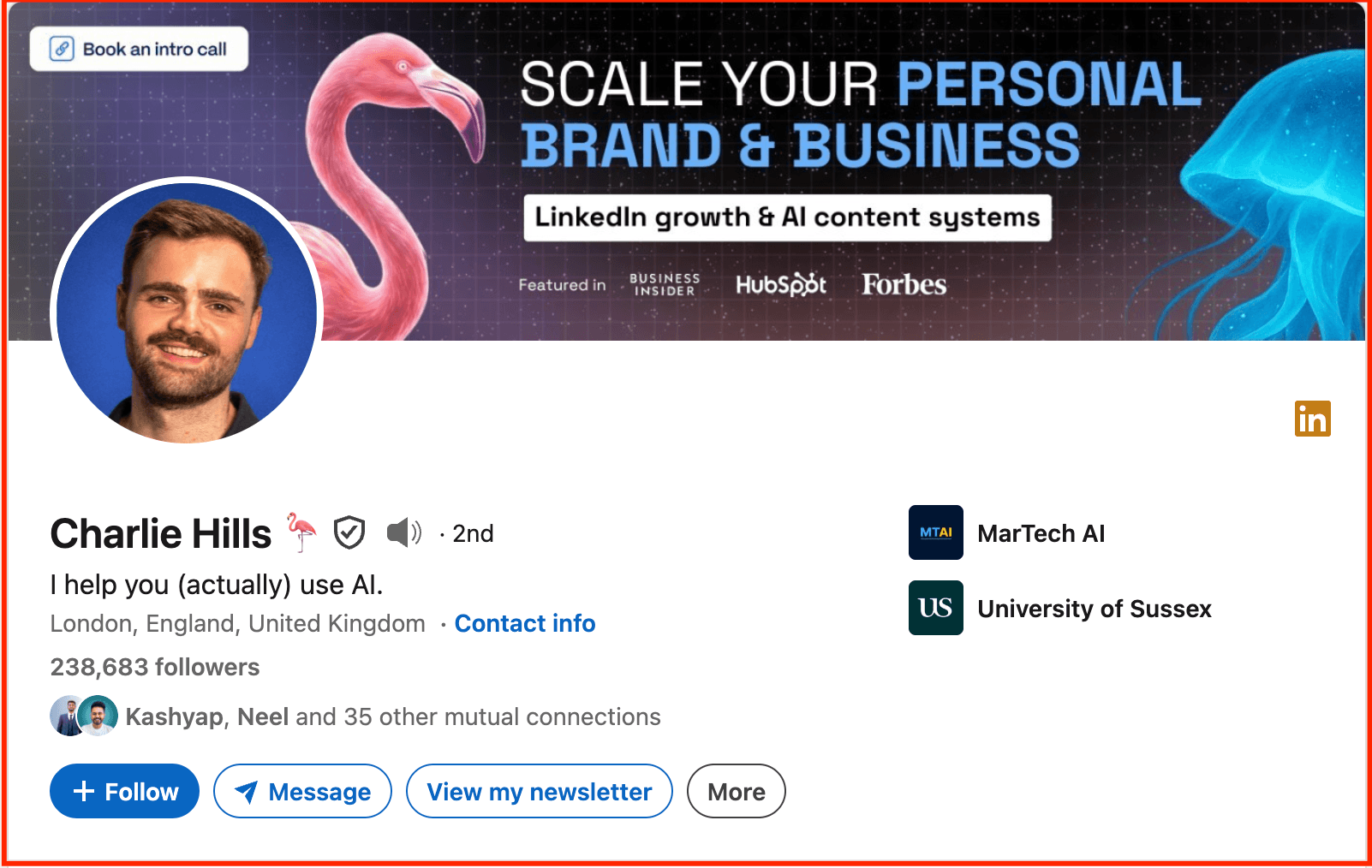
Charlie Hills understood this before he had any credentials on the platform.
In January 2024, he was a working marketer posting on LinkedIn alongside a full-time job. No audience. No industry recognition. No established name. He posted consistently on AI content marketing, built educational carousels, and engaged daily.
In 2026, he had grown to 238,000+ followers, quit his job, launched Linked Agency, and built six-figure businesses from the audience he had built.
He later wrote: "If you post consistently, you are already ahead of 99% of users. People with less experience and less depth are building audiences and creating opportunities simply because they show up."
The gap between those who post and those who do not is not closing. If anything, with AI-generated content flooding feeds in 2026, authentic and consistent human voices stand out more than ever.
Staying consistent is where most people fall apart.
Supergrow's scheduling and content queue remove the friction that causes people to go quiet. So showing up stops being a weekly decision and becomes a system that runs without you having to think about it.
4. Build Thought Leadership That Makes Buyers Come to You
Most B2B professionals think of LinkedIn as a networking platform. It is also, increasingly, a sales channel — one that operates before any sales conversation begins.
The evidence is specific. Edelman and LinkedIn's 2025 B2B Thought Leadership Impact Report, which studied hidden buyers. Internal stakeholders in finance, legal, procurement, and operations who influence deals without appearing in a CRM found that 95% say strong thought leadership makes them more receptive to sales and marketing outreach.
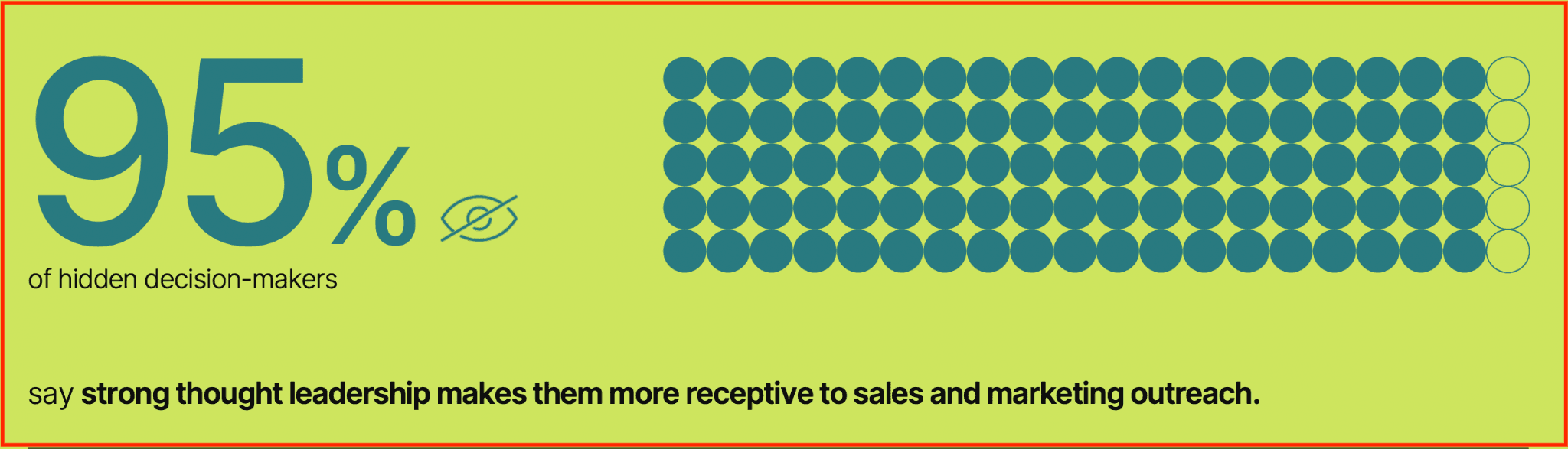
The same study found 71% say thought leadership is more effective than traditional marketing at demonstrating a vendor's potential value, and 79% say they are more likely to champion a vendor during an RFP process if that vendor consistently publishes quality thought leadership.
This is not brand awareness. It is pipeline. And it runs on LinkedIn, through individual voices, not company pages.
The professionals who publish their thinking consistently are not just building a following. They are shortening sales cycles, reaching buyers their sales team never pitched, and building trust with the people making decisions behind closed doors.
5. Build Trust That Works Before You Enter the Room
Buyers do not start their evaluation when they take your call. They start it weeks earlier, in their feed, reading what you post.
Nielsen's 2021 Trust in Advertising Study, conducted across 40,000+ consumers globally, found that 88% of people trust recommendations from people they know more than any other channel. Not paid advertising. Not brand content. People.
It maps directly to how LinkedIn works. When someone follows your content for three months before a meeting, they arrive with a degree of trust that no sales deck can manufacture in 45 minutes.
LinkedIn's own 2026 research reinforces how far this dynamic has shifted. According to LinkedIn's Global B2B Marketing Outlook, 82% of B2B marketers say creators and individual voices increase credibility with decision-makers, and 83% say credibility now matters more to buyers than traditional brand messaging.
That is a structural shift, not a trend. Company logos carry less weight. Individual voices carry more.
The professionals who understand this and build a consistent LinkedIn presence are not just more visible. They are more trusted before the conversation starts, which means they negotiate from a stronger position, close faster, and spend less energy overcoming objections that their content already answered.
6. Attract the Network That Actually Opens Doors
Most professionals on LinkedIn are connected to people they already know. A strong personal brand changes that. It makes you findable, followable, and worth connecting with to people who have never met you — and that is where the real network value lives.
The platform mechanics support this directly. According to LinkedIn's talent data, employees have, on average, 10x as many connections as their company's page has followers. The reach already exists at the individual level. Most people just never activate it.
The career impact compounds over time. Hinge Research Institute's Employee Advocacy Study, which surveyed professionals participating in structured social media programs, found that 86% reported a positive career impact from their social media activity — including new business opportunities, career advancement, and expanded professional relationships.
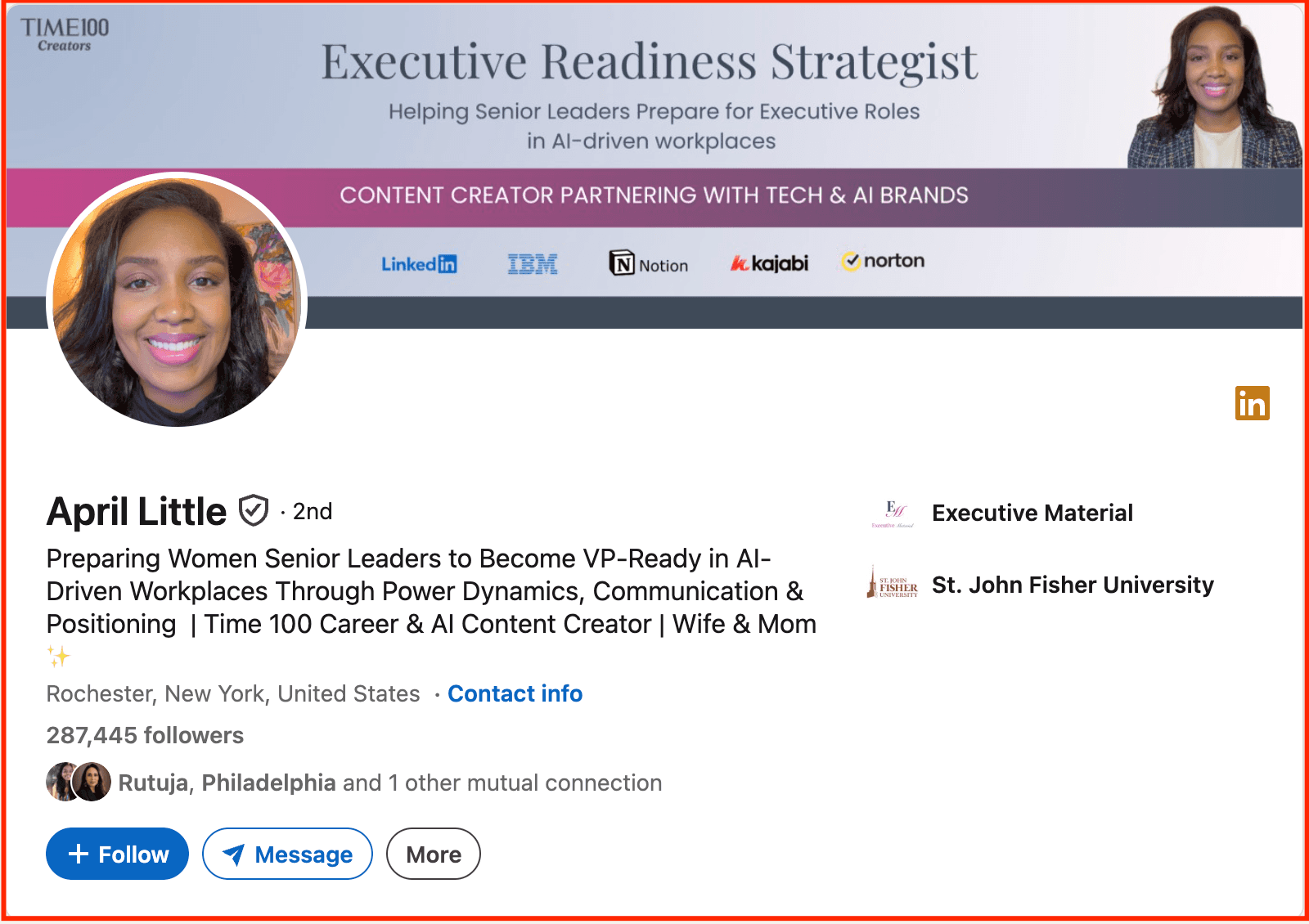
April Little built this from scratch. An HR executive based in Rochester, New York, she began posting on LinkedIn about layoffs and the job seekers most people overlooked. Her perspective was specific and consistent.
Companies started approaching her — not the other way around. Her following grew to 280,000+, and over two years she earned $150,000 through speaking engagements and brand partnerships while remaining in her HR career. She told the WSJ: "I don't see myself as a content creator, even though I am."
That is what an activated network looks like. Not more connections — better ones, arriving without outreach.
7. Generate Inbound Leads Without a Sales Team
The traditional B2B sales motion is built on outreach — finding prospects, sending messages, booking calls with people who did not ask to hear from you. A personal brand inverts that entirely.
IBM's social selling research found that leads developed through employee social marketing convert 7x more frequently than leads generated through other channels. The mechanism is straightforward: by the time someone reaches out after following your content, they have already decided they trust you. The sales conversation starts at a different place.
LinkedIn's data puts the platform's lead generation effectiveness at 277% higher than Facebook and Twitter combined for B2B. That gap widens when the content comes from individual profiles rather than company pages.
Sprout Social's #BrandsGetReal research confirms the underlying dynamic: 70% of consumers report feeling more connected to a brand when its CEO or leadership is active on social media.
Adam Robinson built RB2B's entire early distribution on this principle. He documented his SaaS journey publicly on LinkedIn for two years before launching — sharing revenue numbers, product decisions, and lessons from his previous company.
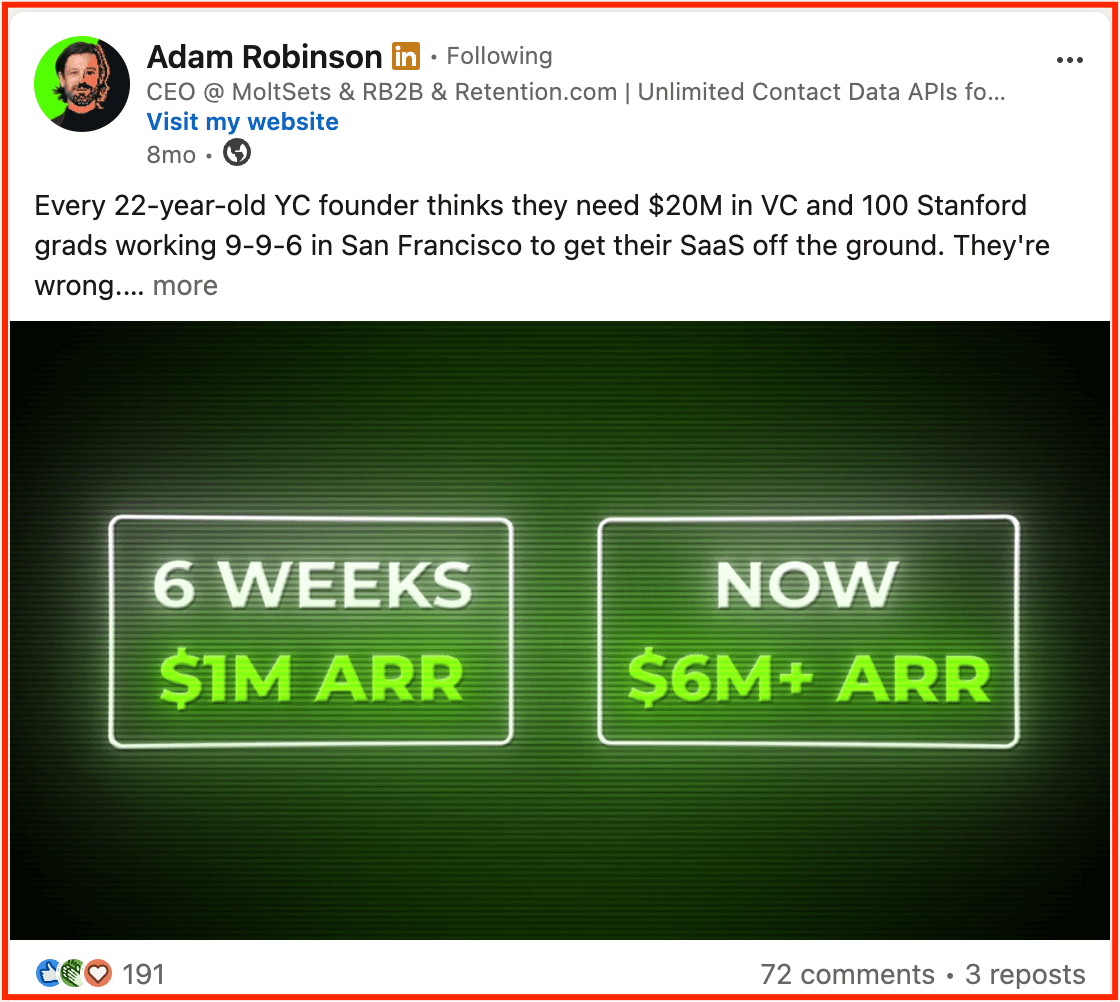
By launch day in March 2024, his audience had built a 3,000-person waitlist. The product hit $1M ARR in 6 weeks and grew to $6M+ ARR with a team of 5 and no paid acquisition. When a competitor sent a cease-and-desist letter weeks after launch, Robinson posted about it on LinkedIn. It generated 1,600 qualified leads from a single post.
The best inbound lead we ever closed told us they had been following our content for three months before they reached out. By the time they booked a call, the sale was already half done.
Supergrow's post generator and scheduling tools are built around this idea. Consistent output without the time investment that causes most people to go quiet before the leads start arriving.
8. Command Premium Pricing Through Visible Expertise
There is a ceiling on what an unknown expert can charge. There is no ceiling on what a visible one can.
Hinge Research Institute's Visible Expert study, which interviewed 130+ subject-matter experts and surveyed 1,028 buyers, found that top-tier visible experts can command fees up to 13x higher than those of peers with equivalent credentials and no public presence.
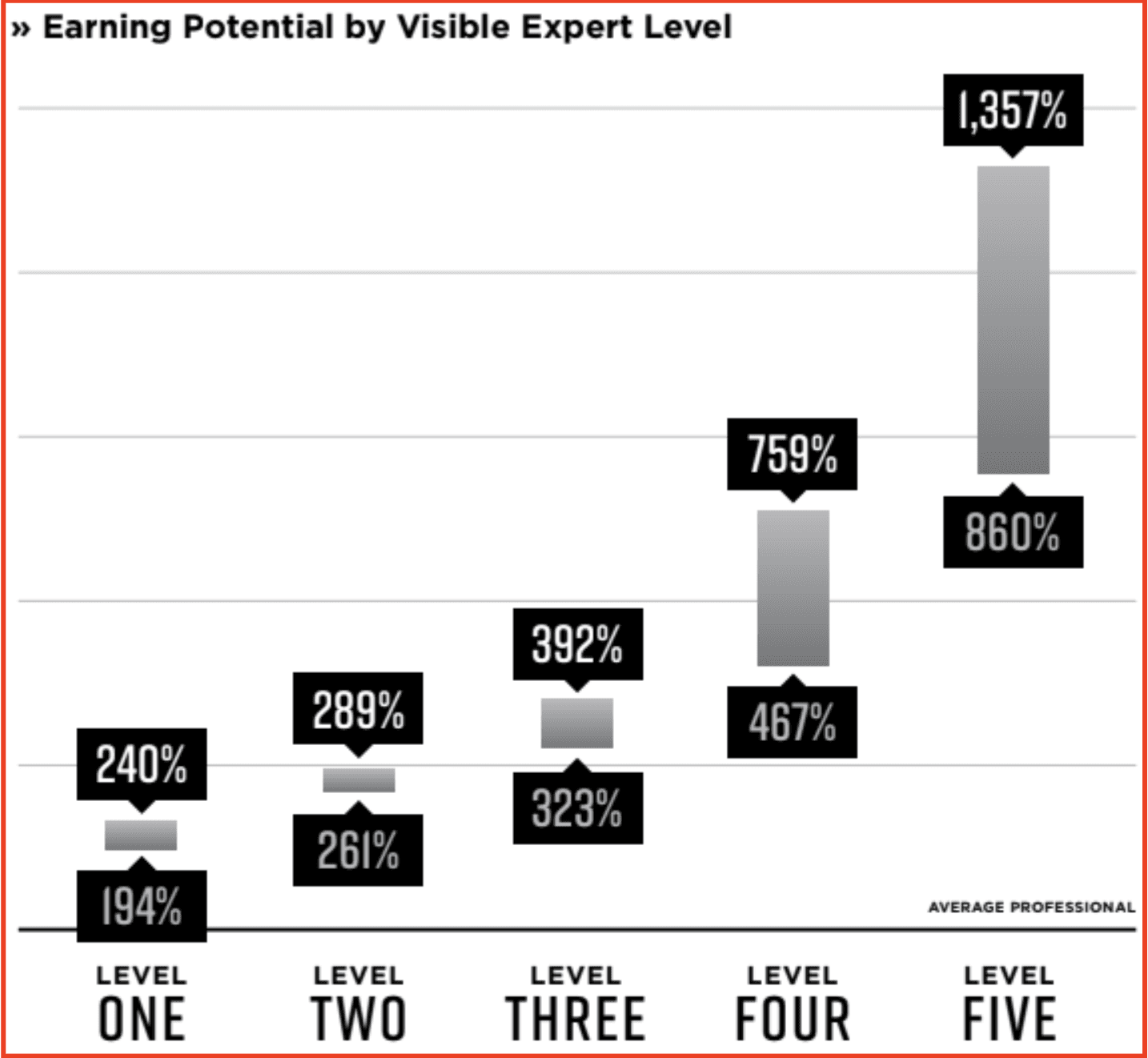
The difference is not competence. It is recognisability. Buyers pay a premium for the expert they already know, trust, and have followed — because working with someone whose thinking they understand feels lower risk than hiring a stranger with an impressive CV.
The same dynamic operates at the company level. Weber Shandwick's CEO Reputation Premium study, which surveyed 1,700+ senior executives across 19 countries, found that executives attribute 44% of their company's market value directly to the CEO's reputation.
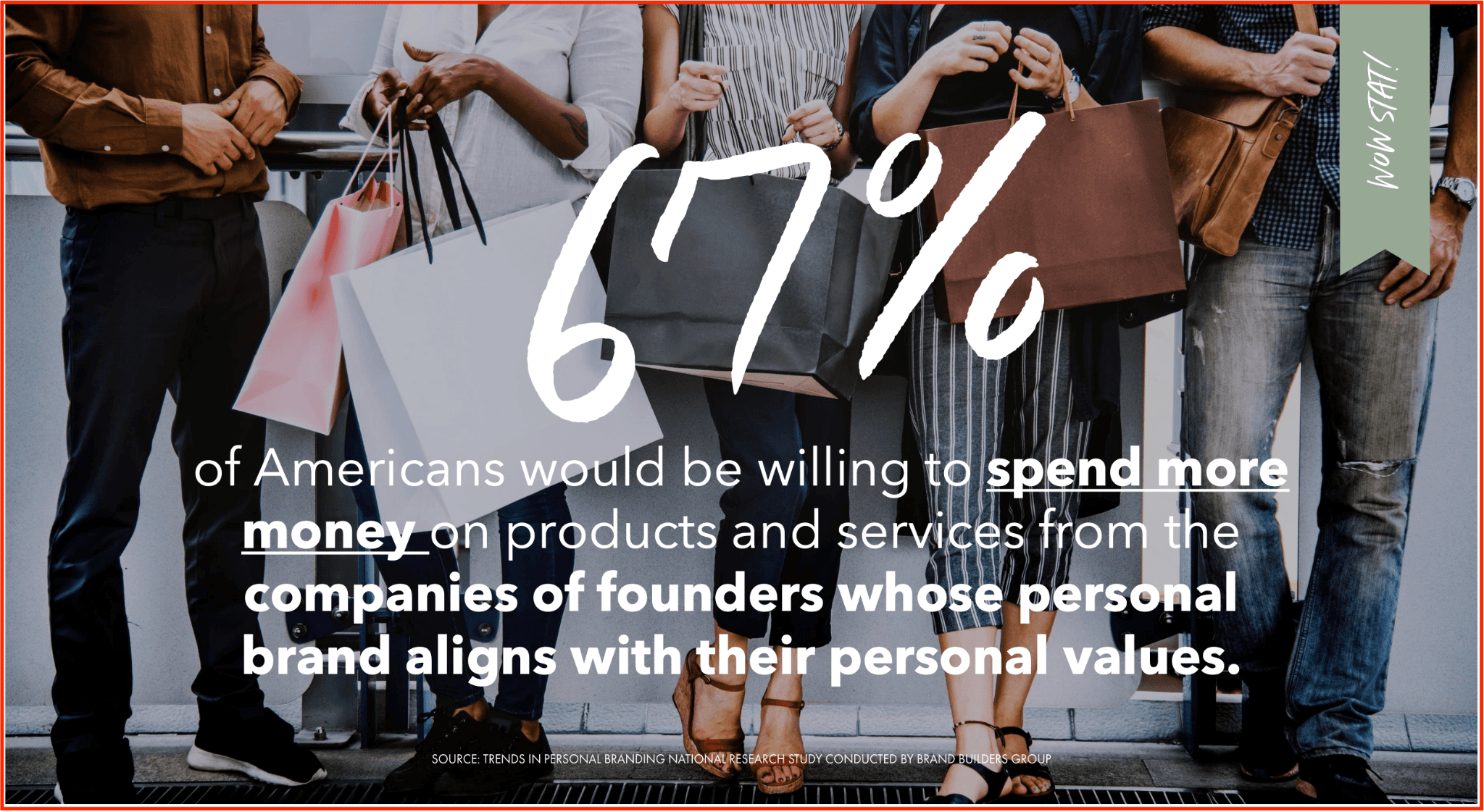
Brand Builders Group research found that 67% of Americans say they would pay more for products from companies whose founders' personal brands align with their values.
Justin Welsh built his entire business model on this dynamic. He left a CRO role in 2019 after burnout, having helped two companies pass $1B in valuation. Outside his employer, nobody knew who he was.
He spent three years building his LinkedIn presence consistently — sharing what he knew about B2B SaaS growth, solopreneurship, and building without a team.
By 2023, that audience generated $2.3M in revenue as a one-person business. His Creator MBA course generated $1.6M in its 2024 launch week alone. Total solo revenue has surpassed $8M, with margins of 86–94%. No paid ads. No employees. Pricing power built entirely on visible expertise.
9. Turn Your LinkedIn Presence Into a Fundraising and Partnership Asset
Capital follows trust. And trust, in 2026, is built in public — long before any pitch meeting.
Brunswick Group's 2022 Connected Leadership Report, which surveyed 2,800 readers of financial publications and 3,600 employees across 7 markets globally, found that 88% of financial readers say it is important for business leaders to be active on social media. 82% of employees say the same — a figure that rises further among professionals under 24.
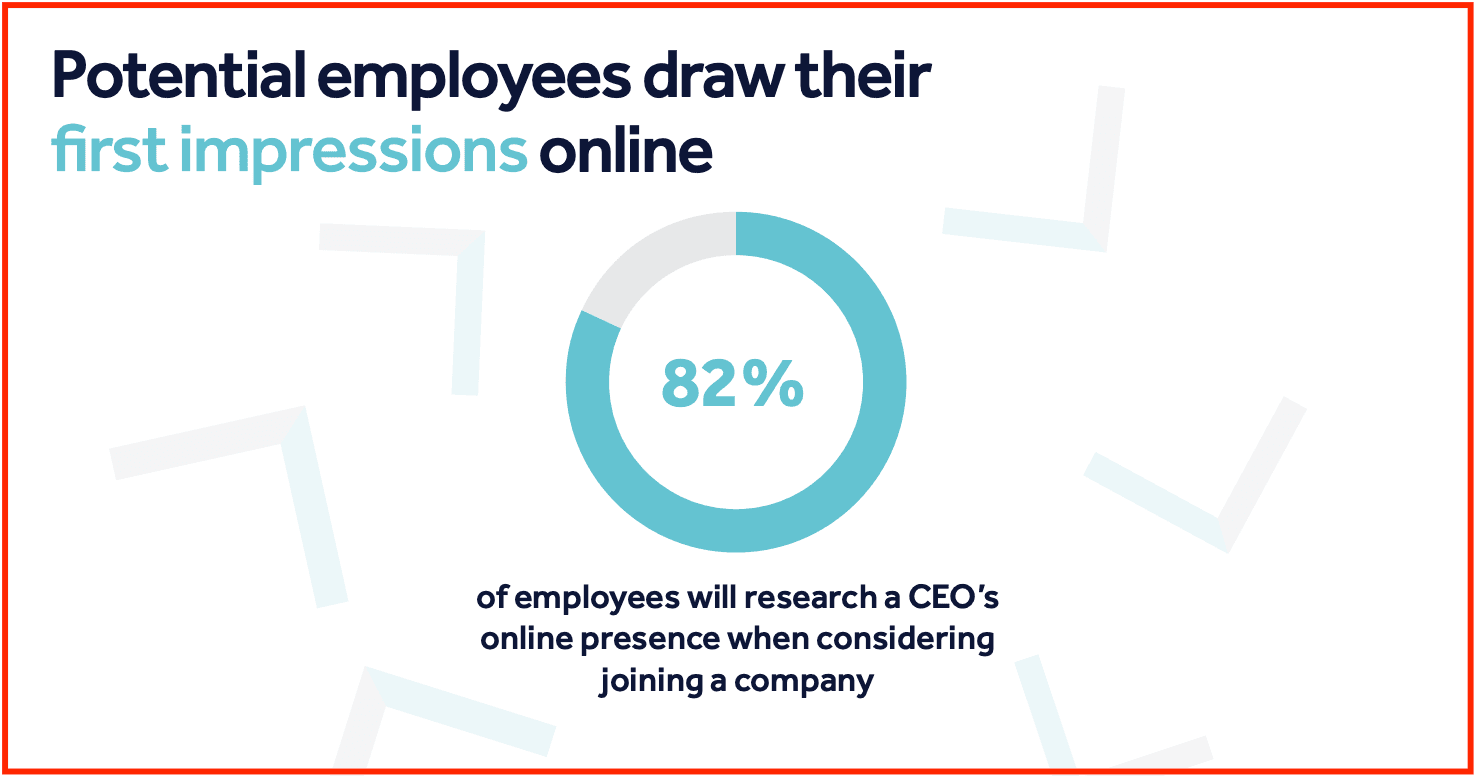
These numbers matter beyond employer branding. Investors, strategic partners, and enterprise buyers all run the same due diligence process before committing. They look for signal that a leader knows their market, has a point of view, and is credible in their space. A consistent LinkedIn presence is now one of the clearest available signals. Because it is public, timestamped, and impossible to fabricate retroactively.
Every investor call I take, they have already read my last three LinkedIn posts. That is not an accident. It is the result of showing up consistently enough that by the time the meeting happens, the conversation starts from a position of established credibility rather than a blank page.
The professionals who treat LinkedIn as a fundraising and partnership channel — not just a content platform — understand that the work done months before a conversation is what determines how that conversation begins.
10. Unlock the LinkedIn Creator Marketplace — The New Revenue Channel
Most professionals think of LinkedIn as a platform for visibility. In 2026, it has become something more specific: a platform where consistent personal brands generate direct revenue.
On June 10, 2026, LinkedIn officially launched Creator Marketplace. A dedicated infrastructure inside Campaign Manager that connects brands with vetted creators for sponsored content, Thought Leader Ads, and custom partnerships. LinkedIn is making a structural bet that individual voices, not brand pages, are where B2B influence now lives.
The traction behind that bet is significant. Through its predecessor program Top Voices 360, LinkedIn generated over $20 million in creator revenue between May 2025 and May 2026, with clients including SAP, IBM, and ServiceNow. The demand from brands was already there. The Marketplace formalizes and scales it.
The opportunity for individual creators is real and growing. According to LinkedIn's research, 55% of B2B marketers are currently partnering with, or plan to partner with, creators on LinkedIn. 82% say creators increase credibility with decision-makers more effectively than brand content alone.
The professionals building their personal brand on LinkedIn today are building the audience that brands will pay to reach tomorrow.
Supergrow's analytics and weekly reports give creators the data they need to understand exactly which content is building their audience. They know what to double down on before a brand partnership conversation begins.
11. AI-Proof Your Career and Business
AI can replicate a skill set. It cannot replicate a perspective built over years of consistent, public thinking.
LinkedIn rebuilt its content ranking system around a foundation model called 360Brew. A 150-billion-parameter AI system trained specifically on LinkedIn data that evaluates content by expertise alignment, comment quality, and dwell time rather than raw engagement volume.
The platform is now structurally designed to surface professionals who demonstrate genuine, consistent domain knowledge over time. Activity without substance no longer compounds. Documented expertise does.
As AI tools generate more content, more responses, and more professional profiles, the signal that cuts through is specificity. A perspective that could only come from a person's experience, in an industry, at a moment. That is not something a model can generate. It is something only you can build, and only LinkedIn can make visible at scale.
I built Supergrow, an AI-powered LinkedIn platform. And I still believe the most important thing any professional can do in 2026 is make sure their human perspective is visible, specific, and consistently documented on LinkedIn. The professionals who do this are not just building a personal brand. They are building the one asset that AI cannot commoditize.
Supergrow's Content DNA captures that thinking at the voice level. So every post you publish reinforces the same perspective in the same tone, compounding into something recognizably and exclusively yours over time.
12. Build a Business and Employer Brand That Compounds Beyond You
A personal brand does not stay personal for long. When a founder or leader shows up consistently on LinkedIn, it sets a standard and a template that the entire organization eventually follows.
Reaction Power research found that 90% of employees agree that when company leadership is active on social media, the overall brand image is enhanced. MSLGroup's foundational research found that branded messages shared by employees are reshared 24 times more often than the same messages published from a company page.
The same visibility that drives employee advocacy can open commercial channels too — founders with a defined niche and an active audience are increasingly launching branded product lines as a direct extension of the trust they have built on LinkedIn.
The compounding effect works in both directions. A founder's visible LinkedIn presence makes it easier to recruit — people want to work for leaders they can see thinking in public. It makes it easier to retain — employees feel more connected to a company whose leadership is transparent and accessible. And it makes it easier to activate employee advocacy, because when leadership models the behavior, participation follows.
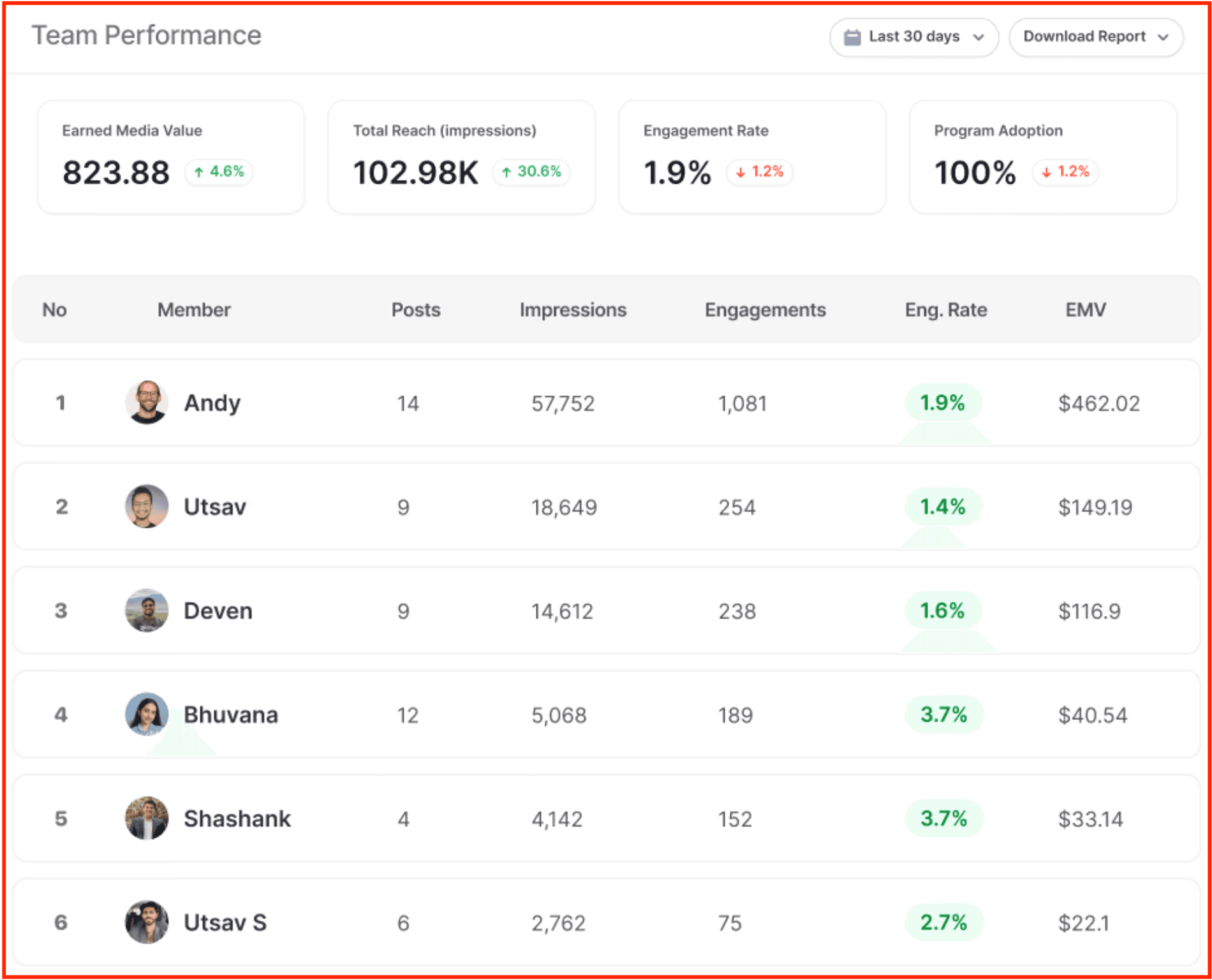
The day Supergrow's team started posting consistently, our inbound improved more than any marketing campaign we ran. That was not a coincidence. It was the compounding effect of multiple voices, each adding a different dimension to what Supergrow stands for, reaching corners of LinkedIn that a single company page never could.
Supergrow's Teams is built specifically for this moment — giving marketing teams the workflow to activate employees as consistent LinkedIn creators, starting from the same voice and content principles the founder already established.
How to Measure Your Personal Brand ROI on LinkedIn
Most professionals treat personal branding as something they feel rather than measure. That is how it stays a hobby instead of a strategy. Four metrics change that.
1. Impression Trend Week Over Week
Impressions are your earliest signal. They tell you whether LinkedIn is distributing your content beyond your existing network before engagement can follow. A rising trend over four to six weeks means the algorithm is working in your favor. Flat or declining means your content, cadence, or consistency needs attention. Watch this first.
2. Engagement Rate Against the Platform Average
LinkedIn's 2026 platform data puts the average engagement rate for personal profiles at 3.85%. Below that consistently means the content is not resonating. Above it means you have proof of concept — and the goal becomes sustaining it.
3. Inbound Connection Request Quality
Not the volume. The relevance. When the right people start finding you without outreach — buyers, investors, partners, hiring managers in your space — it means your content is reaching beyond your network and landing with the audience it was built for.
4. Unsolicited DMs From Your Target Audience
This is the clearest signal your personal brand is working. When people reach out without any prompt from you, the brand has done the selling before the conversation begins. Track how often it happens and which content preceded it.
If you are building your personal brand on LinkedIn and want to track what is actually moving the needle, Supergrow's analytics dashboard and weekly reports surface all four signals in one place — so you always know what is working, what is not, and what to publish next.
Start Building Your Personal Brand on LinkedIn
The professionals who will dominate LinkedIn in 2026 started building six months ago. The second best time is now.
Every conversation you are not in, every buyer who chose someone else, every investor who passed — visibility was a factor. A consistent LinkedIn presence does not just fix that. It reverses it.
Supergrow gives you the system to build in your own voice, stay consistent without the friction, and track exactly what is compounding. No starting from scratch. No guessing what works.